Blog dedicated to reporting on Mexican drug cartels
on the border line between the US and Mexico
.

Showing posts sorted by date for query santa muerte. Sort by relevance Show all posts

Wednesday, April 15, 2026

A Glossary of Cartel Terms

 El Armadillo for Borderland Beat


This glossary is a starting point, a collection of terms, slang, and references commonly encountered in the coverage of Mexican organized crime. It is intended as a resource for anyone with an interest in this world, whether that means readers of Borderland Beat, researchers, journalists, or simply curious observers who may come across unfamiliar language in articles, cartel communications, narco-mantas, corridos, or social media posts tied to the criminal underworld.

Monday, April 6, 2026

Saint Jude, Santa Muerte, and the Drug Trade: How Saints Are Used as Supposed Protection in the Drug Trade

“Sol Prendido” for Borderland Beat 


Wednesday, March 11, 2026

Blood, Hex and Money

 El Armadillo for Borderland Beat


This piece does not come from formal reporting. It comes from personal curiosity and from years of natural conversation with believers, people from my own life, communities I have moved through. The witch is a familiar figure in Mexican and Mexican-American communities across the American Southwest. If you grow up around this, or spend enough time around people who did, you accumulate a working knowledge without ever setting out to.

Wednesday, March 12, 2025

Mass Extermination Ranch Discovered at CJNG Training Camp in Jalisco, Hundreds Believed to Have Disappeared

 "Socalj" for Borderland Beat


After locating three large ovens containing human remains at a former CJNG training center in Teuchitlán, Jalisco, authorities found 200 pairs of shoes, 400 items of clothing, and suitcases at the ranch. The Guerreros Buscadores de Jalisco collective reported that at least 200 people may have been victims there.

Friday, July 12, 2024

German Dark Web Trafficker Linked to Sinaloa Cartel and Clan del Golfo Arrested in Colombia

"Socalj" for Borderland Beat


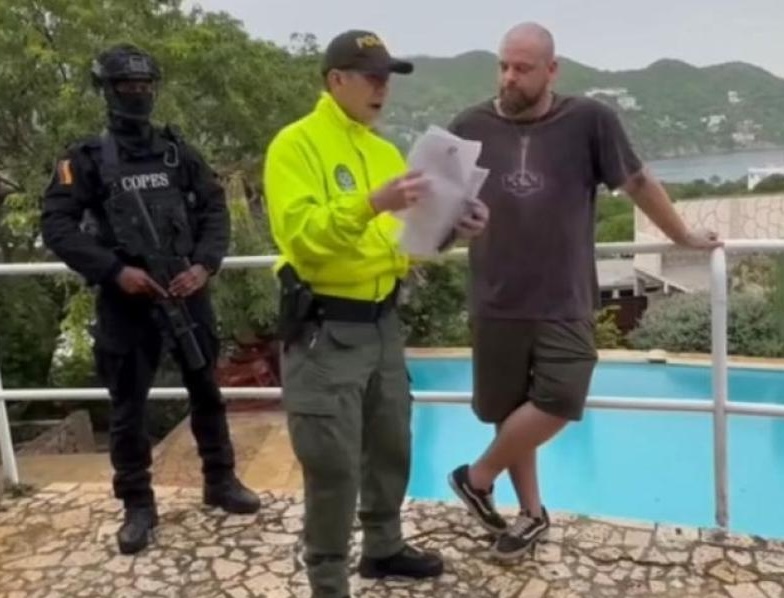
A satanic altar, weapons, an elaborate surveillance system and images of demonic entities are some of the items that Colombian authorities found in the secluded luxury cabin where Patrick Schmitz 'Patrick Smith', a website management expert on the dark web who worked for the Gulf Clan and the Sinaloa Cartel, was hiding. Infobae reports indicate that Patrick would also be linked to the CJNG.

The German-born individual was in the sights of the Department of Homeland Security Investigations (HSI) and other United States agencies due to his activities linked to drug trafficking and money laundering for those criminal groups. Director General of the Colombian National Police General Salamanca Ramírez stated that Schmitz was arrested in compliance with an order issued by a District Court of New Jersey.

Friday, June 28, 2024

Exposing the Carrasco Narco Family of 'Los Chapitos'

 "Enojon", "Char", "HEARST", "Crux1469" For Borderland Beat


Early Sunday morning, June 23, 2024, Los Noticieristas, Luz Noticias, and Ríodoce news sites based out of Sinaloa reported a heavy armed confrontation in the small community of Sanchez Celis syndicate of El Dorado, Sinaloa. The armed clashes started at about 5am on various videos published heavy caliber gun sounds could be heard and as more news reports came in, it was confirmed that Mexican Military Special Forces were conducting a raid against an organized crime leader. That crime figure was ‘El Chore,’ a criminal leader and member of 'Los Chapitos' or 'Los Menores' faction of Sinaloa Cartel. 

Initial reports alleged the deaths of Raul Carrasco Lechuga Aka “El Chore” along with six to seven gunmen, but information could not be verified as bodies needed to be identified. On Monday June 24, 2024, Los Noticieristas confirmed the death of El Chore along six others so a total of seven deaths. 

Friday, March 15, 2024

FlashBack Friday: Comando Zeta Responsible For The Disappearance Of Women

 "Char" for Borderland Beat 

This article was translated and reposted from Vanguardia | MX 

30 AUGUST 2016


They were invited to a dance and from there they disappeared.

Piedras Negras. At the time of the disappearances, whoever was in charge here wiped out dozens of young girls between 17 and 22 years of age out of pure hatred, without anyone seeing anything, without anyone hearing anything. And worst of all: without anyone denouncing anything. It was during the second week of October 2012, when Comandante Enano, head of the criminal group Los Zetas, feeling betrayed by a group of girls who accompanied him to the most intimate parties, invited them to a meeting in the municipality of Allende, considered the "kitchen" of the Cinco Manantiales region, an area mourned by the disappearance of hundreds of people.

Nobody knew anything about it, because nothing happens in Coahuila. In this border, events took place that are difficult to explain, if violent death and kidnapping have any coherent explanation.


Lorena, a girl now 25 years old, remembers well the footsteps of David Alejandro Loreto Mejorado, Comandante Enano, or El Diablo. A handsome and wild little man; cool with his friends and a devil with his enemies.

He knew him since he was a teenager in the Mundo Nuevo neighborhood, better known as San Judas, because of the church of the Saint that fills the inhabitants with faith, accustomed to living with the narco in their streets, in their homes.

David Alejandro was thirteen years old when he studied at the Francisco I. Madero high school, by then he was already nicknamed El Enano (The Dwarf). He was respected among the youths because he washed the cars of Celso Martínez, El Celso, a neighborhood capo who later belonged to Los Zetas, becoming, together with Miguel Ángel Rodríguez Díaz, Alfa Metro, the leaders of the border strip of Coahuila.

This boy, who dressed well and combed his hair with a lot of elastic, rose high in the criminal structure left vacant by El Celso after his capture in 2012.


- He was very quiet, or discreet. I don't know how he rose so high. He got everyone in the San Judas gang to work with the gang: as hawks, collectors or hitmen.

El Enano was two years older. It was a long time before their paths crossed because Lorena moved to live in another city.

When she returned to Piedras, walked and walked the streets of her dusty San Judas, she found the boy who washed other people's cars driving a new car, not at all opulent. He had three escorts with him: He looked a lot more cocky, he confided. The Dwarf asked: "Don't you remember me anymore?

- He asked me to work with him, who was with La Gente. He gave me 5000 pesos in cash. He told me that he gained strength because Celso recommended him to El 42 (Omar Treviño Morales).

Lorena refused. On several occasions she was invited to parties that Comandante Enano organized in a house in Colonia Cumbres, the last one, of which several young girls disappeared, was apparently at a ranch in Allende.

- There was a lot of pot, soda, whiskey. That little group were the most popular in Piedras. There were three from Rosita.

She may have gone to one or two parties, although she doesn't say for sure. She has straight hair and brown skin; she is as skinny as a bird, flirtatious and seductive when she talks and smiles.

- They started dating at the same time with soldiers and GATE'S (elite State Police). Already drunk, they threatened each other. It was the power that blinded them. Once El Enano found messages on the cell phone of one of them where she was talking with soldiers, that's why they disappeared.

Monica, 20 years old

Nobody knows anything about Monica Larissa Pena Ramos, who lived downtown with a friend and had a wild beauty: cinnamon skin, black hair and bright eyes.


She and her friends were nicknamed Monica's Group, all in their twenties, beautiful and fragile as a piece of paper.

The last time they saw her, she asked her relatives to accompany her to buy a costume to celebrate Halloween.

And a nightmare became life all around.

It was October 2012.

The heat was not as cruel as it usually is for much of the year. The city was crumbling with bullets.

- We didn't see her anymore. We couldn't find her. They were taking a lot of people away then. We are afraid they will take revenge if we say anything.


Monica went to high school, 20 years old. She was popular at parties and discos, and when she arrived with her friends they were the center of attention. The daughter of a single mother, her father sent money from the United States. She never lacked for anything.

Where Los Zetas operate, it is necessary to be discreet, perhaps that is why no one would suspect two people talking while sitting on the stairs of a shopping mall, outside a pizzeria, drawing the cruelty of men and women who kill and disappear other men and women for revenge.

- The problem is that there are clandestine graves. One is hopeful, but it is a long time, people know a lot about what happened. There is fear, you don't know who you are talking to.

Regarding the disappearance of Monica Larissa, Familias Unidas AC, has documented her case, of which a complaint was filed with the State Attorney General's Office, but no progress has been made, because nobody, they say, has seen anything.

Atzy Adamary, 22 years old

That afternoon in Villa Union, located 19 kilometers from Allende, no one knew how to explain anything about the recent model pickup trucks that apparently were guarding the first march in that municipality of Familias Unidas AC. The third since they were formed.

Perhaps because it was a Sunday at the beginning of September with the sun covering everything, but no local media showed up to document it.

Nor did they document the families disintegrated by the forced disappearance of their members.

Because it was the time of fear, when reporters, editors and media directors were kidnapped and tortured. Last year alone, the organization Article 19 documented 14 attacks on the media in Coahuila, out of the 39 registered in Mexico.

Fear. Death. Revenge. Suffering in nothingness.

And so, with that fear, about 30 people marched, humming Christian songs like Yo te extrañaré and Vuelve a casa.

Olga Lidia Saucedo García, representative of the municipality of Allende for Familias Unidas, told that she began to know about the violence from the disappearance of her daughter Atzy Adamary, in the early morning of December 18, 2012.

She has heard little about the mass disappearance of young girls in Piedras Negras.

- People tell me that the violence was there before, I began to realize it when my daughter disappeared. I noticed that there was evil here. Many people don't want to get close to you anymore because they think you are in danger.


Olga Lidia smiles at her grandchildren, at everyone. She tries to hide how humid the early morning was when Atzy Adamary Reina Saucedo went to a meeting at her father's house in the company of Alfredo Ruiz, her husband, and their children: a newborn and a two-year-old girl.

Atzy was 22 years old, he was 30, working for a dairy company. If it hadn't rained so much that night, and it hadn't been so cold, the little ones would have disappeared.

- At four o'clock in the morning my son-in-law received a call, telling him to go to his mother's house because she was sick, since it was raining and cold, they didn't want to take my granddaughters out. They took 10 people from his family, plus my daughter and him.

In the morning, Olga Lidia's ex-husband dialed saying that Atzy Adamary had been "lifted", to go pick up her grandchildren.

- It was an unusual word for me. I couldn't figure out what he meant. Things were already very strong, I didn't really know what it meant. Since then I don't know anything. On October 31, my daughter would be 25 years old.

Lluvia, 21 years old

Those who knew Lluvia Marisol Rodriguez Ruiz, then 21 years old, think that there will come a day when we will have to pay for everything we do, but she, a young mother, did not have to leave Piedras Negras just like that.


Her memory now dwells in nothingness, in a pile of papers in a state agency, where her relatives recently went to report her disappearance, which occurred in October 2012.

It was a Monday when Lluvia dialed home in Colonia Bravo asking for a bottle of whiskey, she sounded upset, as if someone was forcing her to talk.

On Wednesday a call came in on the cell phone of one of her relatives. They were worried about her, without any clue.

- I'm going to tell you the truth. Lluvia was given an apartment along with 20 other girls. They were invited to a party with trickery. So they wouldn't look for them.

That's all they knew. Which is equal to nothing.

Lluvia lived with her boyfriend and her six-year-old son, in fact she was a close friend of Monica Larissa Pena. The oldest of seven siblings, she had tattoos of stars on her ankle and Santa Muerte on her back.


It is complicated that in such a colony they talk about Lluvia. It is not easy to remember.

- Many times we don't want to talk, there are many people related to them. You become aware of what happens because of the people, that's how we became aware of all the women who disappeared during those years. They said that one of them was against the (Gulf Cartel), another one had contact with the Federales. In the meetings they took away their phones.

The heir of La Roca (Piedras)

The problem in this region is that nobody saw anything. And when there is nothing, nothing happens. One of these unnamed judicial sources said that practically the entire municipal police force was involved with the narco. Between 2012 and 2013, more than 400 state and municipal police officers were dismissed in Coahuila for failing to pass the control and confidence tests applied by the Public Security Secretariat.

- They were all cooks. Here comes all the filth that goes to the United States. All the policemen were cooks. Many people were burned alive.

With experience in the security area, he said that around 40 vehicles pass through the region every day on their way to the interior of the country, which enter through gaps to avoid customs.

This was the territory inherited by David Alejandro Loreto, Comandante Enano, a territory that first belonged to Los Texas, then to the Gulf Cartel and then to Los Zetas.


On youtube there are gangsta rap songs dedicated to Comandante Enano, two of them tell part of his life, and act: "When he goes out on the street he always goes out entrusted to San Judas Tadeo and surrounded by hitmen... The rock is his place, the government has not been able to, he knows how to give the order, he carries goat horn. He carries a knife to slit the heads of the GATE'S, the ugly ones and the Navy... He carries a knife to slit heads.

Following the reorganization of the cartel and the expansion of its strategy, Comandante Enano took over the city of Zacatecas and was shot by soldiers in the early hours of May 3, 2013, as he was driving down Paseo del Mineral Avenue in his Cheyenne pickup truck with Tamaulipas license plates.

Titina and Claudia, 23 and 26 years old.

A month after Comandante Enano's death, sisters María Cristina and Claudia Bustos Vázquez, 23 and 26 years old, disappeared in Nueva Rosita (an hour from Piedras Negras) at about 5:00 a.m. in the morning. And nobody, for a change, saw anything.

They had left a discotheque after celebrating Father's Day with their mother María Alejandra Vázquez Maltos, Candy, a 42-year-old woman who knew the night working as a bartender, was father and mother at the same time.
Candy knew about the dangers of the dark, that's why she had warned Maria Cristina, Titina, not to trust the night: much less Los Zetas.

- We met one of the old Comandantes when I worked in the cantinas. I told him: I'm going to take you from here to somewhere else. The problem was that he talked a lot with the soldiers, he liked them. She said that just because she liked the soldiers, she wasn't going to point a finger (point them out to the authorities) at those güeyes (Zetas).

Titina responded:

- I see them all the time, they don't do anything to me.

And in her desperation as a mother, Candy explained.

- No daughter, it's just that they are just looking for you to hunt you down. They are going to hunt you. They disappear at the least expected moment.

It was the night of June 15, Father's Day, when Candy and her children María Cristina, Claudia and Omar decided to go to celebrate at the Obsesión cantina, on Reforma Street in the center of the city. It was 3:00 a.m. and they returned home.

But Claudia called a friend to continue the party at the Mangus discotheque, the friend explained that he would only take her in the car, but would not stay: it was a place where old men went, he said.

Omar was the one who interceded so that the girls would be allowed to go: "Let them go, mother. I will take care of them, he promised.

In the wee hours of the morning, Candy texted Claudia's cell phone. Maria Cristina had forgotten hers at home.

- Tell Titina to come over because the baby (newborn) wants to breastfeed. One of them answered that just a little while longer. It was 04:00 in the morning. It was the last message from that cell phone whose trace disappeared.

Four hours later Claudia's cell phone rang. A missed call, an alarm, a message. She doesn't remember, only that it was a sound.

- I jumped in fear. I said: My daughters have not arrived, where are my sons? The first thing that came to my mind was: They already killed my children.

Candy phoned Omar, Claudia, she searched in the company of a family friend for traces in hospitals, in the police; she walked through the bush, through the plain. And nothing.

Omar answered very late; he was recovering from a hangover. He said that his sisters had gone out to take a cab, then returned to the disco to call because there were no cars coming to pick them up. He had stayed at the club with a girl.

From then on, everything was nothing.

- No one knows who picked them up, no one saw anything. Nobody talks, they are afraid. I'm not looking for culprits right now. I want to know where they left them.

Sleepless, anguished. That Sunday Candy went to the judicial authorities, then to the Municipal Police, then she reported the events to the State Attorney General's Office. She put up posters; she went to the radio stations. Once, walking down the street, a woman approached him. She told him in a supportive voice: "I also have a missing daughter.

And she disappeared. He never heard from the woman again.

The partner he had at the time, with whom he had been with for four years, decided to leave for good because of a phone call he received.

- The old people threatened me, they called him and told him: You know what, tell your fucking old lady to shut the fuck up, because wherever we see her we're going to pick her up with you.

Titina left a four year old child who lives with Candy; Claudia left two children, eight and four years old, who are with their father.


They both worked as workers in a maquiladora, they studied up to high school. Candy only thinks about taking care of little Eliud Noé, although, she says, she will not give up the fight, despite the risks.

- I am not afraid. What more harm can they do to me if they have already taken two pieces of my life from me? The day they catch me, one of them won't go free, because first I'll take out his eyes! 


Sunday, February 18, 2024

El Paso FBI Agents Arrest La Chely On Multiple Homicide Charges

"Sol Prendido" for Borderland Beat


FBI agents arrested Michelle Angelica Pineda, known as "La Chely" at a motel Thursday. The Mexican Government was looking for La Chely, a Mexican national, for her alleged involvement in at least five homicides in Juarez.

The FBI Safe Streets Gang Task Force worked with the El Paso Police Gang Unit, County Sheriff's Narcotics Division, and Border Patrol to take down La Chely, who is accused of running a drug trafficking ring for the Artistas Assessino gang.

"Pineda was known for her extreme brutality such as dismembering bodies, removing hearts, and placing the hearts in front of “Santa Muerte” altars and statutes," according to a news release from the FBI El Paso Office Friday.

FBI officials say La Chely had entered the U.S. illegally. Once captured, agents took her to a port of entry and gave her over into Chihuahua State Police and State Attorney General of Chihuahua custody.

“Today’s deportation highlights the swift action of our agents and our significant partnerships by successfully taking a violent assassin off our streets and putting her back into the hands of Mexican law enforcement to be tried for her crimes,” said John Morales, FBI El Paso Special Agent in Charge. “Working hand-in-hand with our partners whether in law enforcement, the private sector, and with foreign law enforcement agencies are paramount in order to keep people like Pineda from bringing violence and drugs into our lives and poisoning our communities.”


Ciudad Juarez, Chihuahua


KVIA

Sunday, February 11, 2024

From 'El Chapo' to 'El Mencho': The Lucrative Market For Online Narco-Souvenirs

"Sol Prendido" for Borderland Beat


These "narco-souvenirs" are part of a commercial trend that reflects the influence of narco-culture in the digital age.

Rise of 'narco-souvenirs', the commercialization of narco-culture

The infamous drug traffickers Pablo Escobar Gaviria, Ramón Arellano Félix, Joaquín El Chapo Guzmán Loera, and now, Ovidio Guzmán, the youngest of Los Chapitos, are part of a unique collection of "narco-toys" or "action figures" sold on the Internet.

As part of the narco-culture that has permeated a sector of the population in recent years, plastic miniatures of organized crime figures have become a trend for collectors and fans.

In the digital display of online stores such as Narcotoyz.com, the figures of drug lords are accompanied by clothing and other objects, which have found a niche in second-hand e-commerce: the customer selects the merchandise, pays the shipping and hours later you receive it at home.

For 512 Mexican pesos, the aforementioned website offers a polyresin representation of Ovidio Guzmán measuring almost nine centimeters.

The figurine shows Chapito with his arms raised, wearing a cap, white shirt and bare chest, showing mini scapulars. The pose of the doll recreates what the capo looked like during his first arrest and subsequent release, in the famous Culiacanazo.

The figure of the popular Ratón joins the collection of evildoers that the website boasts, which also sells mugs and caps that show similar designs. Among the figurines most requested by customers, those of El Chapo and Pablo Escobar stand out, which for now are listed as “sold out.”

The Narcotoyz page captured the spotlight on social networks, from where the controversial character of Ovidio went viral. However, it is not the only store where you can find these items.

On AliExpress, a popular online shopping platform, you can also purchase t-shirts with the image of Ovidio for only 145 pesos, plus the cost of shipping.

Likewise, for those looking to complete their "narco outfit" or expand their collection of Narco-Souvenirs, Mercado Libre offers sweatshirts and caps with the name and drawing of the popular Ratón, for 550 pesos.

Also at Mercado Libre, Pins4Caps offers a “custom enamel pin with rubber back closure,” which is nothing more than a metal pin to attach to the cap.

For 159 pesos, the customer can also purchase a tie clip with the caricature of Ovidio, his father, as well as Santa Muerte in the shape of a 'goat horn', or with the acronym "CDS", very popular among criminal groups.

And so that no one thinks that these promotional products are limited to the so-called Sinaloa Cartel, on Instagram, TikTok or Telegram platforms, to name a few, commercial advertisements circulate that promote clothing embroidered with the name of Nemesio Rubén Oseguera Cervantes, better known as El Mencho, leader of the Jalisco New Generation Cartel, the self-proclaimed “four letters cartel.”

Mencho caps, for example, are one of the specialties for sale online at the JB_HATS_MX store, based in Guadalajara, Jalisco.

But not all of this online marketing is related to crime. On Instagram, 'Arana_toys' sells miniatures of the National Guard, the Navy and the Mexican Army, highlighting their quality in the details of the national flag, the pixelated uniforms, weapons and decorations.

While 'Many Creations' offers Funko-type dolls for cadets, guards, sailors or soldiers.

With continuous updating, according to the war news that arises in the real world, 'narco souvenirs' now represent both a commercial trend and a reflection of narco-culture in the digital age.


The controversial commercial trend that reflects Mexican narco-culture


Milenio

Thursday, December 7, 2023

Throwback Thursday: Santa Muerte Or Holy Death Watches Over And Watches Over The Residents Of Villa Purificación In Jalisco

 "Char" for Borderland Beat 

This article was translated and reposted from MILENIO 


In the recent decade, the municipality has become the epicenter of the criminal organization with the largest presence in Mexican territory: the CJNG.


Victor Hugo Ornelas
Guadalajara / 01.08.2020 10:52:12


The inert eyes of the Santa Muerte hanging from the chest of a policeman are added to the stares that rest on an unknown face just arrived to the place, some murmur, others warn by phone about that unusual presence, in a direct way a man asks what are they coming to do here? This is the welcome to Villa Purificación.

To request an interview with an official there is no social communication office, the data is recorded by an element of public security, name, surname, place of origin, characteristics of the vehicle and its plates, persons accompanying, unusual data for an interview.

Villa Purificación was the first territory to consolidate as a municipality in the state of Jalisco, it is also one of the most extensive with almost 2 thousand square kilometers of surface, but the stories told about the place do not revolve around its culture and biographical data, but about drug trafficking and organized crime, about the presence of a man who has become the most powerful capo in the country, Nemesio Oseguera Cervantes, alias El Mencho, leader of the Jalisco Cartel New Generation.

In the recent decade, Villa Purificación became the epicenter of the criminal organization with the largest presence in Mexico, its vast territory surrounded by mountains and its hundreds of roads and trails offered the right conditions for the cartel members to hide and move from one place to another without being detected by the authorities.

The South Coast region, to which Villa Purificación belongs, is guarded by members of the Regional Police of the state, National Guard and Secretariat of National Defense (Sedena), the units circulate in convoy, never individually, because the area is considered high risk, although this version is incomprehensible to municipal authorities, as the general secretary of the city council, Plutarco Garcia, "is a quiet town, the security issue is not alarming, well I think that as a country, is exactly the same," he said. He also described the local people as friendly and hospitable.

And so it is, in general people in Villa Purificación are cordial, they tell personal and life stories, they like to talk before the unusual presence of a reporter, but only about usual topics, when the subject of drug trafficking is broached, the countenances change, the expression becomes rigid and the words choke before being pronounced, "I don't even know the man you mention (El Mencho), I've seen some things on the news but no, here it's very quiet, it's all lies," explains a man while withdrawing cash from an ATM located next to the entrance to the municipal palace.

As the minutes pass, our presence seems to become uncomfortable and the tension begins to be evident, from the windows of the city hall, perfectly uniformed public servants peek out and, upon making eye contact, hide again inside the office. In addition, young men no older than 20 pass by again and again on their motorcycles, all with defiant looks on their faces. One of them even stops his vehicle and stands in front of it, pulls out his cell phone and begins to speak loudly, as if his intention was to be heard "yes, here in the square... aha, so what about the press?" he asks.

The target the Milenio Jalisco team is trying to reach is El Alcíhuatl, a place high up in the mountains, where there is a health center that was supposedly used to treat the leader of the Jalisco Cartel - New Generation on several occasions, before turning the corner, in front of the Public Security Police Station where there was a unit with four elements on board, We are intercepted by a man in a red T-shirt, with a shaved head, a tattoo that runs from shoulder to shoulder with a phrase that cannot be seen, he also carries something on his waist in front but it is covered by his clothes, not so the knife of approximately 30 centimeters that hangs on the side of his lower back, "Are you the ones who want to go to El Alcihuatl? "he asks. When we answer in the affirmative, the guy gets back in the car and gets close enough to make sure we hear every single word: "You have nothing to go there, there is nothing there, don't go bother the people, here take all the pictures you want of the temple and the kiosk. Look, it's beautiful, take it there and then leave, if you understand or not," he said.


Source: MILENIO 


VILLA PURIFICACIÓN-JALISCO📍


Wednesday, November 15, 2023

The False 'Gringo' Justice System: By Ríodoce

"Char" for Borderland Beat 

This article was translated and reposted from RIODOCE 


The United States extradited 'Rey' Zambada and 'Minilic' to punish them for their crimes, but instead negotiated with them and released them; in Mexico, their crimes remain unpunished.

The appearance of drug traffickers such as Jesus Reynaldo Zambada Garcia, Rey, and Damaso Lopez Serrano, the Minilic, giving interviews to broadcasters and journalists, shows how the US justice system really works, because from being among the most wanted, today both drug traffickers work and walk free in the streets of the United States, under the label of being on parole.

Luis Astorga, professor at the National Autonomous University of Mexico (UNAM), considered that for the United States there are more important, emblematic and mediatic cases than the cases of Zambada García and Minilic, which did not represent the trophies that other drug traffickers are for that country.

"Some of those cases will never be released, others will, if after many years their information they gave was profitable; and the least will undoubtedly be released in a short time, of course, as long as their testimonies are solid to sink drug traffickers who will undoubtedly be the biggest trophies," said Astorga, referring to Joaquin, El Chapo Guzman and his sons, who, in the opinion of other analysts, represent a political medal for U.S. officials.

Two weeks ago, López Serrano gave separate interviews to journalists Anabel Hernández and Luis Chaparro, while King Zambada gave it to broadcaster Pepe Garza, during a program for his Youtube channel.

EL 'MINILIC'.

The interviews caused outrage among journalists and security analysts who criticized the U.S. government, which always sold the idea that these drug traffickers had done a lot of damage and that they would be judged with the full weight of the law when they were in its power, to finally shelter them for collaborating with them, with the understanding that they would collaborate to sink drug traffickers of their own group that the government considered more emblematic.


"It is a transaction that the United States carries out with drug traffickers, and it does so because these are its rules of the game. And they are rules that the Colombians understood. Now that possibility is open to the Mexicans. Afterwards, they will see if those narcos write books, corridos and live off their royalties," said the researcher, author of El siglo de las drogas (The Century of Drugs).


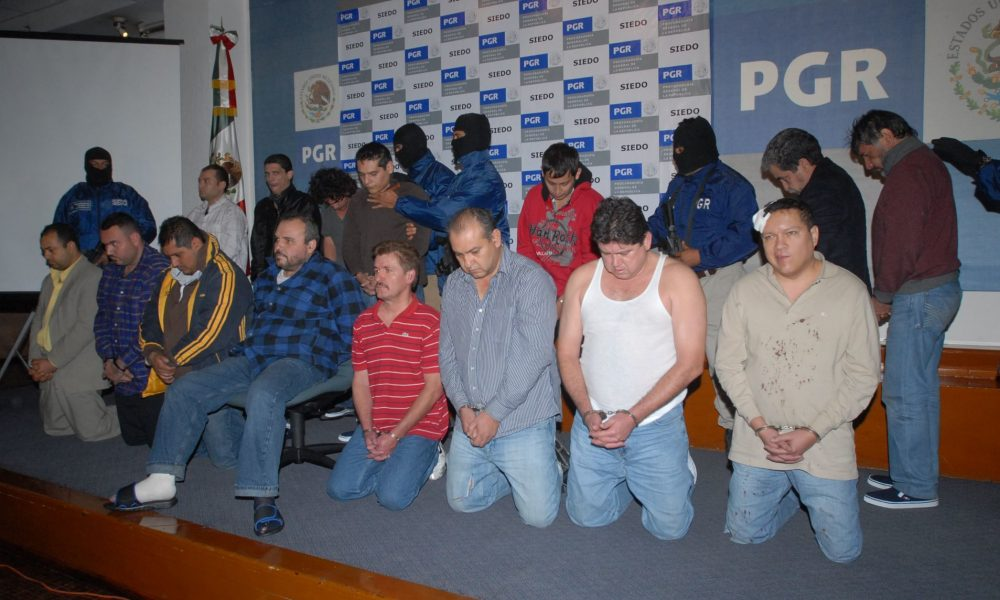
Zambada García was arrested on October 19, 2008 in Mexico City, along with 15 other people. He was first prosecuted for organized crime, aggravated homicide and possession of weapons for the exclusive use of the Armed Forces. Two years later, the Fifth Court for Federal Criminal Proceedings, based in the State of Mexico, sentenced him to formal imprisonment for another trial, criminal case 180/2009 for crimes against health, stockpiling weapons and cartridges for exclusive use of the Armed Forces.


He was then incarcerated in the high security federal prison of Matamoros, Tamaulipas.

However, both processes were pending resolution, since in April 2012 he was handed over to the United States. According to the bilateral extradition treaty, Zambada García must be returned to Mexico after paying his debts with the U.S. justice system.


Even though such proceedings are pending, unofficial sources from the Attorney General's Office (FGR) stated that King Zambada does not have any arrest warrants in Mexico.


The website Búho Legal, for its part, also has no data showing charges pending against Ismael Zambada's younger brother, El Mayo Zambada, although the legal consultation site clarifies the possibility that his defense requested the judge to keep his name private.


"There are occasions when it happens, but in this case we can't know if this person's case was kept confidential, or if there was never really an accusation against him by federal authorities in the country," said a spokesperson for Búho Legal.


The Minilic case is different, because the drug trafficker is accused of being the intellectual murderer of journalist Javier Valdez Cardenas, and there is an extradition request against him that the U.S. government refuses to grant, due to the fact that Lopez Serrano continues to collaborate as an informant with the U.S. government.


They wanted to kill me


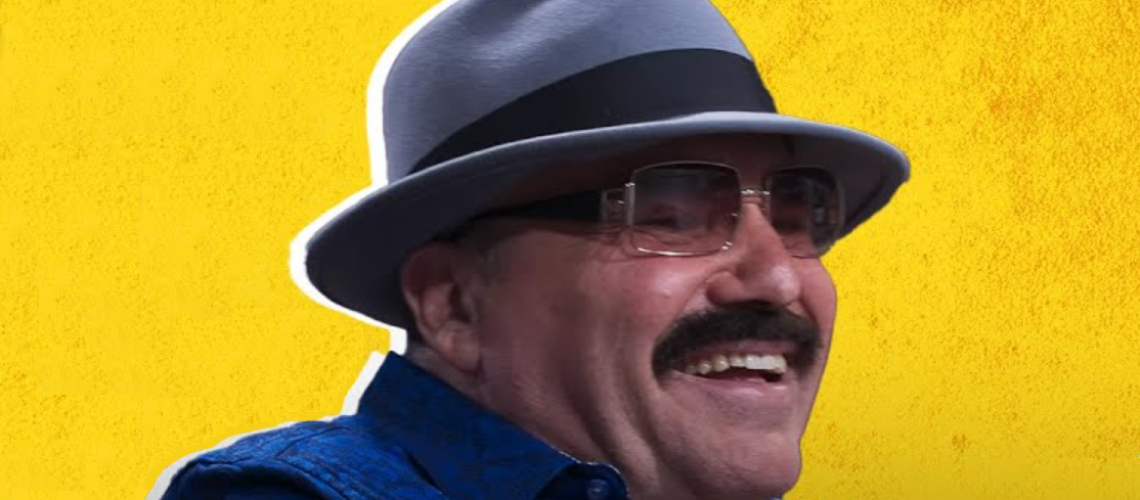
During the interview with Pepe Garza, Zambada García acknowledged having been one of the leaders of the faction commanded by his brother Ismael, but that after 12 years in prison, good behavior, and having collaborated with the U.S. government, he is now on parole "working honestly", but without specifying what he does.


"I don't want to go back to Mexico, because if I do, I would go back to the same thing. And the reality is that prison life is very hard. If someone has never lived it, they don't know what it's like. But I have, because I spent 12 years there, and I don't want to go back even one day," said Zambada García, during an interview that lasted for an hour and 20 minutes, and where he spoke about his intention to become a singer-songwriter.


THE KINGPIN ARRESTED IN MEXICO CITY. End of the race.

Dressed in a gray Porkpie hat, a royal blue shirt and a necklace with a Santa Muerte figure hanging from it, Zambada García admitted that the night of his arrest in Mexico City, they were actually going to kill him, because after the first shots were fired by a convoy of Siedo agents trying to enter his home, he recognized Sergio Villarreal Barragán, El Grande, among the soldiers, so he quickly tried to get to safety.


"My arrest was more like an attempted homicide. They were going to kill me. They never came to identify themselves as the government, nor did they show an arrest warrant, but they came firing bullets, left and right, because what they wanted was to kill me," recalls the former drug trafficker.


He adds: "And I realized and the truth is that I acted coldly, and when I saw that Arturo (Beltrán Leyva)'s people were with them, and how could I not recognize the Grande, I quickly asked for help from the local municipal police, and that's why they didn't kill me.


Zambada Garcia's account coincides with the testimony Villarreal Barragan gave during the trial against Genaro Garcia Luna, when he details how he participated in the operation to arrest King Zambada in October 2008.


"On orders from Arturo Beltrán Leyva, I infiltrated with other hitmen, with agents of the then Deputy Attorney General's Office Specializing in Organized Crime Investigations (Siedo), to capture the brother of Ismael Zambada.

to capture Ismael Zambada's brother," said El Grande.


During that operation, in addition to King Zambada, 15 other people were also arrested, among them his son Jesús Zambada Reyes, 21, and his nephew Juan José Parra Zambada, known as Juanjo.


Finally, the King was arrested in that operation and detained in the Altiplano prison in Almoloya, and a year later he was extradited to the United States where, after agreeing to collaborate with the U.S. government, a sentence of 20 years was reduced to 12 years, thanks to good behavior and negotiations made by his lawyer with prosecutors.


But it wasn't until a couple of years ago that prison agents told him to be careful, because they had intelligence information that the former Public Security Secretary had ordered him to kill him.


"The agents told me to be careful because Genaro had sent to kill me. It is difficult to know if that was true or not, since those who really know is the government. But they told me not to worry, because everything would be fine. Maybe they told me that so I wouldn't get scared," recalled El Rey.


Eventually, Zambada Garcia testified against Garcia Luna, and his testimony would have contributed to putting the former security secretary in prison for life.


According to El Rey, the formula to stay out of the spotlight was to keep a low profile, for which he had to change his name, a name, he explains, that he suddenly came up with.


"Everything I did was under that name, and I ended up being that name. I had a passport with that name, a visa, border crossing, so I could enter the United States whenever I wanted, and I traveled through Europe and South America. That's why, when I was captured, I (as Jesús Reynaldo Zambada García) didn't even have a traffic violation," said the drug trafficker.


Article published on November 12, 2023 in the 1085 edition of the weekly Ríodoce.


Source: RIODOCE 

Friday, October 6, 2023

Special Surveillance Assigned To 'El Roy' Allegedly Involved In The Disappearance Of The Five Young Men In Lagos De Moreno: One Of The Most Wanted Members Of CJNG Cartel

"Char" for Borderland Beat 

This article was translated and reposted PLANO INFORMATIVO INFORMACIÓN VERAZ Y CONFIABLE 


Reforma Agency | 05/10/2023 | 07:09


The man arrested for his alleged involvement in the disappearance of the five young men in Lagos de Moreno turned out to be one of the most wanted members of the Jalisco Cartel - New Generation (CJNG) in Los Altos and therefore has special surveillance in prison.


He is Rogelio "M," alias "El Roy," who appears in the top ranks of the structure that operates in the Altos Norte and Altos Sur regions, according to the organizational chart that Guacamaya Leaks hacked from the Sedena in 2022, based on the hierarchical diagram of the criminal group.


The subject, according to sources from the Jalisco Prosecutor's Office, could be related to other cases of deprivation of liberty in Lagos de Moreno and its surroundings.


The Ministerial Police captured him on Thursday, September 28 on J. Jesus Lopez Alvarez Street, near the intersection of the Lagos de Moreno-San Juan de los Lagos Highway.


"El Roy" - slim, 1.80 meters tall and with Santa Muerte or Holy Death, Saint Death tattoos on his neck and arm - is being held in custody at the Regional Integral Justice Center, where he is under focused surveillance.


Authorities link him to crimes of disappearances, mainly in the case of Roberto, Jaime, Uriel, Dante and Diego, who have not been located.


Yesterday, the Prosecutor's Office announced the arrest of Celestino "M", also linked to the case of the five friends. The subject was identified as one of the participants and an arrest warrant was served on him.


Following the capture of "El Roy", the investigation has leaned towards the hypothesis that members of the CJNG were involved in the disappearance, registered on August 11, and not those of the Sinaloa Cartel.


At the farm where a video of the youths was recorded, the letters MZ -- associated with Ismael "El Mayo" Zambada -- were found painted on the walls, but the initials CJNG were also discovered, which appeared to have been erased.


In the search for the five boys, the Special Prosecutor's Office for Missing Persons has found the remains of at least seven people in Colonia Orillas del Agua.


The brothers Emanuel and Enhau "A", as well as Valentin "S", were arrested for these last cases. Celestino would also be related to these findings.


Source: PLANO INFORMATIVO INFORMACIÓN VERAZ Y CONFIABLE 


 REGION ALTOS NORTH AND SOUTH CJNG CARTEL LEADERS 

LAGOS DE MORENO, JALISCO


Sunday, October 1, 2023

Mexican Mafia Fugitive "Evil," Who Controlled Ventura County Killed in Rosarito

"Socalj" for Borderland Beat


Martin Madrigal Cazares, known as "Evil," was a fugitive Mexican Mafia member who controlled Sureño gangs in Ventura County, California, from a base in Mexico. He was killed in Rosarito, Baja California last month. He had been arrested with another fugitive Mexican Mafia member and 9 others in Rosarito carrying weapons and drugs back in January 2023.

However, it seems he was released from custody since that time. His release and death have gone unreported in Mexico, with only the LA Times reporting on the incident.

Borderland Beat has received exclusive information and photographs surrounding his death.

Monday, August 7, 2023

The Life and Death of a Mexican Hitman Researching How Mexico Can Uproot the Scourge of Organised Crime

"Ms. H" for Borderland Beat

Note: This is an older article taken from Crisis Group, but it is one that I have continued to go back to. It is a timeless piece done by F. Ernst in 2018.

It’s 7pm on a Sunday, and night is falling in this Michoacán town. The heat of the day is past, and there’s a pleasant breeze. The first visitors to the park have left for dinner, but many hang around.

Around the park’s outer edges, teenagers stroll in two circular currents. The boys walk with their friends, in teams of two, three or four. The girls do the same, but in the opposite direction. So the circles intersect, inescapably, again and again. Boys and girls trade shy, longing glances. The lucky few get to hold hands or share a bench, words of affection and maybe a kiss. It’s a teenage ritual, here and in countless municipal parks across Mexico.

Thursday, June 8, 2023

We Who Are Not As Others

"Sol Prendido" for Borderland Beat


This is how family and friends of Cartel del Noreste members put photos on Santa Muerte altars. 

As a reminder that they were killed in confrontations with the government in Nuevo Laredo, Nuevo León and Coahuila.

Those scumbags don't even deserve to be remembered. How many innocent people didn't they kill, kidnap, etc.


Vivo En Marte

Monday, June 5, 2023

Ciudad Juárez, Chihuahua: Unknown Assailants Vandalize A Santa Muerte Shrine

"Sol Prendido" for Borderland Beat


Video translation is as follows:

Edgar: Little did we know that around the Camino Real Highway there was a place for the Santa Muerte, an altar. There the devotees brought money and other things. Unknown persons came to vandalize it though. Joana, you have the report. 

Joana: Edgar good evening. Acts of vandalism do not discriminate and on this occasion an altar dedicated to the Santa Muerte was affected. It is located on the Camino Real Highway and vandals came along to break its scythe. They came to open the altar because these are people who knew where the disciples who are truly devoted to her were putting their money. They knew where the money was placed for them. They opened it for the very purpose of taking their offerings.

Devotee: I placed her here on the Camino Real Highway because I had made a promise to her. Only she and I know what she fulfilled for me. And that is why she is here. So, I have no anger, I have no grudge against whoever did this to her. I hope that the money they took is used for something good, that they use it for something beneficial.

Joana: This altar is located on the Camino Real Highway, near the intersection of Calle Zoltepec. There the thieves took the money that the faithful leave to the Santa Muerte shrine. They also damaged the altar and the structure of the place. The faithful disciples were upset because they pointed out that there is no respect for the devotion of others. Now what is necessary will be done to protect this altar. And to try to prevent the looting and acts of vandalism.

Edgar: Here we can see the vandalism. Some will ask how is it possible for an altar of the Santa Muerte to be in a public place. Well, it's there. I don't know if the property where they placed this figure belongs to anyone. But it's there for all to see. And there are those who have those beliefs. Others will say that there is only one God. We will leave that up to you.


Canal 44

Sunday, May 21, 2023

Iván Guzmán, Prueba de Cargo - En Español

"HEARST", "Redlogarythm", and "Buggs" for Borderland Beat 


El siguiente texto forma parte de un contenido exclusivo al que Borderland Beat ha tenido acceso. Contiene cierta información nunca antes publicada que llegó a nosotros/as a través de una persona que se identifica con el alias de "Shelby" y de quien sabemos ha tenido conocimiento personal de los hechos a los que se hace referencia.


También publicamos una versión en inglés de este artículo para informar a los lectores de ambos idiomas.