Blog dedicated to reporting on Mexican drug cartels
on the border line between the US and Mexico
.

Showing posts sorted by date for query garcia luna. Sort by relevance Show all posts

Tuesday, July 21, 2026

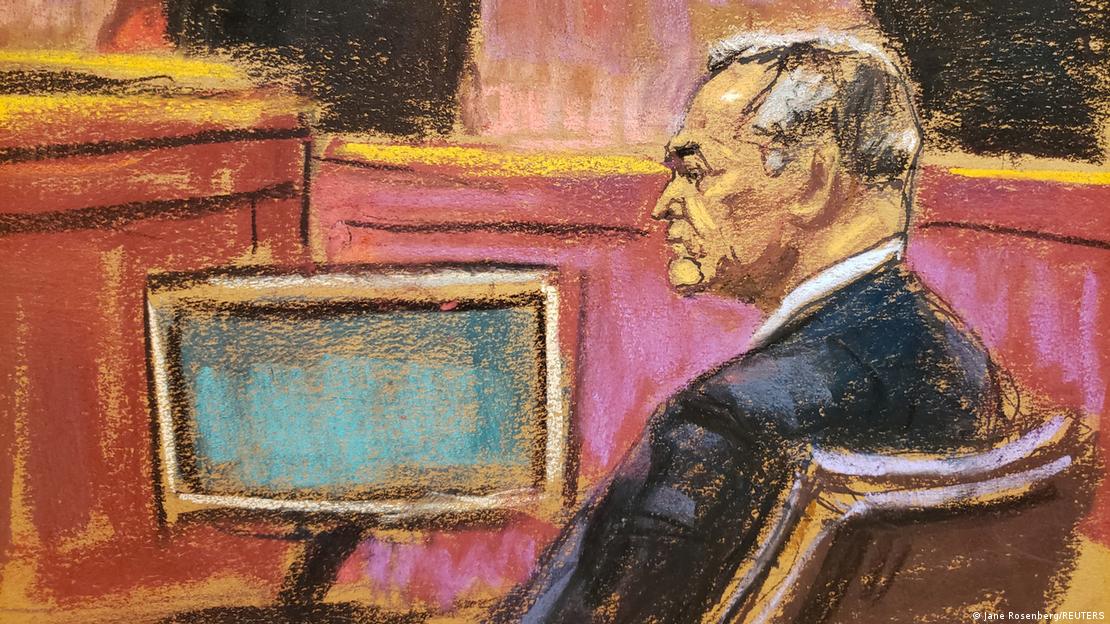
In Accepting Life Sentence, Cartel Boss ‘El Mayo’ Urges Young People Not to Follow His Path

Reposted from Mexico News Daily


Ismael “El Mayo” Zambada García, the Sinaloa Cartel co-founder who was arrested in 2024 after he was kidnapped in Mexico and flown to the United States, was sentenced to life in prison in the U.S. on Monday, 11 months after he pleaded guilty to drug trafficking charges.

Monday, February 24, 2025

Former BLO/H-2 Cartel Leader 'H3' Extradited to the US, Connected to General Cienfuegos Case

 "Socalj" for Borderland Beat


Jesus Ricardo Patron Sanchez, also known as “H-3,” “Diabolic,” “Vela,” “James Bond” and “Xmen,” was arraigned on February 22, 2025 at the federal courthouse in Brooklyn on an indictment charging him with leading a continuing criminal enterprise, participating in a large-scale narcotics distribution conspiracy and using one or more firearms in connection with narcotic offenses.

Tuesday, November 26, 2024

Sedena Deploys 860 Elements In Michoacan To Guarantee Lemon Production

 "Char" for Borderland Beat 

This information was posted by LA JORNADA 

WRITTEN BY: CESAR ARRELLANO GARCIA 

NOVEMBER 26, 2024


Apatzingán, Mich. The Secretariat of National Defense (Sedena) deployed 860 elements in six municipalities of Michoacán, including Apatzingán, Buenavista, Parácuaro, Múgica, Tepalcatepec and Aguililla, to guarantee the production and commercialization of lemons, threatened by extortion by members of organized crime, mainly by the Viagras cartel.

La Jornada visited the “Rancho Seco” orchard, the “La Luna” packing plant and El Tianguis Limonero, located between the town of Antunez and the municipalities of Apatzingan and Paracuaro, which were targets of extortion by organized crime. Producers were asked for up to 2 pesos for each kilo of packaged lemons.

However, President Claudia Sheinbaum Pardo committed to actions in favor of security in Michoacan municipalities where lemon production is the main economic activity.

Therefore, as of October 1, the 100-day plan of the Federal Administration was launched, with the aim of guaranteeing that the citrus production and commercialization chain develops in an environment of security and public peace.

According to the results of the citrus plan, from October 1 to November 25, 63 alleged members of organized crime have been arrested, 61 firearms, 383 magazines, 11,322 cartridges, 12 grenades, 28 vehicles were seized and 132 kilo 670 grams of marijuana and 980 grams of methamphetamine were seized.

“With the start of the current administration, strategies were implemented mainly related to the attention to the different problems in the country, mainly violence and insecurity. In Michoacán we are working with all the authorities: federal, state, armed forces, police, state and municipal public security. There are 64,111 hectares of lemons grown in the state. The state has the first place in lemon production. We have a register of 3,411 producers. There are 26 municipalities in the state that are dedicated to lemon production, but the concentration is in the six aforementioned municipalities of this hot land area,” said Brigadier General Eugenio Leonardo Lopez Arellanes, State Coordinator of the National Guard in Michoacan.

He indicated that 420 elements of the Armed Forces, National Guard participate, 360 elements of the Army, “we have 50 elements of the Secretary of Public Security of the State, Civil Guard is known, as well as 30 elements of Municipal Public Security. We do it in different routes established in the six municipalities, patrolling, visiting plants and orchards.

Likewise, military protection posts have been set up and personnel carry out security patrols along the lemon routes, visit packing plants and provide escorts for vehicles transporting lemons from the production fields to the storage places and marketing points, as well as for the transportation of lemons from the production fields to the storage places.

But not only that, during the operation the elements have managed to combat extortion, kidnappings, homicides and other crimes related to the production and commercialization of this product.

Hours earlier, the Sedena killed two alleged criminals and injured another, seized a vehicle and seized six weapons, the confrontation originated some 30 kilometers from the site.

Gerardo Zavala González, president of the Parácuaro Lemon Growers Association, said that among the main problems is that drivers transporting lemons to different states of the country are sometimes robbed. “One packer was robbed on the way from Morelia to Querétaro, that is what they face outside the municipality, being stopped and robbed. Another packer told me that he was also robbed in Maravatío. We are calmer with the presence of the National Guard, there is more security”.


Thursday, October 17, 2024

Joaquin Guzman No Longer in Federal Prison Custody as Ovidio Guzman Returns to Detention in Chicago

"Socalj" for Borderland Beat


Ovidio Guzmán was removed from the custody of the federal Bureau of Prisons on July 23, just two days before his brother Joaquín landed at a New Mexico airport along with "El Mayo" Zambada. He was being held at Chicago's Metropolitan Correctional Center awaiting trial following his extradition to the US last year. 

Absent from the BOP inmate locator for almost 3 months, Ovidio returned to the system this week. Seemingly switching places with his brother Joaquin Guzman-Lopez who surrendered and was being represented by the same attorney in the same courtroom as his brother.

Wednesday, October 16, 2024

Genaro Garcia Luna Sentenced to 38 Years in US for Protecting Sinaloa Cartel Traffickers

 "Socalj" for Borderland Beat

Genaro Garcia Luna, Mexico's Former Top Law Enforcement Figure Sentenced to 38 Years in US on Drug Trafficking & Bribery Charges.


Thursday, September 19, 2024

AMLO Blames The United States For The Ongoing Insecurity In Sinaloa

 "Char" for Borderland Beat 

This article was translated and reposted from LOS NOTICIERISTAS 

WRITTEN BY: TERY PEREZ 

SEPTEMBER 19, 2024 


Mexico City, Mexico - Andrés Manuel López Obrador, president of Mexico, considers that the United States is co-responsible for the ongoing insecurity in Sinaloa, due to the arrangement for the capture of Ismael 'El Mayo' Zambada. Is the United States in some way co-responsible for the violence in Sinaloa,” he was asked from afar in a ‘morning’ conference this Thursday.

“Yes, of course it is (sic) for having carried out that operation,” he responded.

“Nothing more than for them (the United States) to internationalize that they can't act like that, without taking the Mexican government into account,” he declared.

“That cannot be accepted,” he said.

Regarding the weight or influence of the upcoming U.S. presidential elections, the federal president limited himself to saying:

“What I can say is that there was an agreement, and due to that agreement, which we still do not know what it consisted of, under what conditions the agreement was made, it caused us in Sinaloa the confrontation that is taking place, which I hope because we are acting that soon there will be a return to normality”.

“I believe that they had been working on this for some time and they reached an agreement, in fact, they themselves have accepted, the Justice Department,” he said.

When asked if the case of García Luna is related to this agreement with the US authorities, AMLO pointed out:

“Yes, there is an interrelationship because before (previous governments) did not ask permission (US) for anything, then they went to the extreme that they trained in the United States, elements of the Navy to apply the policy of the US government in Mexico, in matters of security, from the US embassy they gave instructions so that the Mexican Army would act, it is public knowledge”.

AMLO considers the implementation of the operation for the surrender or capture of 'El Mayo' Zambada to be incorrect.

“It cannot be correct (the operation) because they murdered people, it was totally illegal and agents from the Justice Department (in the US) were waiting for Mr. 'Mayo', first there was violence, there were some people who lost their lives, well the former rector (Héctor Melesio Cuén) of the University (UAS) and then the aftermath of what is happening now (in Sinaloa),” he answered to a specific question.

“Of course the loss of a life is the saddest and most regrettable thing, but in their conception that life is not worth anything, what benefits, how does it (Zambada's arrest) help to stop the problem of drug addiction in the United States? In other words, with objectivity, with realism,” he questioned, reiterating that in the neighboring country the causes of drug addiction are neglected.

López Obrador recalled Julio Scherer's interview, in which 'El Mayo' assured that if he was captured or killed, there would be another to replace him, so the drug trafficking problem would not end.

López Obrador expects more information and 'an explanation' from the US on the arrest of 'El Mayo' Zambada
Previously AMLO was asked about the pending report with the details of the agreement for the arrest of 'El Mayo' Zambada.

To this, the chief executive stated that they are still waiting for the report from the U.S. government.

“It is that the Attorney General's Office (General of the Republic) has not received all the information on this matter, they made an agreement and did not inform us, and according to the Attorney General's Office the Justice Department was carrying out with one of the crime groups in Sinaloa, and they had agreements, they even released or gave a different status to one of the detainees (Ovidio Guzman) in the United States, at the same time they took another character (Zambada Garcia),” he explained.

“And that requires an explanation, because if we are now facing an unstable situation of confrontation in Sinaloa, it is because they made that decision and we do not agree that Mexico should be ignored, because we have the problem here,” he accused.

“Of course we are facing it, we are solving it, but in Sinaloa there was not the violence that there is now, nor is it as it is thought that it is completely out of control,” he insisted.

“But we have had to take special measures and move elements of the Armed Forces, and we have also lost officers who have been killed because of this special, extraordinary situation, because it is not the same when the Mexican state intervenes as when there is a completely irregular matter, when someone is kidnapped through an agreement and taken to the United States,” he explained.

AMLO questions the motives of the agreement for the delivery of 'El Mayo' and Joaquín Guzmán

The federal president questioned the real reason for the agreement that led to the capture of 'El Mayo' Zambada and Joaquín Guzmán López, son of Joaquín 'El Chapo' Guzmán.

“That (the implementation of the operation) does not convince us and we are asking for information, what was the agreement? And the cause to see that some people are of course dedicated to drug trafficking and the others as well,” he commented.

“And thinking about it this way, if it is really to avoid drug trafficking and that fentanyl continues to enter from Mexico, as it enters from Canada as it also enters directly to the United States, but let's see if it was that or if it was a decision taken as always, to demonstrate that the problem of fentanyl consumption is being taken care of just for propaganda,” he argued.

“What about us, the situation in Mexico?” he questioned.

“We don't see a plan that addresses the causes,” he said in reference to the drug addiction crisis in the United States.

He took the opportunity to reiterate the comparison of traditions in Mexican and U.S. families in terms of children in their youth.

AMLO assures that there is a respectful relationship with the U.S.

“In the case of the United States the relationship has to be good, for geopolitical reasons, because of the border 3,180 kilometers, 40 million Mexicans live, work for hours in the United States (sic) are sending to their brothers in Mexico 65 billion dollars, it is the main source of income in our country,” he said.

“We have to maintain a relationship of respect, of good neighborliness with the United States, the only thing is that it is understood that we are an independent country”, he stated.


Wednesday, September 18, 2024

Genaro Garcia Luna Writes His Letter Calling Out AMLO, Turned Down a Six Month Plea Deal

 "Socalj" for Borderland Beat


As we saw recently, "El Mayo" Zambada issued a statement via a letter through his lawyer Frank Perez detailing the events leading to and accusations against government officials.

Last year, Los Chapitos, issued a lengthy letter disputing various portions of the new superseding indictment against them, to which "El Mini Lic," provided Borderland Beat with exclusive rebuttals to their claims of innocence regarding fentanyl and certain deaths. Former Los Zetas leader "Z-40" wrote a letter denying that he is the same person authorities claim him to be.

The practice of drug lords penning letters to the media and US authorities to either proclaim their innocence, dispute allegations and indictments and spread propaganda about rival cartels and government officials is not a recent trend. 

Prime examples include "El Chapo" denying the charges laid out in a large Texas indictment in 2012 and a letter written by "La Barbie" accusing Mexican officials of collaborating with the cartels.

Friday, September 13, 2024

US Prosecutor Alleges "El Mayo" Ordered the Death of His Nephew "Cheyo Antrax"

 "Socalj" for Borderland Beat


Friday the 13th is the first appearance for Isamel "El Mayo" Zambada-Garcia in a New York federal courtroom after being transferred from El Paso, Texas. The scheduled initial hearing is in the same courtroom that saw former Sinaloa Cartel leader "El Chapo" receive a life sentence, and the same prosecutor has filed a letter with the Judge ahead of the hearing. The filing details the flight risks associated with Mayo and background on violent crimes and trafficking for his first New York hearing in order to ensure he is denied bond and not released before his trial.

Journalist Keegan Hamilton has highlighted some of the key points mentioned in the latest filing by US Attorney Breon Peace who also won convictions against Genaro Garcia Luna, and Joaquin "El Chapo" Guzman Loera.

Friday, September 6, 2024

"El Mayo" Agrees to New York Court Transfer

"Socalj" for Borderland Beat

Ismael Garcia Zambada, better known as "El Mayo" has agreed to move his case to New York after a federal judge had ruled the case should remain in El Paso. The federal judge denied the government's motion to transfer Zambada to New York from El Paso.

U.S. Attorney's Office filed a new motion Thursday, claiming Zambada and his attorney have agreed to move his case to New York. He was arrested on July 25, 2024 on a 2012 warrant issued in connection with a Western District of Texas indictment. In New York, the superseding indictment was filed in February of 2024.

Thursday, August 8, 2024

Judge Denies Garcia Luna a New Trial, States Luna Attempted to Bribe Fellow Inmates

 "Socalj" for Borderland Beat


García Luna tried to bribe fellow inmates into making false statements to support his bid for a new trial in a U.S. drug case, a judge found Wednesday in rejecting Genaro García Luna ‘s request.

García Luna, who once held a cabinet-level position as Mexico’s top public safety official, was convicted last year of taking payoffs to protect the drug cartels he was supposed to go after. He is awaiting sentencing and denies the charges.

Prosecutors discovered his alleged jailhouse bribery efforts and disclosed them in a court filing earlier this year, citing such evidence as a former cellmate’s handwritten notes and covert recording of a conversation with García Luna. His lawyers said the allegations were bogus and the recording was ambiguous.

But U.S. District Judge Brian Cogan found them believable. Judge Cogan also oversaw the trial of "El Chapo" and likely will as well for the future trial of Isamel "El May" Zambada Garcia.

Saturday, July 13, 2024

Osiel Cárdenas Guillén Incorrectly Reported as Being Released, the Former Gulf Cartel Leader is Still in US Prison

 "Socalj" for Borderland Beat

With Contributions from "Itzli" "Char" & "Enojon"

Recently, the news outlet Zeta Tijuana reported that the former leader of the Gulf Cartel and co-founder of the Los Zetas had already been released from USP Terra Haute Federal Prison in Indiana more than a month earlier than his scheduled release date of August 30, 2024.

However, Zeta Tijuana was accessing a Web 3 variation of the BOP Inmate Locator Registry, likely an outdated database on an internal or test server. That database showed his Release Date [future tense] as 07/01/2024. But his BOP Inmate Number 62604-079, still maintains his August release date on the official BOP website.

Saturday, May 4, 2024

Tsvia Kol Sentenced to 9 Years for Distributing Sinaloa Cartel Meth, No Murder Charges Yet

"Socalj" for Borderland Beat

Based on an NBC Miami Article by Tony Pipitone


A methamphetamine distributor connected by police to the Sinaloa cartel was sentenced Thursday to nine years in federal prison, but her alleged role in luring a drug courier to his murder by a cartel-connected hitman went unmentioned in open court.

The government has not explained why it did not arrest the distributor, Tsvia Kol, in July 2021, 16 months before the murder – when she admitted distributing 15 pounds of meth to coconspirators in violation of her 2020 cooperation agreement with the feds.

A federal agent would later testify he and other agents “completely shut off communications” with Kol when she did the July 2021 “deal on her own. She lied to us and we were out of it.”

She was never charged for the 15-pound shipment and was not arrested for possessing nearly two kilos of meth in 2020 until December 2022, the day after the body of 46-year-old Julio Gonzalez was found in a Miami Springs hotel room.

Friday, January 19, 2024

The Kid Killed By The Zambadas

"HEARST" for Borderland Beat


Only fools believe there are cartel groups which don’t harm the innocent but, well, that’s never really stopped those groups from trying to sell you that line.


The Zambada family, from the Sinaloa Cartel, has somehow developed the reputation of being less cruel than many of their peers. 


But there is an important long-forgotten and under-reported story of a young man that the Zambadas killed. And the government's official version of what happened quickly became a story that Time magazine noted “few in Mexico are buying.”


Monday, January 1, 2024

Borderland Beat’s Top Stories of 2023

Compiled by "Socalj"

From Borderland Beat Contributors


The year 2023 began with a heavy hit to Mexican drug cartels with the arrest of Ovidio Guzman-Lopez.

Since that time, fentanyl trafficking and border migration have become heavily politicized not only within the US and Mexico but internationally as well. Especially following the kidnapping and killing of American tourists, and new indictments against members of the Sinaloa Cartel's Los Chapitos faction. In response, 

The rest of the year included surprising headlines with the CJNG threatening Peso Pluma, the best-selling/charting regional Mexican singer. A Mexican city councilwoman was arrested, released, re-arrested, and charged with drug trafficking across the border into Texas. The children of "El Chapo" denied their involvement in trafficking fentanyl and issued a first-ever "ban" on the drug, responsible for over 100,000 deaths in the US. And the former chief of police once responsible for combatting drug cartels was convicted of not only being bribed but working hand in hand with high-level drug traffickers.

Below is our list of the most viewed articles of the year and important stories worth revisiting and following next year.

Friday, December 22, 2023

Woman Reveals What It Was Like To Work For 'Los Zetas'

"Sol Prendido" for Borderland Beat


A woman, known as "La China," recounts her experience working for Los Zetas, one of Mexico's most violent cartels.


Video translation is as follows:

Male newscaster: In the prisons of San Luis Potosí there is a civil association that helps women behind bars. They managed to document that at least 80% of the women are imprisoned for crimes linked to drug traffickers. Rocío López has the details. 

La China: I was imprisoned for the crimes of kidnapping, homicide, auto theft, criminal association, and weapons charges. I worked with a criminal group.

Rocio Lopez: 'I lived though four years of hell'. That’s how this woman nicknamed La China describes the experience of having worked for the Los Zetas, one of the most bloodthirsty cartels of the country. She lived in fear of being executed at any moment if she made a mistake. She also witnessed cold blooded murders. That's why the day she entered prison she was relieved.

La China: I'm going to be honest with you. I felt like my arrest was a salvation for me because I knew that sooner or later they were going to kill me. I have three children and I was in a financially bad situation. I was invited to work there because the pay was said to be very good. And so I started to work with them due to economic reasons and the fact that everything was so easy.

Rocio Lopez: The Nueva Luna civil association that supports incarcerated women in San Luis Potosi has documented that up to 80% of women in prison who are behind bars worked for drug traffickers.

Nueva Luna President Marcela Garcia: It’s normally through romantic affairs, amorous relationships, that these men who are involved in criminal organizations hook up with women.

Rocio Lopez: According to the association these women occupied minor positions in the criminal structure. They rarely achieved a position of being in charge of a place or leading a regional area. 

Nueva Luna President Marcela Garcia: They play the role of spies and drug dealers. In the case of kidnappings, they take care of the abducted individuals, they feed them. And in many cases there are often the ones who also collect ransoms generated from these kidnappings.

Rocio Lopez: What worries the civil organizations is that even though there haven’t been any cases found in which women are leading criminal gangs. The judges are sentencing them without giving any consideration to gender. 

Nueva Luna President Marcela Garcia: If you’re a woman the penalties are harsher if you commit this type of crime because you as a woman should be taking care of children.

Rocio Lopez: La China was sentenced to 49 years in prison. But she appealed and only served a 3 year sentence for home burglary.

La China: I have a lot of people pointing at me right now because they think I killed, that I participated in kidnappings. But that just wasn’t the type of work that I was doing. 

Rocio Lopez: The Nueva Luna association details that women are ensared or abducted by the cartels at an early age. Girls as young as 12 years old who live in marginalized areas who are fleeing violence in their homes are preyed upon. They are easy prey for criminals. 


Milenio  Nueva Luna

Saturday, December 16, 2023

Garcia Luna's Lawyer Requests Retrial Citing Witheld Evidence & Witness Perjury

"Socalj" for Borderland Beat


A former top Mexican law enforcement official convicted earlier this year on US charges that he took millions of dollars in bribes from drug traffickers is seeking a new trial, arguing he has come across evidence key witnesses lied on the stand.

Lawyers for Genaro Garcia Luna, who as public security minister from 2006-2012 led the country's fight against drug cartels, said in a court filing on Friday that they had also found evidence that prosecutors' cooperating witnesses had improperly communicated with each other before trial.

"Mr. Garcia Luna was convicted of charges of which he is innocent," his lawyers wrote in a memorandum filed in federal court in Brooklyn, where the trial was held in January and February. "Letting the verdict stand would be a manifest injustice."

Friday, December 1, 2023

Óscar Nava Valencia 'El Lobo' Released From Prison In the U.S.

"Sol Prendido" for Borderland Beat

El Lobo' coordinated the shipment and transportation of tons of cocaine from Central and South America to Mexico.

Nava Valencia began his criminal career in the 1990s.

After negotiating with US authorities and ratting out rivals and former allies - including former Secretary of Public Security Genaro Garcia Luna - Oscar Nava Valencia, the former leader of the Los Valencia or Milenio Cartel, was released from prison in the United States after 12 years of incarceration.

Judicial documents to which MILENIO had access reveal that El Lobo left prison on November 27, after having his sentence reduced twice.

In addition, it is likely that Nava Valencia will remain in the United States as part of the protected witness program, along with his wife and children, who are already in that country; according to the agreement signed with the Department of Justice, El Lobo will remain at the disposal of the authorities to cooperate in future cases, as he did with Genaro García Luna and one of Los Cuinis.

El Lobo's path from prison to freedom was based on his ability to put his enemies and former associates in Washington's crosshairs. It was on June 15, 2012 when he signed one of the best deals of his life: he pleaded guilty to conspiracy to distribute cocaine, and thus avoided another charge of direct cocaine distribution in the United States. He opened the way to judicial cooperation as a snitch.

As a result, on January 7, 2014, he was sentenced to 25 years in prison, but then his cooperation began to pay off: he obtained the benefit of a sentence reduction to 200 months, just over 16 years, and the year he spent in prison in Mexico before being extradited was taken into account.

On November 15, MILENIO reported that a new motion for a sentence reduction had been filed, without knowing if it was on behalf of the defense or the prosecution, but the request has already borne fruit. His release, scheduled for April 2024, was brought forward to November 2023.

As MILENIO has been able to confirm, since he was arrested in Mexico, Nava Valencia knew he would become a whistleblower for the U.S. authorities. However, in order not to arouse suspicion among the Milenio Cartel, he tried to avoid extradition without much effort. Thus, in January 2011, he was in the hands of the United States.

"He made the decision while he was in Mexico that he was going to cooperate with the US government as much as possible," El Lobo's lawyers detailed during his 2014 sentencing hearing.

His defense pushed for his two sentence reductions on the grounds that he had been a high-profile and relevant cooperating witness, but also that he was remorseful for what he had done. He even claimed that in prison he had taken all the Bible courses available to him and went to mass.

"All of that he has done with the goal of becoming a better man and assuming that, when he is released, he will assume the role as head of his family, who will help him in improving his life and also to live a good life," his defense assured when he was first sentenced.

The origins of the capo

Originally from Michoacán, he was the leader of Los Valencia or the Milenio Cartel since 2003, following the arrest of his uncle Armando Valencia Cornelio, who founded the organization in the 1990s. He was a close operator of Ignacio Coronel, and remained on Chapo Guzman's side after the breakup of the Sinaloa Federation.

El Lobo coordinated the shipment and transportation of tons of cocaine arriving from Central and South America to Mexico to the port of Manzanillo, Colima, and then to the United States until October 28, 2009, when he was arrested in a federal operation in Guadalajara, Jalisco.

After his fall in 2009, Erick Valencia Salazar, El 85, was left in charge of the cartel, which fractured into two factions, the Jalisco New Generation Cartel and the Resistance. The rest is history. Today, the CJNG disputes control of the trafficking of synthetic drugs such as methamphetamine and fentanyl with the Sinaloa Cartel.

El Lobo was part of high-profile cases as a collaborator. One of them was testifying against former Public Security Secretary Genaro Garcia Luna earlier this year in Brooklyn, New York.

During the trial, in front of the former chief of police of the Calderon era, El Lobo assured that he witnessed at least three meetings between Garcia Luna and criminal leaders. First in 2006 to receive $2.5 million, collected by Arturo Beltran Leyva, El Barbas, during the existence of the Sinaloa Federation, to maintain greater control of the territories.

In 2007, in Cuernavaca, when he was summoned by El Barbas to give explanations for the seizure of a shipment of cocaine belonging to the Beltran Leyvas.

And in 2008, in a car wash in Guadalajara, when El Lobo personally said he paid 3 million pesos to García Luna and his right-hand man, Luis Cárdenas Palomino, head of the Police Intelligence division of the now defunct Federal Police, for protection.

In another case, in Washington, he testified against Gerardo González Valencia, one of the leaders of Los Cuinis. He told how, together with his brothers José and Abigael, they operated the trafficking of tons of cocaine provided by Colombian sources. In addition, as MILENIO has been able to find out, he was part of the construction of a criminal case in Chicago, Illinois, although it is not known precisely which one.

Nava Valencia is free, waiting to collaborate against the many targets he has snitched on since arriving in the United States, where the Justice Department is actively working to build new drug trafficking cases, with the help of El Lobo's howl.


Milenio

Wednesday, November 15, 2023

The False 'Gringo' Justice System: By Ríodoce

"Char" for Borderland Beat 

This article was translated and reposted from RIODOCE 


The United States extradited 'Rey' Zambada and 'Minilic' to punish them for their crimes, but instead negotiated with them and released them; in Mexico, their crimes remain unpunished.

The appearance of drug traffickers such as Jesus Reynaldo Zambada Garcia, Rey, and Damaso Lopez Serrano, the Minilic, giving interviews to broadcasters and journalists, shows how the US justice system really works, because from being among the most wanted, today both drug traffickers work and walk free in the streets of the United States, under the label of being on parole.

Luis Astorga, professor at the National Autonomous University of Mexico (UNAM), considered that for the United States there are more important, emblematic and mediatic cases than the cases of Zambada García and Minilic, which did not represent the trophies that other drug traffickers are for that country.

"Some of those cases will never be released, others will, if after many years their information they gave was profitable; and the least will undoubtedly be released in a short time, of course, as long as their testimonies are solid to sink drug traffickers who will undoubtedly be the biggest trophies," said Astorga, referring to Joaquin, El Chapo Guzman and his sons, who, in the opinion of other analysts, represent a political medal for U.S. officials.

Two weeks ago, López Serrano gave separate interviews to journalists Anabel Hernández and Luis Chaparro, while King Zambada gave it to broadcaster Pepe Garza, during a program for his Youtube channel.

EL 'MINILIC'.

The interviews caused outrage among journalists and security analysts who criticized the U.S. government, which always sold the idea that these drug traffickers had done a lot of damage and that they would be judged with the full weight of the law when they were in its power, to finally shelter them for collaborating with them, with the understanding that they would collaborate to sink drug traffickers of their own group that the government considered more emblematic.


"It is a transaction that the United States carries out with drug traffickers, and it does so because these are its rules of the game. And they are rules that the Colombians understood. Now that possibility is open to the Mexicans. Afterwards, they will see if those narcos write books, corridos and live off their royalties," said the researcher, author of El siglo de las drogas (The Century of Drugs).


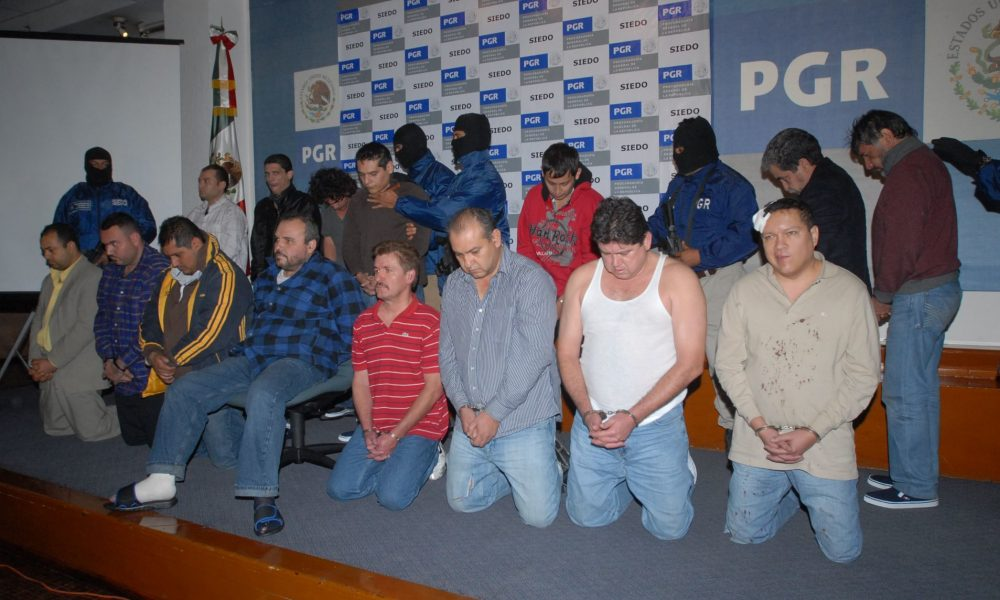
Zambada García was arrested on October 19, 2008 in Mexico City, along with 15 other people. He was first prosecuted for organized crime, aggravated homicide and possession of weapons for the exclusive use of the Armed Forces. Two years later, the Fifth Court for Federal Criminal Proceedings, based in the State of Mexico, sentenced him to formal imprisonment for another trial, criminal case 180/2009 for crimes against health, stockpiling weapons and cartridges for exclusive use of the Armed Forces.


He was then incarcerated in the high security federal prison of Matamoros, Tamaulipas.

However, both processes were pending resolution, since in April 2012 he was handed over to the United States. According to the bilateral extradition treaty, Zambada García must be returned to Mexico after paying his debts with the U.S. justice system.


Even though such proceedings are pending, unofficial sources from the Attorney General's Office (FGR) stated that King Zambada does not have any arrest warrants in Mexico.


The website Búho Legal, for its part, also has no data showing charges pending against Ismael Zambada's younger brother, El Mayo Zambada, although the legal consultation site clarifies the possibility that his defense requested the judge to keep his name private.


"There are occasions when it happens, but in this case we can't know if this person's case was kept confidential, or if there was never really an accusation against him by federal authorities in the country," said a spokesperson for Búho Legal.


The Minilic case is different, because the drug trafficker is accused of being the intellectual murderer of journalist Javier Valdez Cardenas, and there is an extradition request against him that the U.S. government refuses to grant, due to the fact that Lopez Serrano continues to collaborate as an informant with the U.S. government.


They wanted to kill me


During the interview with Pepe Garza, Zambada García acknowledged having been one of the leaders of the faction commanded by his brother Ismael, but that after 12 years in prison, good behavior, and having collaborated with the U.S. government, he is now on parole "working honestly", but without specifying what he does.


"I don't want to go back to Mexico, because if I do, I would go back to the same thing. And the reality is that prison life is very hard. If someone has never lived it, they don't know what it's like. But I have, because I spent 12 years there, and I don't want to go back even one day," said Zambada García, during an interview that lasted for an hour and 20 minutes, and where he spoke about his intention to become a singer-songwriter.


THE KINGPIN ARRESTED IN MEXICO CITY. End of the race.

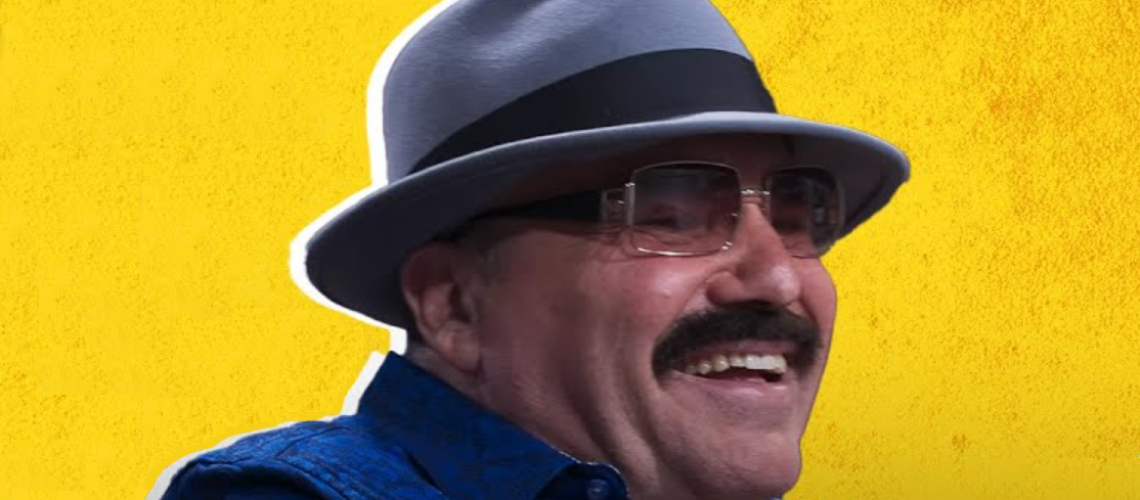
Dressed in a gray Porkpie hat, a royal blue shirt and a necklace with a Santa Muerte figure hanging from it, Zambada García admitted that the night of his arrest in Mexico City, they were actually going to kill him, because after the first shots were fired by a convoy of Siedo agents trying to enter his home, he recognized Sergio Villarreal Barragán, El Grande, among the soldiers, so he quickly tried to get to safety.


"My arrest was more like an attempted homicide. They were going to kill me. They never came to identify themselves as the government, nor did they show an arrest warrant, but they came firing bullets, left and right, because what they wanted was to kill me," recalls the former drug trafficker.


He adds: "And I realized and the truth is that I acted coldly, and when I saw that Arturo (Beltrán Leyva)'s people were with them, and how could I not recognize the Grande, I quickly asked for help from the local municipal police, and that's why they didn't kill me.


Zambada Garcia's account coincides with the testimony Villarreal Barragan gave during the trial against Genaro Garcia Luna, when he details how he participated in the operation to arrest King Zambada in October 2008.


"On orders from Arturo Beltrán Leyva, I infiltrated with other hitmen, with agents of the then Deputy Attorney General's Office Specializing in Organized Crime Investigations (Siedo), to capture the brother of Ismael Zambada.

to capture Ismael Zambada's brother," said El Grande.


During that operation, in addition to King Zambada, 15 other people were also arrested, among them his son Jesús Zambada Reyes, 21, and his nephew Juan José Parra Zambada, known as Juanjo.


Finally, the King was arrested in that operation and detained in the Altiplano prison in Almoloya, and a year later he was extradited to the United States where, after agreeing to collaborate with the U.S. government, a sentence of 20 years was reduced to 12 years, thanks to good behavior and negotiations made by his lawyer with prosecutors.


But it wasn't until a couple of years ago that prison agents told him to be careful, because they had intelligence information that the former Public Security Secretary had ordered him to kill him.


"The agents told me to be careful because Genaro had sent to kill me. It is difficult to know if that was true or not, since those who really know is the government. But they told me not to worry, because everything would be fine. Maybe they told me that so I wouldn't get scared," recalled El Rey.


Eventually, Zambada Garcia testified against Garcia Luna, and his testimony would have contributed to putting the former security secretary in prison for life.


According to El Rey, the formula to stay out of the spotlight was to keep a low profile, for which he had to change his name, a name, he explains, that he suddenly came up with.


"Everything I did was under that name, and I ended up being that name. I had a passport with that name, a visa, border crossing, so I could enter the United States whenever I wanted, and I traveled through Europe and South America. That's why, when I was captured, I (as Jesús Reynaldo Zambada García) didn't even have a traffic violation," said the drug trafficker.


Article published on November 12, 2023 in the 1085 edition of the weekly Ríodoce.


Source: RIODOCE 

Capo 'El Lobo' Valencia, Witness Against Garcia Luna, Could Get Out Of Prison Early

"Sol Prendido" for Borderland Beat

Oscar Nava Valencia, leader of the Milenio Cartel, had pleaded guilty to cocaine trafficking in 2012.

Óscar Nava Valencia, El Lobo, a witness presented by US prosecutors to testify in the trial against Genaro García Luna, a former official of Felipe Calderón's six-year term, could be released from prison before serving his sentence in the United States.

The former leader of the Milenio cartel is looking for his active collaboration with U.S. authorities in cases such as that of former Public Security Secretary and one of the leaders of Los Cuinis, Gerardo González Valencia, to pay off.

Garcia Luna received millions of dollars from the two most powerful Mexican cartels.

Genaro Garcia Luna

According to the U.S. Federal Bureau of Prisons, Nava Valencia would be released from prison in April 2024, that is, in less than 5 months, after having received in 2014 a 25-year prison sentence after reaching a collaboration agreement which was reduced to 200 months, just over 16 years, in 2019. In addition, the year he spent in prison in Mexico was taken into account.

However, this November 15, a motion for a sentence reduction was filed, which although it is not known if it was filed by the prosecution or Nava's defense, would imply reducing his sentence again so that he could be released as soon as possible.

Gerardo Gonzalez Valencia

El Lobo Nava had pleaded guilty to cocaine trafficking in 2012. As the leader of the Milenio Cartel, in addition to running a multi-million dollar drug trafficking business, he had contact with the most recognized Mexican drug lords, such as the Beltran Leyva brothers and Joaquin El Chapo Guzman. He was arrested in Mexico at the end of 2009 and shortly after a year, extradited to the United States.

At the beginning of 2023, he reappeared on the national scene when he was part of the group of witnesses that the US prosecution used against Genaro García Luna, for conspiracy to traffic cocaine.

He said he witnessed at least three meetings between García Luna and criminal leaders. First in 2006 to receive 2.5 million dollars, collected by Arturo Beltrán Leyva, El Barbas, while the Sinaloa Federation existed, to maintain greater control of the territories: "the first time was in 2006, we had to collaborate, to make an agreement between all of us".

Arturo Beltrán Leyva

Then in 2007, in Cuernavaca, when he was summoned by El Barbas to explain why drugs belonging to the Beltrán Leyva family had been seized.

"We met in Cuernavaca with Arturo Beltrán and Genaro García Luna to find out what happened (...) I gave him cash. More than 10 million pesos," said El Lobo, in order to receive the report of the seizure and thus not have problems with his Colombian partners who were claiming for the loss of their cocaine.

And finally in 2008, in a car wash in Guadalajara, when El Lobo personally claims to have paid 3 million pesos to García Luna and his right-hand man, Luis Cárdenas Palomino, head of the Police Intelligence Division of the now defunct Federal Police, for protection.

Luis Cárdenas Palomino.

He also saw how the Gonzalez Valencia brothers, who would later lead Los Cuinis, the financial arm of the Jalisco New Generation Cartel (CJNG), operated the trafficking of tons of cocaine, as he testified in the trial against Gerardo Gonzalez Valencia.

Nava Valencia could be deported after his release, however, having been a cooperating witness for the US government, he could also enjoy protection benefits, his family could also benefit from this, in US territory. In the end, it will be up to a federal judge to determine if El Lobo will be released from his incarceration sooner.


Milenio

Thursday, October 26, 2023

Omar Garcia Harfuch Received Bribes, Confesses "Mini Lic"

"Char" for Borderland Beat 

This article was reposted and translated from DW MINDS


In an exclusive interview, the former member of the Sinaloa Cartel's top leadership assures that García Harfuch received bribes from the criminal organization and stole two million dollars from his father, Dámaso López Núñez.


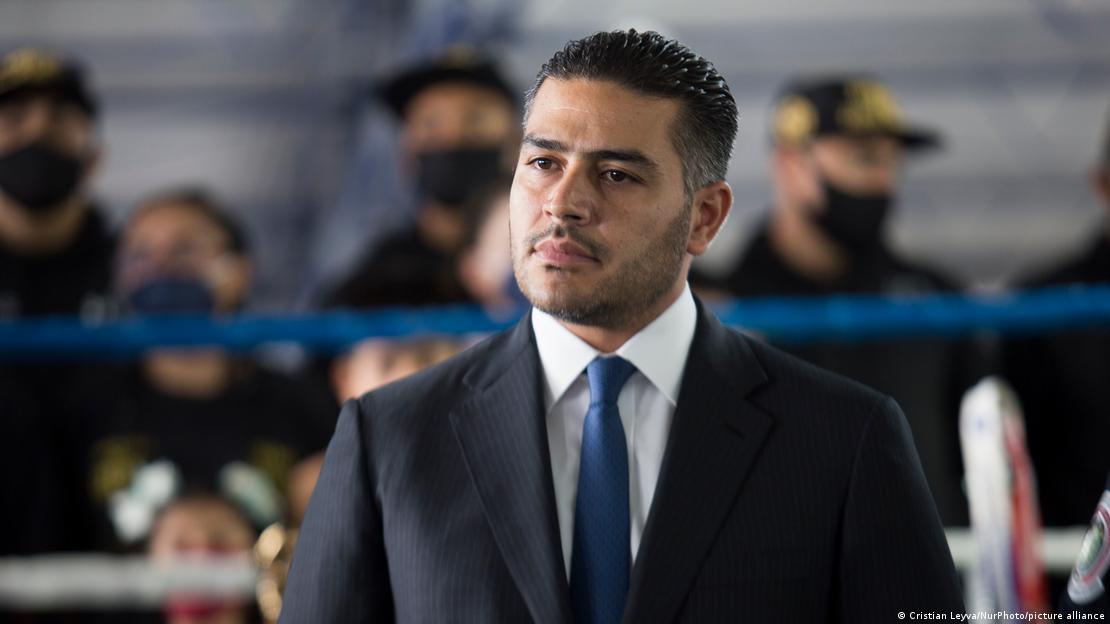
Omar García Harfuch, former Security official and aspiring candidate for Mexico City's Chief of Government


WRITTEN BY: ANABEL HERNÁNDEZ 


Dámaso López Serrano, alias "Mini Lic," who became one of the main directors of the Sinaloa Cartel, friend, partner and rival of the criminal group "Los Chapitos," made up of the sons of his compadre Joaquín Guzmán Loera, alias "El Chapo," confessed publicly. 

In an exclusive interview that I conducted with him on October 1 in a US city, he stated the role that Omar García Harfuch played for the Sinaloa Cartel when he was head of the Criminal Investigation Agency (AIC) during the six-year term of Enrique Peña Nieto. López Serrano accuses García Harfuch of receiving a bribe from "Los Chapitos" to arrest his father Dámaso López Núñez, alias "El Licenciado," who was "El Chapo's" right-hand man for more than 16 years.

"Mini Lic", currently a collaborating witness for the US Department of Justice and one of the key pieces in the judicial processes opened in that country against Ivan, Alfredo, Ovidio and Joaquin Guzman, the criminal quartet of brothers better known as "Los Chapitos," claims that in the operation carried out in 2017 by the AIC in Mexico City to arrest his father, at least two million dollars were stolen from him.

After investigating and seeking to corroborate the version of "Mini Lic", DEA agents assigned at that time to the US embassy in Mexico, confirmed directly to me this week that there are recordings of communications tapped by the DEA to Mexican criminal groups in which they detected a modus operandi of Garcia Harfuch and his team to keep money and drugs found in operations carried out by the AIC with intelligence information shared by the US government.

Until a few weeks ago García Harfuch was the Secretary of Citizen Security of Mexico City appointed by the Chief of Government Claudia Sheinbaum, who is the virtual candidate of the official party Movimiento de Regeneración Nacional (Morena) for the presidency of the Republic. Now García Harfuch is seeking to be Morena's candidate to compete for the head of government of the Mexican capital in the 2024 elections.

Confessed and sentenced

Born on November 23, 1987, "Mini Lic" confesses that from 2005 to 2017 he was part of the Sinaloa Cartel. His father Dámaso López Núñez, alias "El Licenciado," was "El Chapo's" right-hand man for 16 years, and that is how he entered the world of drug trafficking. His criminal career ran parallel to that of "Los Chapitos", whom he had known since his adolescence.

In criminal records filed in the Southern District Court of California and the Eastern District Court of Virginia, Lopez Serrano was accused of trafficking tons of cocaine, methamphetamine, and heroin into the United States from 2005 until 2016, charges to which he pleaded guilty in 2018 in California court. After making a plea deal and cooperating intensely, he was given a brief 5-year prison sentence.

He was released in 2022 and is on probation. "I am a cooperating witness, I contributed to the elaboration of accusations against some of the leaders of the cartel of which I was a part and I find myself as a man who has been tried, prosecuted, and has already served his sentence," he says in the interview I conducted with him.

His contributions to the U.S. government are considered so credible in that country that they were included in the extradition request for Ovidio Guzmán, alias "Ratón", granted by the Mexican government on September 15.


The war with "Los Chapitos

He points out that since he was 15 years old he lived with Ivan, Alfredo, Ovidio and Joaquin Guzman. At first they were just party companions, then partners in drug trafficking. He is aware of the evolution of "El Chapo's" sons from being narco-juniors to becoming a criminal group, which according to the US government is the most powerful faction within the Sinaloa Cartel.

"Mini Lic" affirms that the power of "Los Chapitos" has been founded on terror and corruption at all levels of government. He confesses that he himself when he was part of the criminal organization, paid bribes to authorities, which he says is indispensable to be able to operate.

-What did you do with your drug money? Tell me five things you spent that money on, in order of importance.

-In musical groups, alcohol, buying property, weapons, and equipment for my people, I think those four things. But what I spent all the money on was paying the government, but that's something I had to do, yes or yes.

"In Sinaloa, the cartel is in charge, it puts the governor, municipal presidents, senators, deputies, and trustees in charge," he said emphatically.

After Guzmán Loera's extradition to the United States in January 2017, a month later a dispute broke out with "Los Chapitos" for control of the criminal faction. 

"Mini Lic" claims that "El Chapo's" sons not only wanted him and his father out of the drug trafficking business but wanted to exterminate them.

His father was arrested in May 2017 by the Mexico Attorney General's Office's AIC in a luxury apartment building located in Mexico City's Anzures neighborhood. The AIC was headed by García Harfuch, who was in the post from November 2016 to May 2019, according to records of the Public Function Secretariat.

According to published news reports about the capture, on the same day, an operation was carried out in the Azcapotzalco delegation, also in Mexico City, where Víctor Geovanni González Sepúlveda "El Chómpiras," who they said was López Núñez's financial operator, was arrested.

When "Mini Lic" received information that "Los Chapitos" wanted to assassinate him, he decided in July 2017 to turn himself into US justice.

Garcia Harfuch is not Batman, he is worse than The Joker.

- What have been your family's experiences around this police chief Omar García Harfuch? Is he an honest cop?

-No.

-Is he more Joker than Batman," I asked him, picking up on the propaganda that tries to paint the police chief as if he were the comic book hero.

-It's worse because Joker is bad and pretends to be bad, he never says he's good, but this one? He was the one who captured my dad for a bribe from Los Chapitos, he also arrested my mom, he planted drugs on them. He stole from my dad.

-How much did he steal from him?

-Approximately two million dollars.


-Where was this money?

-That money was divided between my dad's apartment and the place where they arrested one of my dad's workers (El Chómpiras), I think it was in Azcapotzalco. When they arrested my dad, he asked him to turn me in, to give him my location so he could 'protect' me because Los Chapitos were going to kill me. It was someone important in the operation, to tell them where I was, because they knew I was in Mexico City, that they could protect me; on the other hand, if they found me Los Chapitos were going to kill me. My father did not agree.

"Later I learned from government sources that (García) Harfuch was pressuring them to prosecute my mother for the drug deal," added "Mini Lic.

Later, informants within the AIC informed him "that Garcia Harfuch's intention was to arrest my father and kill me, that this was the agreement he had reached with Los Chapitos. That he was going to pretend that I defended myself, that I attacked them, that I confronted them and they were going to kill me."

"Approximately a year before, through a person I had working in Mexico City, he told me that (Garcia) Harfuch wanted to collaborate with us, that he could help us a lot because he was in the position that Tomás Zeron (former head of the AIC) had before and that he was very important, that he could help us a lot by passing us information, operations and capturing or eliminating enemies.

"My father didn't want to see him or to be approached by him, he just said no, that it was too much of a commitment and that for the moment he wasn't involved".

Was he asking for something in particular, I asked, referring to Garcia Harfuch.

-To begin with, he was asking for a meeting and obviously money, he only offered his services but we never accepted, neither the meeting nor the talks. That was it.

"Mini Lic" states that Ivan Guzman Salazar, leader of "Los Chapitos," asked his partner, drug trafficker Gabriel Valenzuela, for two million dollars to pay the bribe to Garcia Harfuch to arrest "El Licenciado". Of that money, it is said that 800 thousand dollars were paid to the head of the AIC, and 600 thousand dollars to "El Pollito" who was "El Licenciado's" secretary and betrayed him by revealing his whereabouts. "El Chapito" kept 600 thousand dollars. When Valenzuela discovered that Ivan kept part of the money, he got angry with Ivan. 

-The money they steal from his father, do you know how they steal it?

-My father's secretary, his employee who worked as his secretary in Mexico City, when he was in prison, was the one who told us if they (the AIC) had presented the money, we said no. We told him they had not.

The two million dollars found in the apartment and in Azcapotzalco were not presented to the PGR as part of the seizure.

La Barbie denounced García Luna at the time.

This is not the first time a drug boss has revealed police complicity. In 2012, from a Mexican jail, Edgar Valdez Villarreal, alias "La Barbie", a member of the Sinaloa Cartel on behalf of the Beltrán Leyva faction, sent me a letter whose contents I published as front page news in the newspaper Reforma, where he confessed to having paid bribes to the head of the federal Public Security Secretariat, Genaro García Luna, Luis Cárdenas Palomino, Ramón Pequeño and several police commanders.


At the time, the reaction of the police chiefs was to say that "La Barbie" was lying and said this in retaliation because they had captured him. This year in the Eastern District Court of New York it was confirmed that the accusation was true. Garcia Luna was found guilty of drug trafficking and of having received millions in bribes from members of the Sinaloa Cartel in exchange for protection. All the officials pointed out by "La Barbie" were identified by the NY Prosecutor's Office as part of the criminal network of corrupt police officers.

DEA confirms information

Given the seriousness of the accusations made by "Mini Lic" after the interview, I sought to confirm the information. A DEA agent active at the time in Mexico on condition of anonymity because the case could not yet be discussed officially confirmed the modus operandi described by Lopez Serrano.

"In 2017 and 2018 we had the phones of a criminal group in Michoacán hung up, they were dedicated to drug transport and money laundering. In the calls recorded during the intervention people spoke that AIC agents seized the money, but when we asked AIC about the money seized they said they did not go," the US official said.

"Garcia Harfuch and his group were stealing their shipments, in this case, it was money. It happened twice and we no longer trusted them with intelligence." "It was more than three million dollars each time," he detailed.

"There was also an informant who said that AIC was stealing cocaine shipments and then selling it," he added.

Another agent who knew the details of López Núñez's arrest said that they also knew about the theft of money from that drug trafficker by García Harfuch and his team.

Black History

For more than 16 years I have investigated the group of corrupt police headed by Genaro García Luna, former Secretary of Federal Public Security during the six-year term of Felipe Calderón, and Luis Cárdenas Palomino, García Luna's right-hand man, who at the time was the Regional Coordinator of the Federal Police.

During that six-year term, I revealed that both worked for the Sinaloa Cartel and that they even obtained drugs in the operations that the same group of police officers then trafficked. Years later, the U.S. government accused both officials of drug trafficking and of receiving millionaire bribes from the Sinaloa Cartel and the Beltran Leyva faction in exchange for protection.

In this space for the past three years, I have pointed out that Garcia Harfuch was part of the team closest to Cardenas Palomino. He joined the PF in 2008 thanks to him even though he had no capacity. I documented that in the PF he did not pass his confidence control exams and that in the polygraph exam - lie detector - he showed signs of falsehood when he was asked if he had any links with a criminal group and if he had consumed drugs. I have documented that he was commander of the PF in Guerrero when commanders of that corporation, of which he was the superior chief, participated in the attack against the Ayotzinapa normalistas and in their disappearance.

As if that were not enough, I obtained official documents that prove that the Internal Affairs Unit of the PF carried out an investigation and discovered that during the time when García Harfuch was the head of that corporation in Guerrero, several of its members were involved with organized crime. In spite of everything, as was the case in the García Luna era, the government in office headed by Morena has covered it up.