![]() |
The report cited data from the Chinese government's State Taxation Administration website, which listed certain chemicals for rebates up to 13%. It additionally currently subsidizes 2 fentanyl precursors used by drug cartels - NPP and ANPP, it said.
![]() |
Four of the individuals were Chinese: Hongfei Wang (王洪飞), Yaqin Wu (吴雅琴), Yonghao Wu (吴永昊) and Huatao Yao (姚华涛) and one was Guatemalan: Ana Gabriela Rubio Zea. Both companies were also Chinese: Suzhou Xiaoli Pharmatech Co. Ltd. and Wuhan Shuokang Biological Technology Co. Ltd.
According to a press release made public on the same day, the individuals and companies were sanctioned for their role in the supply of precursor chemicals -specifically N-BOC-4-Piperidone- used for fentanyl manufacturing. In some cases the precursors were shipped from the People´s Republic of Chine (PRC) and shipped firstly to Guadalajara, Jalisco, from where they were re-shipped to the State of Sinaloa. The deals between both parties -Chinese producers and Mexican clients- were facilitated through a Guatemalan intermediator -Ana Gabriela Rubio Zea- who was in charge of introducing the precursors into Mexico hiding them in containers and disguising their illicit nature as if they were part of food and legal chemical shipments.
Interestingly enough, the OFAC also sanctioned a Bitcoin address owned by Wang Hongfei -3PKiHs4GY4rFg8dpppNVPXGPqMX6K2cBML- which was used for receiving payments on the behalf of Mexican clients. This has turned out to be a considerably important event since it is the first time that a specific Bitcoin address is publicly associated to the activity of Mexican organized crime.
Nevertheless, in order to fully understand the complexity and importance of this network we must take a step back and analyze it from a wider perspective, since the OFAC actions are part of a much broader effort by American authorities in their recent offensive against los Chapitos faction which detonated on April 4th when a three different US courts unsealed five indictment one of which included twenty three arrest warrants including Yonghao Wu, Yaqin Wu, Huatao Yao and Ana Gabriela Rubio Zea.
In the current report Borderland Beat tries to dig into how this network -and by extension Mexican organized crime chemical precursor supply networks are managed-. For doing so we have focused not only in the mere logistical aspect of the trade but also in the role played by brokers and intermediaries between parties and the use of cryptocurrency to make quick and easy payments beyond borders. We hope our efforts will add a bit of light into an area -the procurement of chemical precursors- about which too much has been written but very few truths told.
"HEARST" and "Ivan" for Borderland Beat
A review of the verifiable evidence which corroborates the claims in the response letter from Damaso López Serrano, alias “El Mini Lic”.
His letter acts as rebuttal to a letter that los Chapitos released earlier this month. The Chapitos were, in turn, were responding to specific parts of the US indictment, or stating their personal grievances.
It can be difficult to keep track of the various claims and responses. This article aims to match up each claim and subsequent response, to create a more comprehensive view of these letters. To read any of these documents in full, please see the link to the US indictment, the Chapitos letter, and the Damaso letter.
This article is Part 1, covering the allegations about their involvement in fentanyl and their alleged framing of El Mayo.
"MX" for Borderland Beat; The Salem News
| Fentanyl is a serious threat to Missourians. In November 2017, a man was caught on i-55 carrying almost fve pounds of fentanyl—enough to kill 40 times the population of New Madrid County, where police stopped him (source: Safe Medicines). |
There are two major means of entry of
illegal synthetic opioids into the U.S.: a route into the U.S. by the postal
service, and routes into the U.S. used by drug traffickers. In both cases,
Chinese chemical factories are the source of these synthetic opioids arriving
in the U.S.
Clandestine laboratories in Mexico convert Chinese fentanyl precursors
to fentanyl and combine IMF with heroin. The Mexican cartels “tend to use crude
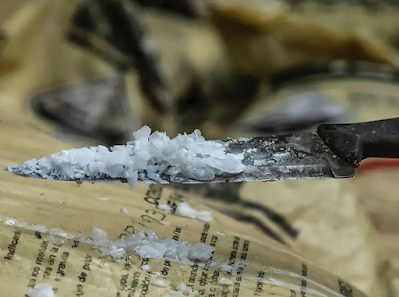
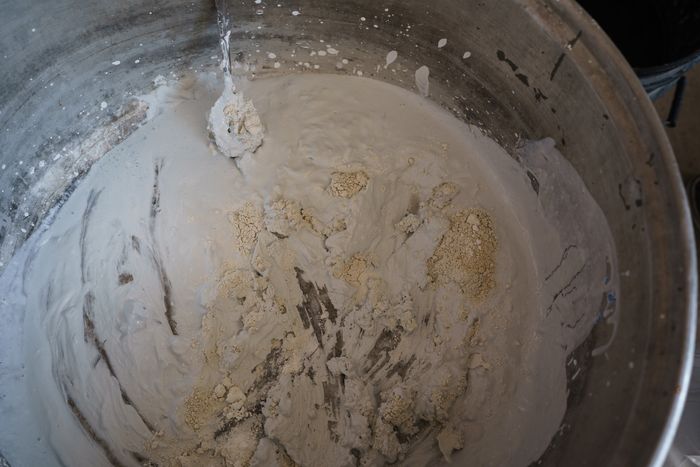
methods” to make it and “they just take the fentanyl and stir it with a spoon,”
said Doug Coleman of the DEA. Illegal fentanyl is then trafficked into the U.S.
market, already combined with heroin and other drugs. The U.S. General
Accountability Office has determined that Canada, as well as Mexico, is a
supply route for drug traffickers.
American drug dealers can order fentanyl and analogues to be sent by
mail from China, often diverted through another country. One Chinese drug
dealer who operates openly on the Chinese social media WeChat said that sending
drugs through the Chinese mail to the U.S. is easy: “We have our people in the
postal companies.” Chinese sources can be found on the Internet that will ship
fentanyl analogues that are still legal in China.
"Socalj" for Borderland Beat
![]() |
| “Rainbow Fentanyl” in different forms from pills, powder, and blocks has been seized across the Northwest US. |
![]() |
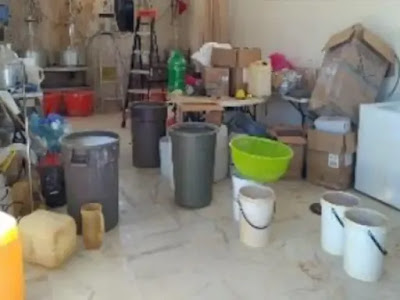
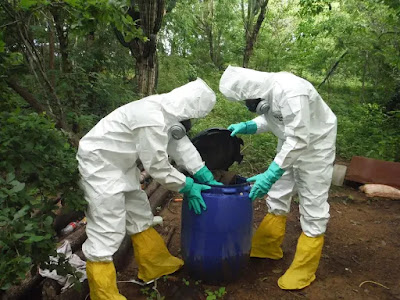
| Fentanyl made by Mexican drug cartels in inexpensive labs, such as the one above, is flooding the U.S. |
Source DEA, Borderland Beat
"Sol Prendido" for Borderland Beat
Ciudad Juárez, México - In late October, Mexican authorities seized a record-breaking quantity of fentanyl at a single laboratory in the northwestern state of Sinaloa, landing a major blow to the Sinaloa Cartel, officials said.
But security analysts and cartel operatives say the bust was only proof of the "unstoppable" production of fentanyl in Mexico.
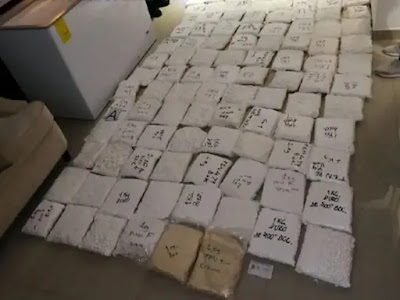
Mexican soldiers found 118 kilograms, or roughly 260 pounds, of fentanyl worth roughly $50 million in a lab on the outskirts of Culiacán, a city known for being Sinaloa's Cartel stronghold.
Mexican officials said the lab and warehouses seized in late October 2021 were used to store precursor chemicals used to make fentanyl.
Fentanyl is a powerful synthetic opioid analgesic similar to morphine but 50 to 100 times more potent, according to US authorities. Mexican drug cartels have relied on fentanyl more than any other drug to keep profits rising.
During the raid, authorities arrested Armando Bátiz Camarena, aka "El Inge," a known Sinaloa Cartel leader in charge of fentanyl production and shipment to the US, along with four of his men.
Authorities also seized four bags of fentanyl precursor in paste form, over 4 pounds of Inositol, a powder used as a cutting agent for drugs, five firearms, and more than $14,000 and 160 Venezuelan bolivars.
Although this was the biggest fentanyl bust in Mexico's history, it might not have any effect on the drug trade. It also may only be a sign of how Mexico is becoming the biggest player in fentanyl production.
"If Mexican authorities seized more than 100 kilograms, it means criminals are producing at least several tons," Manelich Castilla, former commissioner of Mexico's Federal Police, told Insider.
Fentanyl is easier to produce than cocaine or heroin since it requires just a few chemicals and some very rudimentary equipment, Castilla explained.
"It is very easily produced and 20 times more profitable than any other drug. You only need a very small dosage to create addiction," he said.
Manelich said that the fact that small doses of fentanyl could provide such intense effects means it's easier to smuggle.
"To transport fentanyl you don't need big shipments. Now you can hide a very profitable load inside a trailer container and it would be almost impossible to find," he said.
Mexico's defense secretary said earlier this year that fentanyl could be made in a few hours and was worth about $5,000 a kilogram in Mexico — a price that rises to about $200,000 in the US.
In a sign of the scale of production, US authorities intercepted 17,584 pounds of meth and 389 pounds of fentanyl in a tractor-trailer crossing into the US near San Diego on November 17. Both amounts would be the largest seizures of either drug in the US in 2020 or 2021, US officials said.
| Potent product |
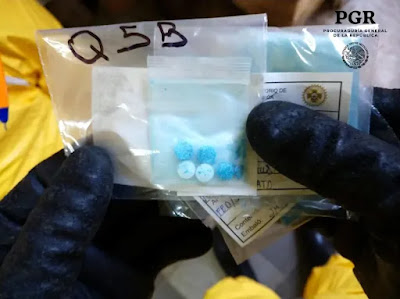
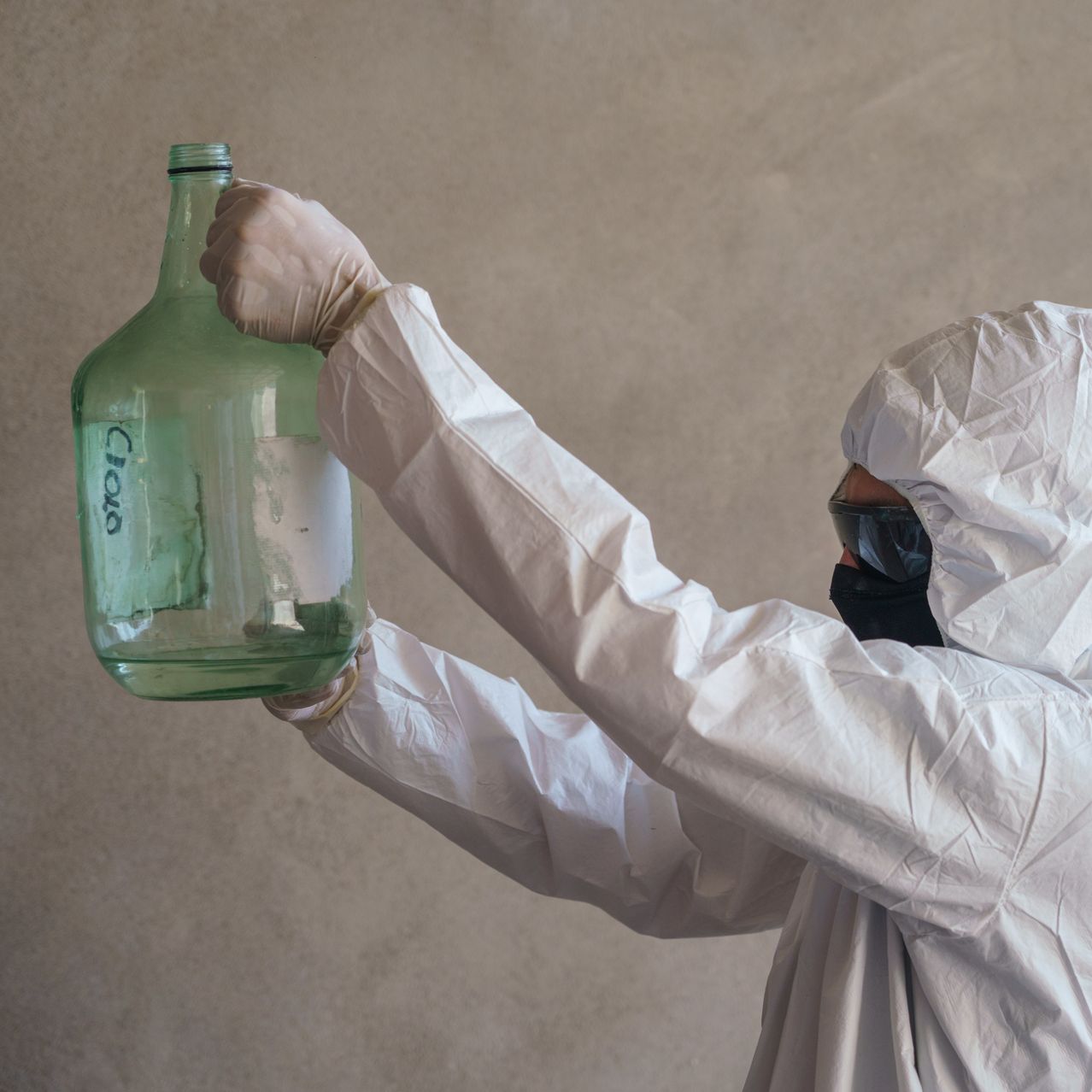
A chemical specialist in a protective suit with pills seized at a clandestine lab processing fentanyl, in Mexico City, December 12, 2018. A Sinaloa Cartel operative in Culiacán who asked not to be identified told Insider that the busted lab was "very small" compared to production around Sinaloa.
"They busted one, and immediately some other 10 started operating not very far from that one," the operative said.
The operative said fentanyl labs operate on a "mobile basis."
"Some years ago the old bosses used to set established fentanyl labs inside warehouses or abandoned houses, but we learned that once they busted that lab, the loss was too much," the operative said. "So now we set up mobile labs in the middle of the woods and cook only small batches in several labs at the same time to build a big shipment."
On a trip to Sinaloa state in early 2021, Insider visited a fentanyl lab operated by the Sinaloa Cartel. One of the lab operators described how cooks are trained to mix fentanyl "according to US needs."
"The cook learned from a Chinese man brought all the way here" by the cartel, the operator told Insider, adding that the cook "is the only one who knows the recipe."
"But many started dying because we still didn't have the right recipe, and some of them were not aware of the potency of the new product," the operator added.
| Mexican authorities examine a clandestine lab suspected of producing synthetic drugs, in Sinaloa state, August 2016. |
According to Manelich, most of the precursors needed to make fentanyl come from "the Asia region" but not exclusively from China. Shipments arrive by sea "inside one of many, many cargo [containers] processed at the port" in Colima state on Mexico's Pacific coast.
A leaked 2019 DEA report called the Sinaloa cartel "a prominent producer and trafficker of Mexico-based fentanyl" into the US. The powerful Jalisco New Generation Cartel has also ramped up its production of fentanyl.
The US Treasury Department recently sanctioned four men it said were CJNG members "operating through the port of Manzanillo in Colima" to import fentanyl precursors and other drugs.
"It is impossible to search all these shipments arriving into Mexico. What we need is a list of priority targets to know by name who are we looking for, who is in charge of these operations," Manelich said.
Fentanyl seizures in Mexico have risen over the past year, according to Mexican officials. In 2020, authorities seized 1,300 kilograms of the drug, compared to 222 kilograms in 2019 — an uptick of more than 400%.
More than 30,000 people in the US died of overdoses involving fentanyl in 2018, making it one of the most dangerous illicit drugs in history. Fentanyl-related overdose deaths have pushed total overdose deaths in the US to new levels.
Manelich said the only way out is a "coordinated agenda regarding addictions and security."
"Today Mexico does not have a policy or a campaign to point out the traffickers and the producers. The present administration's vision is very limited when compared to how things are done in the US," Manelich said.
![]() |
"Sol Prendido" for Borderland Beat
When Indiana State Police pulled over a vehicle traveling on Interstate 65 near Seymour this past November, it didn’t take long for them to suspect that a large amount of drugs was hidden inside.
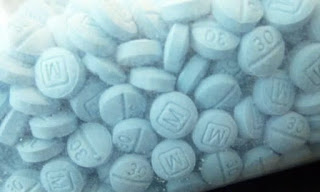
As police combed through the vehicle, they found crystal meth, loaded handguns and $2,000 in cash. But one of the arresting officers noticed something else that he later referred to in court records as a national “epidemic” — a plastic bag containing 10 blue pills that he suspected “were disguised as prescription medications but were really fentanyl.”
Federal authorities say pills like these are part of a worrying trend seen across the country as criminal drug networks in Mexico and elsewhere ramp up production of fentanyl, a synthetic opioid that is more potent than heroin but much cheaper to produce and distribute.
Last year, the U.S. Drug Enforcement Administration said its agents had seized a record 9.5 million of counterfeit prescription pills containing fentanyl from January to September, including some 3.8 million that contained lethal amounts of the drug.
That 10-month total was more than the number pills the agency had seized over the previous two years combined.
And some local law enforcement officials now fear that an influx of these pills could be the next wave in a decades-long drug crisis that has killed at least 153 people in Bartholomew County since 2015.
“I think you’re going to see the pill issue become an even bigger issue, if it isn’t already, as it comes north through the United States,” said Bartholomew County Sheriff Matt Myers.
So far, most local fentanyl seizures still involve the powder form of the drug, though Columbus police have seized counterfeit Xanax pills containing fentanyl in the past, Columbus Police Department spokesman Lt. Matt Harris said.
In Jennings County, law enforcement officials suspect that the pills are already moving through the area but have not yet intercepted any. Jennings County Sheriff’s Chief Deputy David Turner said sheriff’s deputies there are concerned that the fake pills will drive up “senseless deaths.”
“It’s just a matter of time,” Turner said, referring to the chances that the pills make their way to the Columbus area.
‘Nationwide surge’
The increase in fentanyl-laced pills in the United States, described by federal officials as a “significant nationwide surge,” represents the latest shift in the multi-billion-dollar illegal drug trade, officials said.
In recent years, drug traffickers have increasingly turned to fentanyl because it is cheaper and easier to produce than heroin and other drugs, according to the DEA.
Soon after that, fentanyl started finding its way into other drugs like methamphetamine, cocaine, marijuana, making them cheaper, more addictive and deadlier, federal officials said.
Now, drug traffickers are mass producing fentanyl in clandestine labs using ingredients largely made in China and have started churning out fentanyl pills under the guise of prescription medications, including Percocet, Adderall, Xanax, oxycodone, among others.
These drugs are increasingly being sold online and delivered by mail. And users often have no idea that they are buying fentanyl, leading to accidental overdoses and “killing unsuspecting Americans at an unprecedented rate.”
U.S. Customs and Border Protection has reported seizing an increasing amount of fentanyl over the past several years.
The agency seized about 11,200 pounds of the drug during fiscal year 2021, up from nearly 4,800 the year before and 2,800 in fiscal year 2019. At the same time, drug overdose deaths have continued to surge in the United States, with over 100,000 Americans now dying from overdoses per year, up from 52,000 in 2015, according to the Centers for Disease Control and Prevention.
“It’s cheap and easy to manufacture. … Drug dealers are very greedy people. They don’t care whose lives they are destroying. All they care about is that they’re making money.”
In Bartholomew County, deaths from drug overdoses have nearly doubled over the past few years — from 17 in 2018 to 33 last year, reaching their highest levels on record in each of the previous two years, according to data from the Bartholomew County Coroner’s Office.
Experts believe one of the main culprits of the increase is fentanyl, which is now the leading cause of death among Americans ages 18 to 45, according to the CDC.
Locally, fentanyl is becoming “primary fatal drug in drug overdoses,” said Bartholomew County Coroner Clayton Nolting.
For the Mexico-based Sinaloa Cartel and Cartel Jalisco New Generation, who federal officials say are responsible for most of the fentanyl coming into Indiana, the profit margin on the drug “is through the roof,” said Michael Gannon, assistant special agent in charge at the DEA’s Indianapolis Field Office.
“It’s cheap and easy to manufacture,” Gannon told The Republic. “…Drug dealers are very greedy people. They don’t care whose lives they are destroying. All they care about is that they’re making money.”
‘Not getting any better’
Amid this backdrop, Myers traveled to Washington, D.C. last month to attend the National Sheriff’s Association’s annual conference, but said he “didn’t get very encouraging news” about the state of affairs in the nation’s ongoing drug crisis.
At the conference, U.S. Customs and Border Protection and other federal agencies discussed trends in crime, particularly the flow of drugs into the United States, Meyers said.
“I do not see it getting any better,” said Myers, who sits on the association’s national drug enforcement and homeland security committees.
“There are more drugs coming in from the southwest border at a rapid pace,” Myers added. “Fentanyl is the drug of choice coming across the border. … And the reason (the cartels) are doing this is because the cartels can make much more money pressing pills.”
Now, law enforcement is racing to adapt to the evolving drug trade.
Federal authorities near the U.S.-Mexico border are finding fentanyl pills strapped to the legs of drug runners, inside fish coolers, concealed in hidden compartments in vehicles, among other locations.
Last week, federal authorities in the border city of Nogales, Arizona, seized more than 37,000 fentanyl pills concealed in the spare tire of a vehicle, according to U.S. Customs and Border Protection. The pills had an estimated street value of $1.13 million.
A few days later, border patrol agents in Nogales seized another 1,500 fentanyl pills, capping off what CBP described as a “busy week.”
In November, two men were sentenced to lengthy prison terms after ordering enough supplies from China to make 2.5 million fentanyl-laced pills in a backyard pill-pressing operation they ran near Seattle, The Associated Press reported. The pair had obtained equipment that could make their pills appear to be pharmacy-grade oxycodone instead of fentanyl.
In December, the DEA said that its agents in Indiana, Illinois and Wisconsin had seized 145,000 fentanyl pills, 29 guns and over $647,000 in U.S. currency over the previous four months.
Earlier this month, police in Arizona found 227,000 fentanyl pills concealed in large buffetstyle containers filled with food.
On Tuesday, a Louisville man was arrested after police found 15,000 fentanyl pills in his home, one week after Fort Wayne police seized nearly 1,200 pills believed to contain fentanyl.
“That’s probably what you’re going to start seeing here,” Myers said. “Pills are something that we didn’t see a lot of here at first. I think you’re going to see it a lot more.”
Myers is urging people to not buy prescription drugs off the street or from unauthorized online sources, warning that “you’re putting your life at risk, especially in today’s world.”
‘Not slowing down’
However, fentanyl is not just arriving through the U.S.-Mexico border, said Steve Bansbach, spokesman for CBP’s Chicago field office, which covers Indiana and monitors about 20% of all international mail coming into the United States.
“We see a lot (of fentanyl shipments) from China, Hong Kong, the Netherlands,” Bansbach said. “Those are usually the big countries that we see here locally.”
“You’re starting to see a lot more precursors for fentanyl,” Bansbach added. “People are making fentanyl, more mass production. You have to worry about what is being added to that fentanyl. That is something that we’re always worried about because you can have another additive that can be added that changes the whole chemical makeup and could be actually more deadly than your original fentanyl.”
Locally, officials hope to counter the rise of fentanyl through education and outreach. But they remain concerned that the synthetic opioid is going to continue to have a large share of the illegal drug market for years to come, fueling more overdose deaths and destroying more lives.
“We’ve done everything we can to keep these drugs out, but (the flow of drugs) isn’t slowing down,” Myers said. “ … And they’re coming in larger amounts and more lethal.”
![]() |
| "This is the first time in our nation's history that a substance is being designated as an emerging threat by any administration," Gupta said. |
![]() |
| The cook with the Sinaloa Cartel said that by adding food coloring to pure fentanyl, it would be impossible for dealers in the US to mix it with something else without the final drug user noticing. |
![]() |
![]() |