Blog dedicated to reporting on Mexican drug cartels
on the border line between the US and Mexico
.

Showing posts sorted by date for query chapo cabo. Sort by relevance Show all posts

Friday, July 4, 2025

Boxer Julio Cesar Chavez Jr. Arrested by ICE Alleging Sinaloa Cartel Ties, Faces Arrest Warrant in Mexico

"Socalj" for Borderland Beat


The DHS announced that ICE has detained 'prominent Mexican boxer and criminal illegal alien Julio Cesar Chavez Jr., and is processing him for expedited removal from the United States.'

His arrest in Los Angeles was made as he had overstayed his B2 tourist visa that expired early last year.

Chavez is a Mexican citizen who has an active arrest warrant in Mexico for his involvement in organized crime and trafficking firearms, ammunition, and explosives. According to DHS, Chavez is believed to be an affiliate of the Sinaloa Cartel, a recently designated Foreign Terrorist Organization.

Monday, June 10, 2024

"El R" Ruben Duarte Roque, Hitman for "Cabo 20" & "El Flaquito" Killed Outside Tijuana Night Club

"Socalj" for Borderland Beat


At around 8:15AM on Thursday morning, June 6. Three men were shout outside of a stripclub/bar, La Cueva Bar del Peludo in Tijuana. One of the men, the target of the attack died.

Rubén Duarte Roque was 35 years old and better known as "El R" and earlier on "El Roque" or "El RR" and was a longtime figure under "Cabo 20" David Lopez Jimenez in Tijuana. Authorities allege "El R" was responsible for much of the violence in the Sanchez Taboada area.

Thursday, December 7, 2023

Mexican Cartels Hire Spies And Ex-Military To Conquer The Balkans

"Sol Prendido" for Borderland Beat


Drug trafficking

The cartel has grown stronger and wants an empire in the world.

During the 2018 Christmas holidays, the Sinaloa Cartel had a double reason to party: they were preparing for the New Year and to open a new 10,839-kilometer cocaine route to Europe.

To ensure the success of the new route, each stop had been meticulously prepared, as would a legal airline investing millions of dollars in its expansion plans: the cartel hired air and drug trafficking experts to evaluate the viability of air ports, costs, allies and financial profitability.

After months of work in Culiacan, the cartel was ready to open the Mexico-Italy route to enter the black market in the Balkans, a region that includes 11 countries, among them Albania, Bosnia and Bulgaria, and where a gram of cocaine that costs six euros in Mexico can reach 86 euros there, according to the European Monitoring Centre for Drugs and Drug Addiction.

In Spain, 2,300 kilos of cocaine from America seized; five people arrested

In other words, the same amount of cocaine generates a profit of over 1,333 percent. These margins are comparable only to the profitability of oil or precious minerals.

The route included two stops. First, empty jets would leave Mexico for Colombia to supply cocaine to the Sinaloa Cartel's existing South American partners. Then, the aircraft would land in Cape Verde, Africa -- off the coast of Senegal -- to refuel and arrive safely in Catania, southern Italy, where the aircraft would be unloaded for a representative of the Sinaloa drug traffickers to sell the kilos to the 'Ndrangheta, the most powerful Italian mafia in Europe.

In turn, the 'ndrine -- the 'Ndrangheta's operational units spread outside of Europe -- would take the drugs through Europe, including the Balkan peninsula, and resell them to local mafias for distribution to drug dealers.

In this way, Albanian mafias and criminal groups such as the Bulgarian-born Oarza Brigade could be the final sellers of the cocaine that had traveled around the world from a private jet leaving from Culiacan.

But there was a problem with the meticulous plan: there are no Sinaloan drug traffickers fluent in English, Portuguese, Italian and Albanian to successfully negotiate kilos for euros.

Operation against drug trafficking in Costa Rica

Despite these complications, the European Union Agency for Police Cooperation (Europol) was certain that organized crime in Latin America had reached the Balkans at some point between 2015 and 2018.

In July 2022, the Global Initiative against Transnational Organized Crime, an international NGO based in Geneva, Switzerland, contacted dozens of journalists in Latin America and Europe with a proposal: to create a network of investigators from both sides of the ocean to exchange information, contacts and documents to answer a question: how big is the presence of Latin organized crime in the countries of the Balkan peninsula, home to major mafias such as the Romanian or Kosovo mafia?

"Mexican cartels are known to cooperate with criminal networks based in the European Union (EU) to traffic methamphetamine and cocaine to EU ports for subsequent distribution within and outside the Member States," warns the Europol report, prepared with the DEA, entitled 'The Involvement of Mexican Criminal Actors in Europe's Drug Market'.

This is the Mexico chapter of that collaborative journalism investigation.

The Silent Link

Few drug traffickers would risk getting on a commercial plane to cross international borders and personally oversee an illegal, million-dollar business. They avoid it for fear of their identity being discovered, as happened to José Rodrigo Aréchiga, better known as 'Chino Ántrax', arrested in Amsterdam, Netherlands, or Sergio Vega Mendoza, 'El Látigo', arrested in his own country at Mexico City's International Airport.

They do not risk carrying false passports or wearing a suspicious wig that would give them away in a country where they have no police protection. Some do not even leave the plazas they dominate or the mountains where they hide.

So the Sinaloa cartel had to resort to an illegal and expensive labor pool to guarantee that the new Mexico-Italy route would be a success. One that is available to organized crime around the world: the hiring of brokers, the freelancers of high-flying crime.

Operation against Sinaloa Cartel's narco-laboratory. 

A broker in this world is, in short, a facilitator who will guarantee with his life the success of an international project for any criminal group that hires him.

He is typically a former military officer, a retired policeman, a private spy or a public servant with power who connects criminal groups with each other, and who acts as a middleman, a translator of needs, a logistics provider, a contractor of cooks in clandestine laboratories, a corruptor of officials at sea and air ports, a buyer of properties abroad for use as warehouses, an undertaker of judicial investigations, a retriever of seized drugs, and more.

To make his resume stand out among other brokers, he will brag about his years in a security corporation, his military training, his family connections with high-level politicians or his years of operating with major cartels and terrorist groups.

"Brokers are part of a criminal model that resembles outsourcing, where a criminal organization decides to hire someone with a specialization instead of wasting resources on training someone in-house." This is how they are described by Stu Sjouwerman, a cybersecurity expert, who identifies three typical spaces to reach one of them: the Deep Web, secret forums or encrypted and temporary chat rooms, and the Internet.

Graffiti in favor of 'El Mayo' Zambada

As in any job market, there are candidates for the dirty work of different prices, experience and contacts. There are rookies, veterans -- like Xianbing Gan, a businessman who in February 2020 was sentenced in the United States for laundering millions of dollars for Joaquin El Chapo Guzman and Nemesio El Mencho Oseguera -- and even celebrities -- like Four, a Colombian-Australian who has operated the Mexico-Australia drug route with impunity for decades -- but they all agree on one trait: their work requires discretion, even more than that of a cartel boss.

"Encrypted digital devices are increasingly a key tool brokers use to coordinate and conduct drug trafficking and other crimes covertly. Encrypted phones have provided these networks with a degree of anonymity and discretion," warns Europol in a 2020 report.

The chosen ones

For the new Mexico-Italy route, the Sinaloa Cartel hired four main brokers: Guatemalans Daniel Tito Esteban Ortega and Luis Fernando Morales Hernandez, El Suegro, whose mission was to establish contact with the Colombians, and Jose Angel Rivera Zazueta, El Flaco, usually hired by El Mayo Zambada for international projects and who would be in charge of the Colombia-Cabo Verde route.

The fourth broker is known as Don Señor, who from Rome would be in charge of choreographing his workers to unload the aircrafts in Catania (Sicily), take the cocaine to vehicles, coordinate dozens of drivers to avoid customs, and drive the drugs to northern Italy to begin their journey to the Balkans.

The phase of hiring independent drug traffickers seemed to have gone well. The Sinaloa cartel was celebrating its elaborate plan that would boost its profits in a cocaine market, such as the European one, worth up to $10 billion annually, according to the UN Office on Drugs and Crime. However, problems kept cropping up.

Drugs seized in operations

The phone of a broker who had worked for the 'Ndrangheta was tapped by the Italian Investigation Group against Organized Crime, which since 2019 had launched Operation Falcon to stop the arrival of cocaine from Latin America. Thanks to that tap, the director of the corporation, Pablo Laccesse, learned of the plans hatched from Mexico.

Neither brokers nor Sinaloans knew it, but every part of their plan was listened to with attention by the biggest anti-mafia arm in the world, known for bringing down even the toughest capos dei capi and consiglieres.

Keeping track in Mexico

How is it that Latin American organized crime has managed to do business with criminals from the Balkan peninsula, from Albania to Serbia?

In countries like Ecuador and Colombia, there are plenty of reports in the press about local gangs and their links to the Albanian mafia. In Argentina there is data from the beginning of the century about criminal relations between local gangs and the Calabrian mafia in Italy. In Peru and Venezuela with Serbian gangs. Southern European criminals such as Robert Suloti, Milan Milovac or Darko Saric can be read in local media as evidence of the black connection between South America and the Balkans.

But in Mexico the relationship remains in the shadows, despite the fact that this year the anti-drug agency DEA placed the Sinaloa Cartel and the Jalisco Newl Generation Cartel with more than 44,000 representatives in more than 100 countries.

MILENIO undertook the task of locating citizens of the 11 countries that make up the Balkan region in two different Mexican lists: murdered foreigners and imprisoned foreigners. To do so, we used open data and information requests through the National Transparency Platform.

Between 2012 and mid-2022, the Mexican government recorded the murder of 3,121 foreigners, mostly North American tourists or Central American migrants. All the rest fall into the category of "Others", which makes it impossible to officially know their nationality.

However, at least four murdered people from southern Europe were identified: the Bulgarian citizen Galina Chankova, the Greeks Martin Demerutis - linked to the Sinaloa Cartel - and Ciannistis Constantine, as well as the Romanian Constantin Sorinel Marcu, killed in June 2018 in Cancun, Quintana Roo, identified as the bodyguard who betrayed his boss Florian Tudor, leader of the Romanian mafia in Mexico.

U.S. Treasury Department Announces Fentanyl Strike Force

Regarding foreigners in prison, up to the date of the investigation, of the 219,279,27 people deprived of their freedom in Mexico, 4,451 were foreigners. But the authorities only separate them by nationality, if they were born in the Americas. In the category "From a European country" 28 were included without further details.

But a newspaper search told another story: in January 2020, a Bosnian citizen was arrested in the state of Nuevo Leon for driving a cloned cab, which is the vehicle preferred by Mexican cartels to transport cocaine. In May 2008, five Albanian nationals were arrested in Chiapas for entering the country with fake passports from Bulgaria. A year earlier, another Albanian was arrested in Chiapas accused of being part of a gang of smugglers of undocumented migrants.

In December 2011, the then Mexican Federal Police arrested Greek citizen Charonitis Zacharias with more than half a kilogram of cocaine at the Mexico City airport, where he was attempting to travel to Greece with a stopover in Madrid, Spain.

In December 2015, authorities in the Mexican capital arrested 26 alleged members of an international gang linked to identity theft and bank card cloning, including two Bulgarian citizens and one Romanian.

In September 2022, nine migrants of Romanian origin were detained in Tijuana, where they arrived with illegal documentation seeking to cross into the United States. Their detention led to the arrest of three Mexican migrant smugglers.

And in May 2021, the Attorney General's Office arrested Florian Tudor, leader of the Romanian mafia that operated in Mexico's main tourist centers, where he duplicated credit cards.

More data pointed to an important presence of Mexican cartels in the Balkans, such as the discovery in November 2021 of 450 bottles of liquid methamphetamine hidden in vanilla containers that traveled from Mexico to Sofia airport, the largest seizure in the narcotics history of Bulgaria, a country integrated to the Balkan mountain range.

Or the 1.5 tons of methamphetamine of Mexican origin trafficked in 2020 through Croatia to Slovakia. Or the seven members of the Sinaloa Cartel arrested in March of this year in Colombia and Greece as part of the same Interpol-led anti-drug operation. Or the seizures in Albania of drugs packaged by the Ecuadorian gang Los Choneros, whose origins are linked to the Sinaloa Cartel.

Couple arrested for drug possession in Tijuana

In other words, there is evidence to support that the Sinaloa Cartel and the Jalisco New Generation Cartel have managed to take their dirty business beyond the Balkan Mountains and the Dinaric Alps, but they have done so without exposing themselves to a significant number of murders and arrests to attract media attention on both continents.

For Fatjona Mejdini, director of the Observatory of the Global Initiative against Transnational Organized Crime, this presence is explained by the network of brokers woven by the cartels. They are responsible for the successful international expansion of Mexican organized crime. They are the true global narcos on whose triumphs the heads of plazas in towns and cities from Tijuana to Tapachula hang themselves.

Although, sometimes, as in the new Mexico-Italy route, they are also responsible for the failures.

Intervened line: the plan is thwarted

Unaware that their every move was being listened to, the brokers hired by the Sinaloa Cartel agreed on all the steps to be taken over tapped phone lines. For months, the anti-Mafia arm in Italy listened to them talk about their contacts, their exploits, their friendships in the National Guard -- a certain official who plays deaf, they said -- and even their friendships with other brokers in Canada who were also looking to be hired on the job boards that open up in the deep corners of the internet. The wiretap seemed too good to be true.

Therefore, the police had to make sure the operation was real. They preferred to listen and follow up on what the drug traffickers agreed for January 9, 2020: on that day they would test the viability of the new route with a test load of 400 kilos of cocaine that 'Don Señor' received at Catania airport and unloaded to hide in a safe house on the outskirts of the city.

During the raids, 20 packages containing a white powder with cocaine characteristics were seized. 

El Flaco, Mayo Zambada's trusted confidant, called Don Señor from Cancun to confirm that everything had gone well. The good news came with a request: Don Señor followed the rules of veteran brokers and did not ask for a cash payment - difficult to comply with in the banking system - but to keep 32 bricks of cocaine for distribution, especially to a contact of his who represented a Chinese family based in Milan that wanted to do business with the Sinaloans.

That demand mixed with ambition and greed gave Pablo Laccesse's agents confirmation that the plot was real and they were ready to act.

"In the Balkans, the local mafias of course know the Mexicans. They are probably the most famous drug traffickers in the world," says Fatjona Mejdini, an organized crime expert based in Albania. "But the reputation they have is that the Mexicans are too violent and even the Albanian mafia or the Serbs don't feel comfortable dealing with them."

"The Balkan groups are more like businessmen who only use blood as an exception, not as a rule," which is why, Fatjona adds, is that for Mexican cartels to do business in that region of the world they need brokers who know and imitate the style of the southern European mafias and not the sadism of Sinaloa.

Another difference is that Mexican cartels in the Balkans are not interested in drug dealing. The business of the Sinaloa Cartel and the Jalisco New Generation Cartel is not in the sale of grams, as it does in Mexico, but in the tons that they can get through airports and seaports.

The trade in small doses is left to local groups, so there are no Sinaloans or Jalisco locals selling cocaine on street corners in Kosovo or North Macedonia, as is the case in the TV series.

The mission was thwarted when Don Señor delivered the cocaine to Charlie, another Italian broker who would take the drugs to his boss in compliance with the rule that no links should know each other to avoid information leaks.

On his way to deliver the merchandise, Charlie ran into a snow jam that was exploited by the Italian police. The goods were immediately seized and the delivery was thwarted. There was only one problem: Don Señor, Flaco and El Sueegro had no leads to arrest them.

Despite the operation, Europol finds that the Mexico-Italy route is not closed. Despite the fiasco of the criminal plan, European authorities have published two separate reports in which they claim that the route is still used to ship drugs on behalf of the cartels.

Interpol estimates, informally, that there are thousands of brokers of different ranks, costs and experience in the labor exchange used by organized crime. There could be tens of thousands because it is a black market. There are some celebrities who are known, such as El Viejo, The Finalist or Pan Haiping, but others are ghosts who daily change the world with their interventions, although nobody knows who they are.

They are the power behind the power. The people capable of making the expansion dreams of a farmer from Sinaloa who didn’t finish primary school and wants to conquer Europe or a farmer from Jalisco who doesn’t know where Italy is on the map and wants to dominate Africa come true.

These are the secret links of drug trafficking that explain how a Mexican drug trafficker with money, but without a passport, can plant his flag in a place as far away as the 11 countries that make up the Balkans and bring cocaine to their noses. Become millionaires.

 And with that money finance the violence in Mexico.


Milenio

Saturday, August 5, 2023

El Chapo: The 6,000 Messages Of Love And Betrayal That Brought Down The Drug Lord

"Sol Prendido" for Borderland Beat

In addition to confessing how the Sinaloa Cartel operated, the letters between the Chapodiputada (Chapo Congresswoman) and the drug lord reveal secrets of crime, bedroom’s and jealousy.

Love and Betrayal: The story behind the letters that sank El Chapo.

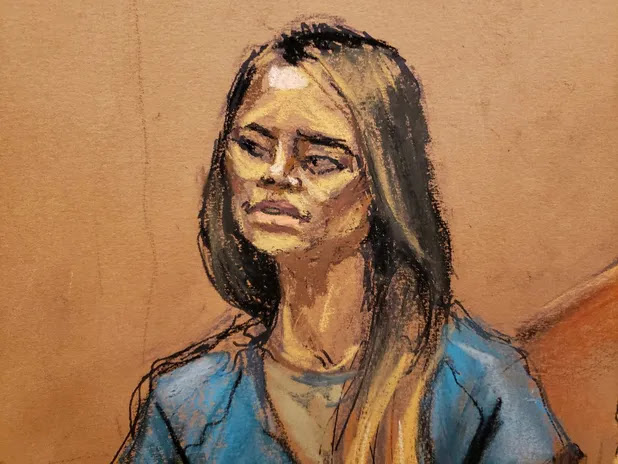
In the first days of January 2019, Lucero Guadalupe Sánchez López heard loud, clear and well-spelled one name: Kate del Castillo. That day, in front of the jury at the Eastern District Court of New York, in Brooklyn, the former Mexican congresswoman barely tolerated the incisive question:

Did you know that he was interested in Kate, the Mexican soap opera actress?

-Well, actually... he never talked to me about it," was Sanchez's answer.

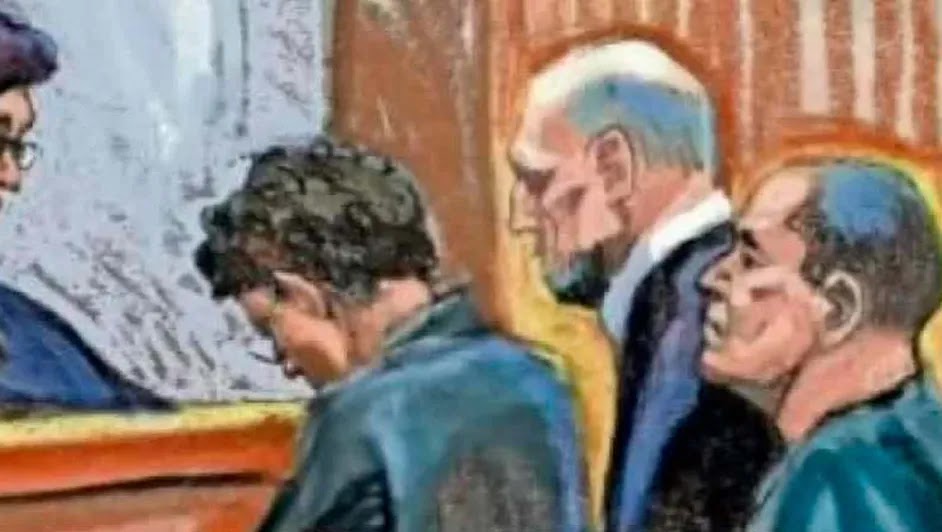
Not only Lucero had to endure hearing names of other women who shared a bed with the man she had loved; also the lady sitting in front of her, the capo's wife, Emma Coronel, had to tolerate the pitying look on people's faces as Joaquin El Chapo Guzman's permanent mistress spoke in court.

During the trial, the two heard the names of other women who did not enjoy the same luxuries and privileges as they did. Cases like that of the 13-year-old girls who were allegedly drugged and abused by the cartel leader.

-In fact, he told you that he wanted to produce some program or movie about his life, correct? And you knew that he was in contact with writers in the United States and other countries to write about his life, correct?

Similar questions posed to Lucero Guadalupe followed one after the other. She, hopelessly, had to publicly acknowledge or deny Joaquín Guzmán Loera's infidelities.

Drugs, murders and escapes

Judicial documents to which MILENIO had access reveal that Sanchez did not have too much trouble handing over sensitive material about her ex-partner to U.S. agencies, which presumably ended up benefiting her: so far there is no record of the woman being in any U.S. prison.

Lucero Guadalupe Sanchez handed over 6,000 text messages in which the capo himself confessed to drug-related operations, murders and escapes, among other crimes he committed while he was leader of the Sinaloa Cartel.

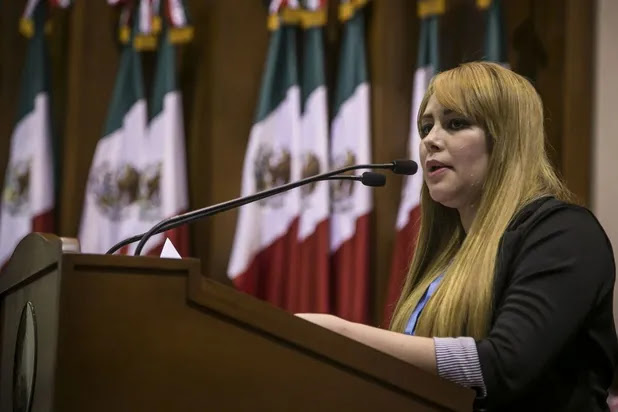
The famous "Chapodiputada" - as she was dubbed by the press - was a legislator for the state of Sinaloa. She herself recounted how she managed to win a seat in national politics despite her stormy relationship with Joaquin Loera, whom she wanted to leave on countless occasions -- mostly out of fear, she said -- but with whom she maintained a relationship until the day of his incarceration in the United States in 2019.

-I wanted to tell you that the packages didn’t fit on the plane, there were 50 kilos left out," wrote Lucero Guadalupe.

-What was the total my love," answered El Chapo.

-400 kilos, only 350 fit," she wrote.

-It was all very well packaged my ove, what’s the total of the packages," Guzman asked again.

-10 kilos my love. They have the mark of a 4 inside a heart," explained the woman.

-There’s even a heart there my love," said Guzman romantically.

-What a thrill," she said.

For Lucero Guadalupe, these messages, in which messages of love were interspersed with drug transactions, were not unusual. But they could not have happened if the element of trust had not existed on Chapo's part.

Lucero was born in Cosalá, a town 160 kilometers from the capital of Sinaloa, into a very humble family of mine workers, and during her childhood she collaborated in the family economy and to support herself by selling empanadas in the streets of Culiacán.

At the age of 16 she went to live with a man originally from the Golden Triangle area -which includes the states of Sinaloa, Chihuahua and Durango-, who like many others there, grew and sold marijuana that they planted in the fields, pushed by the poverty that used to be extreme. During this relationship Lucero experienced violence and was subjected to aggression from her partner.

One of the witnesses against 'El Chapo' was Lucero Sanchez, better known as the 'Chapodiputada', who said she lived with the drug lord for a year. (EFE)

That changed in 2010, when she met Chapo. A year later, the drug lord, seeing her talent for negotiating with farmers, invited her to negotiate the purchase of marijuana on his behalf in the mountains of Durango and Sinaloa.

If she had to mark the date when she began her relationship with Guzmán Loera, it was in February, the month of love.

She remembers well how it all began: when Guzmán met her, he started sending her messages that later turned into phone calls and, just as he did with Kate del Castillo, he quickly bought her a Blackberry phone to communicate directly without any risk. He kept her on his personal phone with the nickname "Hermosura"(Beautiful); she, with a "J", for Joaquín.

"We talked about our romantic relationship, things like that. I wanted to have a more stable relationship with him and things of that nature," Lucero said that January 17, 2019, in the United States. The lovers found a way to see each other more often, her visits to him went from one to three days a week.

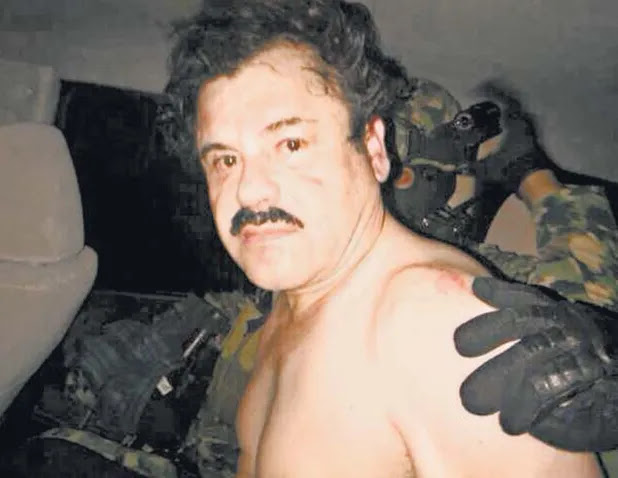
Lucero would travel to different parts of the country to meet her lover in residences that served as his hideout, such as the one in Cabo San Lucas, a beige mansion overlooking the Pacific Ocean and with a jacuzzi included. El Chapo was only able to stay there for a short time, until a Mexican government operation descended on him.

The former congresswoman remembers it like this: "He had many thorns and scratches, and he told me how his secretary had helped him jump the fence. He had blood on him and he told me what had happened: that he had fallen after jumping the fence and that was when he got scraped because they were hiding in thorny bushes".

Guzman would send her to the mountains of Sinaloa to meet with peasants she had known since she was young. He had chosen her because the capo knew how she had moved around the highland communities as a child. The motto was for her to acquire "good, nice and cheap" drugs.

Some of the messages that were made public in the court hearing reveal the messages of love and drug transactions that were sent over the course of three years. Lucero would draw messages that were hidden in the squares of marijuana that were sent from the hills to El Chapo.

-The heart signifies that I love you and the four is because I bless the day you came into this world. The day of your birthday ♡ -said one of them. El Chapo, by the way, was born on April 4.

-Ah, yes that’s true. This coming week buy 300 kilos. And with this purchase you’ll have enough for another trip my love - answered El Chapo, visibly less excited than she was, and more interested in the kilos of drugs that she would bring him with the support of a pilot nicknamed Cachimba.

Lucero Sánchez was a militant in the PAN political party of Sinaloa and in 2014 she was elected deputy for the town of Cosalá.

She loved and feared him

During their relationship, the messages came and went with the same tone, between business matters and affectionate expressions.

-Love, look how much is available for you (drugs) to buy everything, but, if necessary, open the bags and check," Guzman said.

-All right, love," she replied.

-It's okay, honey. I love you. Whenever you can, come upstairs to send a message my love," El Chapo asked her.

Other times, Lucero expressed her fear of going on his behalf to the highlands to buy drugs, but she was not completely opposed because, according to herself, although she was in love with him, he also inspired fear in her.

In one of the hearings, when the 'Chapodiputada' was testifying, El Chapo and Coronel decided to dress alike. (EFE)

-People talk too much. I've been careful not to be seen, but you see how everyone knows. And you can get hung up somewhere because of envy. I don't sleep, my love," she said to the boss.

-Look, the mafia kills people who don't pay or people who snitch, but if you are serious mob then that’s not the case my love," Guzman reassured her.

-Well, that's true, my love. I know that when a person is loyal and straightforward he or she can last for years. He or she can die of natural causes. But there are also the envious people who, just because they want to get someone out of their way, do bad things. But I'm not afraid of that, my love. I have thought about things before. I know I'm not doing anything wrong. On the contrary, I think this is good for people, and more so with you because you have helped the ranches so much. I'm proud and I hold my head up high guided by you, my love.

Deep down, Lucero's words were a reminder that she was not a snitch and would never rat him out to the government or reveal information about his hideouts. "And I didn't want him to distrust me because I thought maybe he could hurt me too," she finally declared.

Lucero Guadalupe said she tried to separate her feelings from her business with Guzmán, but it wasn't always possible. On the other hand, her lover did. And he was very distrustful. She remembers that when she went to visit him, he would blindfold her so that she could not identify the route.

Lucero Sanchez is known as the 'Chapodiputada'

-That's right, my love. Lies are the cause of problems. Don't lie, and people will always see the good, my love. Always remember that. I tell you this because I love you. Even if you make a mistake, don't deny it, and you will always be happy and people will appreciate you," the capo constantly warned her, sweetening his threats with words of love.

During the trial on January 17, 2019, after reading this message and looking directly at Guzmán Loera, the former congresswoman burst into tears. But once she recovered from reading the private messages aloud, Lucero recounted that by June 2012, El Chapo had promoted her in the organization. From then on, she was in charge of overseeing the operation of front companies through which drug operations and money transactions were carried out. These companies were in Mexico City, Los Angeles, California and Ecuador. They were juice and fruit businesses, warehouses and fishmeal.

"I would tell them which institutions they had to go to in order to register the company, how to set up bank accounts, everything related to the legal documentation of the company and its incorporation, in order to establish the basis to be able to start operating," the woman said during the trial.

But at the same time she became his "wife," Lucero assured: She did his shopping, chose his clothes, his lotions, everything that had to do with his personal care.

"I was like a house wife. She would cut the legs off his pants because they were a little long, so she had to adjust them back to his own height."

The former congresswoman recalls that the dynamics of the relationship started to go downhill in late 2012, until it became untenable. So much so that she decided to get into politics and join the National Action Party (PAN) in Sinaloa. In 2014 she was elected deputy for Cosalá, her hometown, in District Number 16 of the northern state. And she won with many votes in her favor.

But El Chapo would not leave her alone. He called her insistently, asking her to visit him in his new hideout in Culiacan.

Lucero also narrated direct experiences with the drug trafficker. Like one instance that took place in 2014.

"You know, after we stayed up, we were talking for hours, he and I, and after that I couldn't sleep," Lucero Guadalupe recounted profusely, "I was awake around three or four in the morning when I started to hear some loud noises at the outside door. I heard a lot of banging and helicopters, screams. I heard Condor (an employee) come in and say, 'Uncle, Uncle, upstairs, they're onto us, they're onto us.' And I was very scared. I was in shock that day. They were running all over the place and then I saw him come into the bathroom with Condor and the maid and he said, 'My love, come, come with me, come here.'"

At trial Lucero added another moment from that scene: "What happened was that there was like a lid on the bathtub that went up, and I was like, 'How, should I go in there?' I was really scared because it was dark and everybody was going in there. Well, the first thing I saw was wooden steps and then the next thing, all I could see was complete darkness. For me it was horrible because I had never been in a place like that. It was a wet place, full of water, with mud. He ran out first and left us behind, I kept feeling the sides of the tunnel so I could get through the darkness and know where to go. Well, we came out to an area, it was like a river, I think it was the Humaya River."

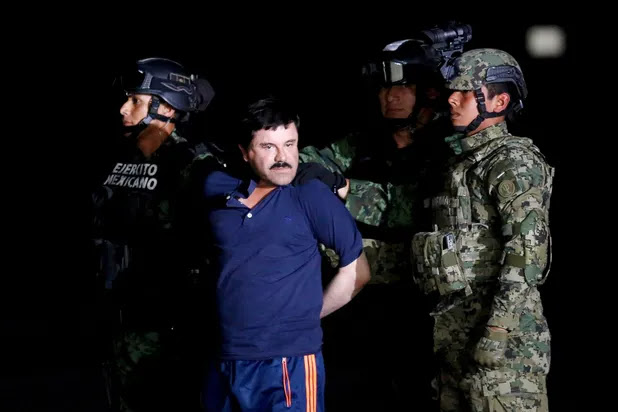
The capo would be arrested a few days later, on February 22, 2014, during an operation carried out at number 608-A on Mazatlan's boardwalk, in a condominium of towers and apartments facing the sea.

Holy God, it's him: DEA agent narrates arrest of 'El Chapo'.

Lucero also acknowledged that with the capture came the interrogations of Chapo's mob. Dámaso López Núñez, El Licenciado, questioned her to find out what her reaction had been and if she had anything to do with the capture of their boss.

That's why Lucero didn't dare refuse to go when El Chapo sent for her through his lawyer, Manuel Osuna, to visit him in September 2014. The drug lord had not lost the habit of sending letters from the maximum security prison. He entertained himself.

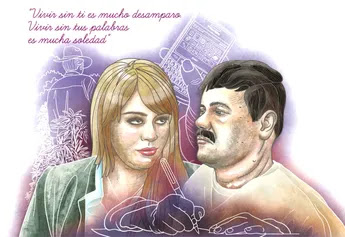
"To my queen who is a sweetheart. I hope you are well, my best wishes are for our family and our children. I was very happy to receive your letter my love and when I read it I was very ecstatic to hear that our son is going well, what a joy, don’t stop taking care of yourself. Living without you is a lot of helplessness. To live without your words is a lot of loneliness," wrote Guzman, who mysteriously alluded to shared "children".

Lucero ended up visiting him in prison, but she did so under a false name and altered identification. Nonetheless, the fact was scandalous and the news quickly spread. Already by April 2015 she began to be called the "Chapodiputada," and in September 2016 she was removed from her post as a local legislator.

"She was afraid of her enemies and afraid of being attacked, because the truth days after this came out I started receiving death threats from the enemies of the Lord (Chapo)," stated the former legislator.

On July 21, 2017, Lucero Guadalupe arrived in the city of Tijuana on a flight that departed from Sinaloa. Her intention was to escape Guzmán's enemies. The woman attempted to cross into San Diego, California, through the Cross Border Xpress international crossing, located at the border city's airport. It was a terrible moment for her: a U.S. immigration officer took her documents to check them. It took her several minutes that seemed like an eternity.

When she realized they were running her name through a database, she tried to flee to the Mexican side. But it was too late, they already knew who she was. The immigration agents caught up with her and tackled her like in a football game. She was badly hurt.

Arrest of 'El Chapo' Guzmán

She was first transferred to a detention center in San Diego, then taken to Washington, D.C., where she began facing trial for collusion with El Chapo Guzmán. However, the extradition of her lover to the United States benefited her, because in January 2019 she became one of the most important witnesses against him, she testified in great detail about the escape in Culiacán, how drug purchases were made in the Golden Triangle, in addition to revealing important names of Chapo's accomplices.

After her cooperation, her identification number no longer appears in any U.S. prison. According to the Bureau of Prisons, she is no longer in their custody, she simply disappeared without a trace.

However, information revealed in El Chapo's trial documents could provide a clue as to the woman's whereabouts: it was revealed that, in exchange for her cooperation, the government promised her a recommendation to the judge to be lenient in sentencing her, as well as guaranteed benefits for her entire family.

Even so, Lucero's life has been marked by tragedy: in 2014, her ex-husband Rubén Chávez was kidnapped and murdered in Cosalá, Sinaloa. A few days earlier, her sister María Carolina had been murdered. The authorities linked it to a crime of passion.

Today it is not known where Lucero Guadalupe was transferred to, if she received years of sentence or even if she really had a child or more with the capo. For now, all that remains are the messages of love and the facts of betrayal.


Milenio

Thursday, January 19, 2023

The Armed Criminal Cells Of Sinaloa In Baja California Sur

"Sol Prendido" for Borderland Beat

Juan Manuel Franco Silva "El Alacrán" kept Comondú police and officials on his payroll / State Police and Navy arrest Víctor "N" from Sinaloa, linked to the crime of forced disappearance.

A criminal cell has been identified in Baja Sur, allegedly identified as "Los Menores", a group identified with operations from Sinaloa and led by the sons of Joaquín "El Chapo" Guzmán Loera, arrested in 2016.

"Los Javieres," "El Colores" and "Fuerzas Especiales Dámaso" are some of the violent cells of the Sinaloa Cartel that have had a presence in the southern part of the state and that attacked local groups just after the capture of major Sinaloa capos such as "Chapo" himself and Dámaso López Núñez "El Licenciado".

"As already happened after the arrest of 'El Chapo' and after the fall of Dámaso (2017), Baja California Sur felt the ravages of the war between the Sinaloa Cartel and Jalisco, this time is no exception, they could take advantage of the arrest and generate movements to seek control, either from Jalisco or an independent who is waiting for the moment. We should not get ahead of ourselves, the smallest one fell, important, yes, but not essential to maintain the organization," a state investigative agent warned ZETA after the arrest of Ovidio Guzman Lopez on January 5, 2023 in Sinaloa.

In Los Cabos a narco-banner signed by La Chapiza, announces the arrival of the CDS

Just two days before the capture of the man nicknamed "El Ratón", according to criminal case CSL/25/2023, a narco message signed by "La Chapiza", alleged criminals at the service of "El Chapo" Guzmán and his sons "Los Chapitos", was found on the bridge of Desarrollo La Ballena in Cabo San Lucas, Los Cabos municipality.

The discovery was reported at approximately 07:55 hours on Tuesday, January 3 by elements of the Municipal Police, however, a surveillance camera captured a citizen taking pictures of the same since 06:00 hours.

"The investigations are advanced, we do not see any major impact of the message or consequence, but we are keeping an eye on it. There are already lines of investigation and we have identified the person who placed it," said the State Criminal Investigation Agency.

While for some security agencies the appearance of the narco-message does not represent a problem, it should be emphasized that after the fight for the plaza, according to unofficial reports from the Secretary of National Defense (Sedena), the terrain of Los Cabos would be divided as follows: Cabo San Lucas for Cartel Jalisco New Generation (CJNG) and San Jose del Cabo for Sinaloa.

Sedena intelligence sources indicate that the Sinaloa Cartel has operations in La Paz, San José del Cabo, Comondú, part of Loreto and Mulegé; however, members of the CJNG have also been identified in the south and the Beltrán Leyva organization in the north.

"Not as such, but all the corporations have been instructed via the chain of command to be alert. Since the arrest occurred in Sinaloa, we are in constant tours, attentive to any incident, suspicious and fearless. Because at any moment we can return to 2016 and 2017, when everything got out of control," said a member of the State Public Security Bureau.

THE SINALOA PAYROLL

The relevance of the capture of Juan Manuel Franco Silva "El Alacrán" on December 5, 2022 not only represents the disarticulation of one of the most violent groups in the northern zone - comprised of Comondú, Loreto and Mulegé - it also uncovered police protection.

Not only did a little peace return to the municipality, but information was obtained that compromises the security and tranquility of the corporations, the control and confidence of the institutions, criminal transactions with members of security and other public servants.

"After the arrest, we obtained relevant information that links 'El Alacrán' with different municipal, state and even federal public officials in Ciudad Constitución, they all protected him, they even warned him that we were coming for him the day of his arrest. We collected evidence of payments of up to one million dollars to police officers, high-ranking municipal and federal officials, and the information for his arrest is already being collected," confirmed a source.

Citizens' Council for Attention to Victims of Crime requests that the violence of 2017 and 2018 does not return to BCS.

The evidence collected showed that the criminal sent "Christmas bonuses" to public officials residing in Comondú and were distributed according to their rank: 15,000, 20,000, 30,000 and up to 100,000 pesos received from the hands of organized crime, as thanks for the protection they provided.

"It was already unsustainable for the criminal group itself, it was too much the abuse of control they maintained, so much so that they moved with impunity that they were not afraid to circulate through the streets armed, they were uncontrollable because they paid the high command, and that was broken when they beat the police. Even on the day of his arrest, a federal official told them that we were coming for him and halfway through the operation there were already pickup trucks around the site, that was the fear that the hitmen would arrive with long arms," said the member of the Security Table. 

Comondú is an example of the impunity enjoyed by organized crime in the state, the cell of "El Alacrán" operated kidnappings, homicides, drug sales, alcohol, and extortion of businesses and fishermen. Although it has been an open secret, the authorities did not act. Many of the officials were on the payroll.

"It seems that the police are afraid of criminals, that in Baja California Sur it is not possible that the police are at the service of crime, we know that for a long time it has been a tradition that they charge a certain percentage to criminals, it has been seen, but that now they have them on payroll is worrying", is the slogan from the Citizen Council of Attention to Victims of Crime.

The municipality of Comondú, located two hours away from the Capital via highway, also entered into the project of keeping an agent of the Secretary of the Navy, Lieutenant Commander Juan Heladio Clavel Nicolás, in charge of Municipal Public Security.

But it was precisely his escort who tried to rescue "El Alacrán", a Navy agent died defending criminals and the director of Security himself took evidence of the incident, which casts doubt on his reliability.

"How are we doing in terms of Control and Confidence, the failed police officers are in an office outside the operational area, they are going to be dismissed. Who watches the surveillance cameras that monitor the city, who gives notice when a crime is committed to the units? These reports are not provided by the government, everything is opaque. We are not willing to continue being victims of the same authority," said the Citizens' Council.


Zeta Tijuana

Wednesday, November 2, 2022

Cartel de Sinaloa Controls Baja California

"Sol Prendido" for Borderland Beat

The capture of El Babay generated an internal dispute within the CJNG in La Paz and Los Cabos.

Recent violent incidents involving the presence of armed groups in La Paz and Comondú have raised the alarm for the Mesa de Seguridad in Baja California Sur, as these events were provoked by the same criminal group, such as the attack on Comondú municipal agents in Ciudad Constitución on the night of September 25, where around 15 heavily armed assassins were recorded on video as they brutally beat the police officers.

In addition to the irruption of an armed criminal cell  with assault rifles on the evening of Saturday, October 8, when 30 gunmen entered the Chapel of San Juan Bautista in San Juan de los Planes - municipality of La Paz - and tried to abduct a couple from Tijuana, Baja California, but when they did not find them, they took another couple who hours later would be released.

Situations that marked a turning point in the State Government that, in the face of so many warnings, raised the  alert level. 

"We are on alert because the event in Comondú was not just any old thing, we have to strengthen, the regional commander of the Army was here just to shield us, so that Sonora, Sinaloa, Baja California, we have to be more careful. It seems that the same group has been working here in the area," acknowledged the governor of Baja California, Victor Castro Cosio.

In the latest map prepared by members of the State Criminal Investigation Agency and the State Government, the Pacific Cartel or Sinaloa Cartel (CDS) is in total control of criminal activities in BCS, mainly kidnappings, retail drug trafficking, extortion and kidnappings. The most alarming are from Puerto San Carlos (Comondú), La Paz and Los Cabos.

This is evidenced by the seizures of weapons and drugs, as well as executions and disappearances. It is known that the Pacific Cartel is in control of drug trafficking on the ground; other organizations could have a presence, but only by sea and air in the transfer of drugs, not by being formally installed in the state. Those are the data we have from intelligence tests," an agent from the state Public Security Bureau told ZETA.

"I don't know what it's called, but there is a group that participated in Los Planes, and we suspect, we see that it is probably linked to the fact, when they beat the police in Constitución, that fact has already been prosecuted, fortunately they were quickly apprehended (3 of 15 assassins), but we are still investigating," said the governor.

It seems that "the criminal group" that the state administration recognizes is the Pacific Cartel, and that the National Palace is already in its sights. The President of Mexico, Andrés Manuel López Obrador, was reportedly addressing the issue during his most recent visit to BCS.

The information in government agencies has been capitalized and handled with total secrecy, and although it was already an open secret since the complaint of the collection of money from fishermen in Puerto San Carlos at the beginning of 2022, the problem wasn’t recognized until it was evidenced in video via social networks.

"I could not say names, it would be like slipping a topic to which I do not refer, we will give a talk on November 5 or 6, on public safety, because there are very interesting things, but other very worrying matters and this is one. The president is coming to see the issue of health and security," added Castro Cosio.

THE DIVISION ACCORDING TO FGR AND SEDENA

It seems that there is a lack of coordination in the federal, state and municipal intelligence reports, each institution recognizes a rearrangement and very different dominant groups.

According to the Attorney General's Office (FGR), the country is divided into nine criminal organizations and/or drug cartels, which in turn are divided into 37 criminal cells, and between them all participate in the generation of violence for the control of the national territory in the sale and distribution of narcotics.

They drew up a criminal map that remains in effect since 2014 and to date "has not changed much," suggesting that in BCS there is a presence of the Pacific Cartel through "Los 28"; of Los Beltran Leyva with the cells of "Los Mazatlecos," with influence in Sinaloa; and "La Oficina," with a presence in Aguascalientes.

Surprisingly, the FGR does not consider the Jalisco New Generation Cartel (CJNG) in the state, despite multiple military intelligence reports, testimonies of drug dealers arrested and wounded in the criminal battle.

What does stand out is the official entry of the "Los 28" cell into the state since 2015, as stated by the Attorney General's Office in intelligence reports delivered at the end of that year. Since July 31, 2014, when the war between cartels broke out in BCS, the presence of the CDS was clear.

Sinaloa's fight against local cells involved the participation of "La Barredora," a cell from the state of Guerrero; "Gente Nueva," from Sinaloa and Chihuahua; and "Los 28," natives of Baja California Sur who changed sides and Monterrey, Nuevo Leon.

They were also supported in the fight by the "Dámaso Special Forces" cell, until they were able to establish themselves in Baja Sur.

Those who confronted them on behalf of Los Beltran Leyva are "Los Mazatlecos", originally from Sinaloa and BCS, and in the southern part of the state, "La Oficina".

Another - unofficial - report from the Sedena indicates that in "some points like La Paz an alliance was established to operate peacefully, an agreement of no confrontations and respect for the territories.

The database establishes by locality and leadership:

* Cabo San Lucas- CJNG

* San Jose del Cabo - "Chapo Isidro" (Los Beltran Leyva)

* La Paz-CJNG and minor presence of CDS

* Comondú - "Los Menores" CDS)

* Loreto - Caborca Cartel (Caro Quintero)

* Mulegé - In dispute for being the entrance to BCS.

Certainly it is a back and forth of criminal reports of the institutions, however, the branch of the FGR that is dedicated in organized crime investigations responded to dozens of requests for public information through the National Transparency Platform, in which since 2014 is practically the same document. The only changes are the date and the Government that issues it.

Perhaps it is the evidence they have, but the intelligence units of the different corporations, at least in Baja California Sur, detail the presence of other criminal organizations that the "official report" does not contemplate or is far from the reality on the streets.

The FGR omits criminal cells that were present, such as "Fuerzas Especiales Dámaso" (FED), the cell of "El Colores", "Los Compadrones", Ismael "El Mayo" Zambada's "Los Mayitos" and "Los Pepillos" - formerly Beltrán Leyva - who joined Jalisco New Generation Cartel.

Narco messages, graffiti and a high level of violence, evidenced the presence of the CJNG. However, for the authorities of Baja California Sur it was not enough to accept the reality.

US: CJNG DOMINATES BCS

The report "Mexico: Organized Crime Organizations and Drug Trafficking," published by the U.S. Congressional Research Service on June 7, 2022, reveals a panorama closer to what the country and Baja California Sur are going through, which encompasses the wars for drug control.

One of the main concerns of the Drug Enforcement Administration (DEA) is "the CJNG's ambitious expansion campaign, characterized by high levels of violence.

The U.S. Congressional Research Service directly links the violent surge in Baja California Sur since 2014, particularly in 2019, when CJNG allied with the remnants of the Arellano Felix Cartel (CAF) of Tijuana, Baja California and founded the recently formed alliance called the Tijuana Cartel New Generation (CTNG) to take on the Pacific (CDS) on the Baja California Peninsula.

According to James Bosworth, a regional analyst for Latin America, the main cartels leading the war in Mexico according to data obtained from open sources and interviews with journalists are CJNG, Sinaloa, Juarez, Gulf and Los Zetas.

Precisely the specialist places Jalisco New Generation Cartel with having absolute control of BCS, although in another report developed by StratFor, a private intelligence and international security analysis company at the service of US government agencies, revealed in 2021 the presence of the CJNG in Southern California as predominant to the Sinaloa Cartel.

The US Congress recognizes the Jalisco Cartel - New Generation as the trigger for criminal violence in Baja California, Baja California Sur, Nayarit, Sonora and other states.

Zeta Tijuana

Wednesday, April 27, 2022

Old Video of Hitmen Working for Ivan's Lieutenant El Gabito Makes Rounds On Social Media

"HEARST" and "Ivan" for Borderland Beat 


Update 4/28/2022: Multiple made allegations about this story were incorrect. El Sol de Sinaloa has released a new article on the video that states: 


When questioned on the subject, the Secretary of Public Security of Sinaloa, Cristóbal Castañeda Camarillo, stated that it is an old video and also that the incident did not occur in Sinaloa.


"It (the video) is old, the uniforms are no longer of that style, there is no report that it was in that place," he commented briefly when approached by the media this morning.


Castañeda Camarillo also did not acknowledge that the event occurred in La Noria, Mazatlán, as has been said in social networks, but warned that it would be SEDENA, the institution itself, that would report the precise details of the event.


Footage of Sinaloa Cartel (Cártel de Sinaloa, CDS) hitmen holding a group of armed men at gunpoint and forcing them to hand over their equipment and uniforms has been shared on social media. The hitmen are alleged to work for one of Ivan Archivaldo Guzmán’s top lieutenants.


The Video 

A video posted online yesterday, April 26, 2022, allegedly depicts the moments right after a group of CDS hitmen forced a group of armed men to lie on the ground, with their hands flat in surrender. Update 4/28/2022: There are currently allegations that the men seen in the video are not soldiers but instead members of a rival cartel group.


Currently, social media accounts are alleging this incident took place near the small town of La Noria, Sinaloa and that the camp seen in the background of the video belonged to the the armed men. 

Wednesday, July 28, 2021

Two Women And Five Men Executed, CDS Incursion into La Línea's Territory, Guerrero, Chihuahua

"HEARST" and "Sol Prendido" for Borderland Beat


In the early hours of the morning, five burnt bodies were found in a pick up truck on a road in Guerrero, Chihuahua. Later that same day, the dead bodies of two bound and injured women were discovered in the middle of the highway on the border between the municipalities of Cuauhtémoc and Guerrero. Their interrogation tape is later released online.


As previously covered on Borderland Beat, just last Tuesday, July 20 2021, five men were found dead inside a vehicle in Ejido Calaveras, in the municipality of Guerrero, Chihuahua. The five men, suspected of being in the process of illegally logging, were killed when an unknown armed group attacked them. Now another five dead bodies have been found on a road in the same municipality. 


On the morning of July 25 2021, the emergency line received a civilian report of an burned out pickup truck being spotted on a road in Guerrero, Chihuahua. Responding to this report, police arrived on scene and found five burned bodies located in a calcined pickup truck on a road leading from Rancho de Santiago to the municipality of Ignacio Zaragoza. All bodies were later found to be male. According to the authorities, three bodies were found in the back of the truck and two others were found on the rear seats of the pickup truck. 


Later, authorities revealed that three of the individuals found were originally from Zaragoza, while the remaining two were originally from the municipality of Matachíc. Jesús Manuel Carrasco, prosecutor for the western zone, commented that none of the five men had been reported as missing. 


Later that same day, two women were found dead on the Cuauhtémoc-La Junta highway, right on the border between the municipalities of Cuauhtémoc and Guerrero. Their two dead bodies were found lying in the middle of the two lanes of the highway, laying in full view of the dozens of motorists driving at this time. 


Investigators found that both women were bound, with their hands tied together with brown tape. Their heads were also wrapped with the same type of brown tape covering their eyes. Reportedly between 7-9 casings from 223 caliber ammunition was found near the two bodies. 


One woman was wearing blue jeans and a beige blouse. She was found to have injuries consistent with being hit, with various blows to the body in addition to gunshot injuries. The second woman was found wearing black shorts and a black blouse. She too was found to have injuries consistent with being hit in addition to gunshot injuries. 


Later, one of the women was identified as Cruz B. R. who was 39 years old. She worked as a teacher and lived in Anáhuac, Cuauhtémoc municipality. The other woman was identified as Ana Carolina B. P. who was 37 years old. She was unemployed and also lived in Anáhuac, Cuauhtémoc. Both reportedly played softball on the Laguneras de Anáhuac team. The following video is safe for all to watch, only an interrogation is seen, no graphic content.


Video Source: Omnia

Interrogation tapes of the two women found on the road later emerged online. In the videos the two women are seen to be tied up and they are being asked about facts related to local drug trafficking.


Video translation is as follows:
Captive #1: Jose Nava aka “El Caballo” would sell it to us. Along with his stepson Mario and his wife Rachel. Jose is known as the “Lord of the Rings”. And Angel Maldonado got us that connect with him. Captive #2: Jose is the one who would sell it. Along with his wife and son. They call him “El Caballo”. Him and Mario…”The Lord of the Rings” would also sell to us. He’s the one who gave is that connect with Angel aka “El Podrido”.  
Sicario: What do they call him? Captive #2: They called him “El Kolachi”. We would sell for “El Kolachi” on the weekends. Along with my husband. (At 00:58, the charging handle of a rifle can be heard being pulled) Sicario: And who the fuck is your husband? Captive #2: My husband’s name is Cruz Bejarano. Sicario: “Irava”? Captive #2: Yes sir. Sicario: What would y’all inject yourselves with? Captive #2: With crystal meth. Sicario: What? Captive #2: With crystal meth.

Please note that there is nothing to suggest that this execution is related to the five men found dead prior. The cartel names mentioned in the video have not been identified as belonging to La Linea or the Sinaloa Cartel as of the writing of this story. The two women's execution may just be related to local drug dealer disputes.


Prior to these recent attacks, Guerrero municipality has been allegedly held by La Línea. In south western Chihuahua, the traditional “cut-off” point between La Línea controlled area and Sinaloa Cartel (CDS) controlled area has been the town of Creel, in Bocoyna municipality, with the areas south being controlled by CDS and the areas north, which include Guerrero, being controlled by La Línea.


Moris and Ocampo are considered to be strongholds of La Línea's Los Hs, which have already been discussed at length this month in prior reporting. The municipalities surrounding such as Guerrero are thought to have a strong Los Hs influence but are contested by CDS intermittently.


In the areas more towards the central part of southern Chihuahua like Nonoava and San Francisco de Borja, CDS has been able to claim areas more north of the Creel “cut off point”. In particular, a CDS group called Gente Nueva del Tigre is thought to control Nonoava, Cusihuiriachi, San Francisco de Borja, Carichí municipalities according to El Heraldo de Chihuahua newspaper. Based on these locations, they are the CDS cell with the most access to Guerrero, making them the primary suspect in these attacks.

Gente Nueva del Tigre is allegedly led by Edgar Alfredo Gamboa Sosa, alias El Tigre Blanco. His brother, Raul Gamboa Sosa alias “El Cabo” famously had a falling out with La Línea which eventually led to his execution at the hands of La Línea members.


Other CDS groups in close proximity to Guerrero include a group led by José Noriel Portillo Gill, alias “El Chueco” which allegedly controls Urique and the aforementioned south-of-Creel area of Bocoyna municipality. And a CDS group led by Melquiades Díaz Meza, alias “El Chapo Calin” which allegedly controls Guachochi.

El Heraldo de Chihuahua reports that according to intelligence areas of the State Attorney General's Office, at the beginning of 2021, El Chueco and El Tigre Blanco formed an alliance. This alliance was formed in order to obtain control of the region that falls between north Urique up to the city of Cuauhtémoc from La Línea. Guerrero, notably, falls within this region. In the February article, El Heraldo asserts that a total of 38 deaths, from La Línea or CDS, had occurred so far as a result of this push and the subsequent fight against an incursion.
Update 7/29/21 10:00 AM CST: "Cruz Hervano" changed to "Cruz Bejarano" in video translation. Thank you to commenter Billy Jean.