Blog dedicated to reporting on Mexican drug cartels
on the border line between the US and Mexico
.

Showing posts with label Julio Cesar Moreno Pinzon "El Tarjetas". Show all posts

Wednesday, August 13, 2025

Treasury Targets Terrorism and Timeshare Fraud in Mexico. 'CJNG Cartel' And El Tarjetas, La Firma, And El Plumas Targeted yet again by US Treasury

Press Releases

Treasury Targets Terrorism and Timeshare Fraud in Mexico


Scams Targeting U.S. Victims Produce Significant Revenue for CJNG

WASHINGTON—Today, the U.S. Department of the Treasury’s Office of Foreign Assets Control (OFAC) sanctioned four Mexican individuals and 13 Mexican companies linked to timeshare fraud led by the Cartel de Jalisco Nueva Generacion (CJNG).  These individuals and companies are based in or near Puerto Vallarta, a popular tourist destination that also serves as a strategic stronghold for CJNG.  A brutally violent cartel, CJNG is a U.S.-designated Foreign Terrorist Organization (FTO) that is increasingly supplementing its drug trafficking proceeds with alternative revenue streams such as timeshare fraud and fuel theft. 

“We are coming for terrorist drug cartels like Cartel de Jalisco Nueva Generacion that are flooding our country with fentanyl,” said Secretary of the Treasury Scott Bessent. “These cartels continue to create new ways to generate revenue to fuel their terrorist operations.  At President Trump’s direction, we will continue our effort to completely eradicate the cartels’ ability to generate revenue, including their efforts to prey on elderly Americans through timeshare fraud.” 

Treasury has taken a series of actions targeting the diverse revenue streams benefitting the cartels, including fuel theft, human smuggling, extortion, and fraud.  As Treasury and its partners seek to disrupt the cartels’ revenue streams, it is important to remind current owners of timeshares in Mexico: If an unsolicited purchase or rental offer seems too good to be true, it probably is.  Those considering the purchase of a timeshare in Mexico should conduct appropriate due diligence. 

Today’s action was taken pursuant to Executive Order (E.O.) 14059, which targets the proliferation of illicit drugs and their means of production, and pursuant to E.O. 13224, as amended, which targets terrorists and their supporters. Today’s action was also taken in coordination with the Federal Bureau of Investigation (FBI), the Drug Enforcement Administration (DEA), and the Government of Mexico’s financial intelligence unit, the Unidad de Inteligencia Financiera (UIF). 

CJNG: VIOLENCE IN PURSUIT OF PROFIT

CJNG is considered one of the most powerful cartels in the world.  It has conducted intimidating acts of violence, including attacks on the Mexican military and police with military-grade weaponry, the use of drones to drop explosives on Mexican law enforcement, and assassinations and attempted assassinations of Mexican officials.  CJNG has also executed its own recruits who defy orders. All of this is perpetrated in furtherance of CJNG’s relentless pursuit of illicit proceeds.  In addition to drug trafficking, the group’s core source of revenue, CJNG is also generating alternative revenue streams through fuel theft, extortion, and timeshare fraud, among other activities.

On April 8, 2015, OFAC designated CJNG pursuant to the Foreign Narcotics Kingpin Designation Act (Kingpin Act) for playing a significant role in international narcotics trafficking.  On December 15, 2021, OFAC also designated CJNG pursuant to E.O. 14059.  On February 20, 2025, the U.S. Department of State designated CJNG as an FTO and a Specially Designated Global Terrorist (SDGT). 

PARADISE LOST:  TIMESHARE FRAUD IN MEXICO

Mexico-based cartels have been targeting U.S. owners of timeshares through call centers in Mexico staffed by telemarketers fluent in English.  Beginning in about 2012, CJNG took control of timeshare fraud schemes in Puerto Vallarta, Jalisco, Mexico, and the surrounding area.  These complex scams often target older Americans who can lose their life savings.  The lifecycle of these scams can last years, resulting in financial and emotional devastation of the victims while enriching cartels like CJNG.   


The cartels generally obtain information about U.S. owners of timeshares in Mexico from complicit insiders at timeshare resorts.  After obtaining information on timeshare owners, the cartels, through their call centers, contact victims by phone or email and claim to be U.S.-based third-party timeshare brokers, attorneys, or sales representatives in the timeshare, travel, real estate, or financial services industries.  The fraud may include timeshare exit scams (a.k.a. timeshare resale scams), timeshare re-rent scams, and timeshare investment scams. The common theme is that victims are asked to pay advance “fees” and “taxes” before receiving money supposedly owed to them.  This money never comes, and the victims are continuously told to pay additional “fees” and “taxes” to finalize the transactions.  Victims are typically told to send these “fees” and “taxes” via international wire transfers to accounts held at Mexican banks and brokerage houses. After these initial scams, re-victimization scams can occur.  The scammers may impersonate law firms, claiming that they can initiate proceedings on behalf of the victims to recover lost funds for an upfront fee.  In other instances, scammers impersonate government officials, including OFAC, claiming that victims have engaged in suspicious transactions and demanding “fines” to release their funds or face the risk of imprisonment. 

On July 16, 2024, Treasury’s Financial Crimes Enforcement Network (FinCEN), OFAC, and the FBI issued a joint Notice on timeshare fraud associated with Mexico-based transnational criminal organizations (TCOs), including in Spanish, to provide financial institutions with an overview of these schemes, associated financial typologies, and red flag indicators. In the six-month period following this Notice, FinCEN received over 250 Suspicious Activity Reports, and filers reported approximately 1,300 transactions totaling $23.1 million, sent primarily from U.S.-based individuals to counterparties in Mexico.  Based on FinCEN’s analysis, U.S. fraud victims sent an average of $28,912 and a median amount of $10,000 per transaction to the suspected scammers potentially working for Mexico-based TCOs.

According to the FBI, approximately 6,000 U.S. victims reported losing nearly $300 million between 2019 and 2023 to timeshare fraud schemes in Mexico.  In 2024 alone, FBI’s Internet Crime Complaint Center (IC3) received nearly 900 complaints concerning timeshare fraud schemes in Mexico with reported losses of over $50 million.  However, these figures likely underestimate total losses, as the FBI believes the vast majority of victims do not report the scam due to embarrassment, among other reasons.  On its website, the FBI has included a timeshare fraud resource page, and FBI’s New York Field Office has posted a public service announcement video featuring a victim of timeshare fraud. Victims of timeshare fraud are encouraged to file a complaint with the FBI’s IC3 by visiting https://www.ic3.gov.  For elder victims, financial institutions may also refer their customers to the Department of Justice’s National Elder Fraud Hotline at 833-FRAUD-11 (or 833-372-8311). 

TARGETING TIMESHARE FRAUD
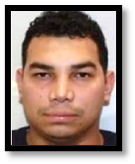
Montero
Montero 

Today’s action marks the fifth time OFAC has sanctioned those linked, directly or indirectly, to CJNG’s timeshare fraud activities, resulting in the designation of over 70 individuals and entities to date.  The previous actions occurred on March 2, 2023April 27, 2023November 30, 2023, and July 16, 2024.

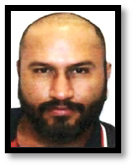
Rivera
Rivera

The three senior CJNG members most involved in timeshare fraud are Julio Cesar Montero Pinzon (Montero), Carlos Andres Rivera Varela (Rivera), and Francisco Javier Gudino Haro (Gudino).  These three individuals have also been part of a CJNG enforcement group based in Puerto Vallarta that orchestrates assassinations of rivals and politicians using high-powered weaponry. 
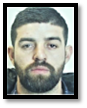
 

Gudino
Gudino

On June 2, 2022, OFAC designated Montero pursuant to E.O. 14059. Today, Montero is being designated pursuant to E.O. 13224, as amended, for being directed by, or having acted or purported to act for or on behalf of, directly or indirectly, CJNG. 


On April 6, 2021, OFAC designated Rivera and Gudino pursuant to the Kingpin Act.  Today, Rivera and Gudino are being sanctioned pursuant to E.O. 14059 and pursuant to E.O. 13224, as amended, for being directed by, or having acted or purported to act for or on behalf of, directly or indirectly, CJNG.   

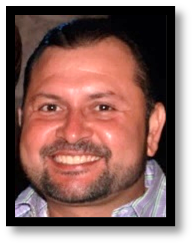
Ibarra
Ibarra 

The other individual sanctioned today is Puerto Vallarta native Michael Ibarra Diaz Jr.  (Ibarra).  An ostensibly legitimate businessman involved in the tourism industry, Ibarra is engaged in timeshare fraud on behalf of CJNG.  For over 20 years, Ibarra has been involved in the sale and management of timeshares in the Puerto Vallarta area, including just north in the state of Nayarit.  Ibarra was trained as an accountant, which is consistent with CJNG’s use of professionals to conduct this complicated and highly lucrative scheme.  Ibarra is being sanctioned pursuant to E.O. 14059 and pursuant to E.O. 13224, as amended, for being directed by, or having acted or purported to act for or on behalf of, directly or indirectly, CJNG.
Akali RealtorsAlso sanctioned today is Ibarra’s corporate network, which is composed of 13 companies.  Five of the companies—Akali RealtorsCentro Mediador De La Costa, S.A. de C.V.Corporativo Integral De La Costa, S.A. de C.V., Corporativo Costa Norte, S.A. de C.V., and Sunmex Travel, S. de R.L. De C.V.—explicitly acknowledge their involvement in the timeshare industry.  Another company involved in timeshare-related transactions—TTR Go, S.A. de C.V.—claims only to be a travel agency. Fishing Are UsThree additional companies are purportedly engaged in real estate activities:  Inmobiliaria Integral Del Puerto, S.A. de C.V.KVY Bucerias, S.A. de C.V., and Servicios Inmobiliarios Ibadi, S.A. de C.V.  This diverse corporate network also includes tour operators (Fishing Are Us, S. De R.L. de C.V.Santamaria Cruise, S. de R.L. de C.V.), an automotive service company (Laminado Profesional Automotriz Elte, S.A. de C.V.), and an accounting firm (Consultorias Profesionales Almida, S.A. de C.V.).  These 13 companies are being sanctioned pursuant to E.O. 14059 and pursuant to E.O. 13224, as amended, for being owned, controlled, or directed by, or having acted or purported to act for or on behalf of, directly or indirectly, Ibarra.

SANCTIONS IMPLICATIONS

As a result of today’s action, all property and interests in property of the designated or blocked persons described above that are in the United States or in the possession or control of U.S. persons are blocked and must be reported to OFAC.  In addition, any entities that are owned, directly or indirectly, individually or in the aggregate, 50 percent or more by one or more blocked persons are also blocked. Unless authorized by a general or specific license issued by OFAC, or exempt, OFAC’s regulations generally prohibit all transactions by U.S. persons or within (or transiting) the United States that involve any property or interests in property of blocked persons. 

Violations of U.S. sanctions may result in the imposition of civil or criminal penalties on U.S. and foreign persons.  OFAC may impose civil penalties for sanctions violations on a strict liability basis.  OFAC’s Economic Sanctions Enforcement Guidelines provide more information regarding OFAC’s enforcement of U.S. economic sanctions. In addition, financial institutions and other persons may risk exposure to sanctions for engaging in certain transactions or activities involving designated or otherwise blocked persons.  The prohibitions include the making of any contribution or provision of funds, goods, or services by, to, or for the benefit of any designated or blocked person, or the receipt of any contribution or provision of funds, goods, or services from any such person. 

Furthermore, engaging in certain transactions involving the persons designated today may risk the imposition of secondary sanctions on participating foreign financial institutions.  OFAC can prohibit or impose strict conditions on opening or maintaining, in the United States, a correspondent account or a payable-through account of a foreign financial institution that knowingly conducts or facilitates any significant transaction on behalf of a person who is designated pursuant to the relevant authority.

The power and integrity of OFAC sanctions derive not only from OFAC’s ability to designate and add persons to the Specially Designated Nationals and Blocked Persons List (SDN List), but also from its willingness to remove persons from the SDN List consistent with the law.  The ultimate goal of sanctions is not to punish, but to bring about a positive change in behavior.  For information concerning the process for seeking removal from an OFAC list, including the SDN List, or to submit a request, please refer to OFAC’s guidance on Filing a Petition for Removal from an OFAC List.

Click here for more information on the persons designated today.

###

Thursday, January 30, 2025

Federal Authorities Seized Another Drug Training Camp In Teuchitlán, Jalisco; 37 People Were Arrested. CJNG Cartel Camp Raided By Military

 "Char" for Borderland Beat 

This information was posted by EL OCCIDENTAL 

Members of the federal forces confiscated the camp after a foot tour

THURSDAY JANUARY 30, 2025


Editorial / El Occidental

A training camp used by organized crime was discovered by elements of the Secretariat of Security and Citizen Protection in coordination with the Mexican Army, the National Guard and the Attorney General's Office

The discovery occurred after personnel from these federal agencies carried out a foot search in an unpopulated area of ​​the municipality of Teuchitlán, in the Valles region of Jalisco.
The federal agency reported that they arrested 37 people and secured the training camp linked to a criminal group operating in the area.

The inspection also found 1,818 cartridges, magazines, four radio communication devices, tactical equipment and chemical precursors.

After locating the camp, the detainees were transferred to the facilities of the Attorney General's Office of the Republic to be made available.

The Federal Public Ministry has already begun the investigations and in the next few hours the legal situation of the almost 40 detainees will be defined.

On September 24, 2024, elements of the National Guard located another clandestine camp in the town of Estanzuela, in Teuchitlán.

At that time, 10 people were arrested and two others were rescued. Through the evidence it was learned that it was a clandestine school, where people were prepared to join the ranks of crime.


SOURCE: EL OCCIDENTAL

Thursday, January 9, 2025

63 bags with human remains in Lomas del Refugio grave, in Zapopan: Jalisco

 "Char" for Borderland Beat 

This information was posted by EL OCCIDENTAL 

On Wednesday, 15 bags were located

WEDNESDAY JANUARY 8, 2025 

Román Ortega

Agents from the State Prosecutor's Office and experts from the Jalisco Institute of Forensic Sciences resumed excavation work this Wednesday at the clandestine grave in the Lomas del Refugio neighborhood, in Zapopan, where 63 bags with human remains have been located since it was located on December 13 by members of the Luz de Esperanza (Light of Hope) collective.
Hector Flores, founder of the collective, said that they were working until December 24 because there was no more backhoe, which was needed for this work.

“It was necessary to ask the Chief of the Cabinet of the State of Jalisco, through him, the Secretary of Agriculture lent a backhoe so that they could continue the work today.”
Héctor Flores indicated that today the State Government finally provided the heavy machinery so that the agents of the State Prosecutor's Office and the experts of the Jalisco Institute of Forensic Sciences could continue with the search work.

He indicated that as a result of this Wednesday's work, 15 bags with human remains were found, for a total of 63 since the work began last December.
“Today 15 bags and one bone remains were found and in total there are 63 bags, tomorrow the work will continue in the grave here in Lomas del Refugio, in Zapopan”.
The discovery occurred on December 13 in a property located at the intersection of Ameca and Matamoros streets, where the members of the collective arrived to search for buried human remains, according to an anonymous tip they received through their social networks.
According to data from the Special Prosecutor's Office for Missing Persons, 20 clandestine graves had been accounted for between January and November of last year.

Monday, December 16, 2024

"Fuel Theft" Soars In Jalisco During Lopez Obrador's Six-Year Term Of Office

 "Char" for Borderland Beat 

This article was translated and reposted from EL OCCIDENTAL 

Investing in technology to combat this crime is a must


Román Ortega

Fuel theft in clandestine Pemex pipelines, also known as “huachicol”, shot up by up to 279 percent in Jalisco during the recently ended federal administration of former President Andrés Manuel López Obrador compared to the six-year term of former President Enrique Peña Nieto, despite López Obrador's assurances that his administration would put an end to this illicit activity.

Data from Petróleos Mexicanos (PEMEX) obtained through transparency indicate that during the six years of Enrique Peña Nieto's administration there were 173 fuel leaks in Pemex pipelines, while during López Obrador's term the figure was 656, which represents an increase of 279%.


In the case of leaks, Luis Campos warns that they represent a greater risk for the communities near the points where the fuel comes out of the pipelines due to its high level of flammability.


“The risk is that it is a highly flammable material and to the extent that a person is unaware that there was a fuel leak and there is an ignition point, which is what fire experts say, that is what will generate the contingency. I believe that the only issue is the information and to be aware of something in writing”.


Official figures provided to El OCCIDENTAL show that clandestine pipeline tapping detected in Jalisco increased 65%, that is, 5,293 illegal tappings were registered during the period of Andrés Manuel López Obrador, while during the administration of Enrique Peña Nieto there were 3,205.


Luis Campos, a public safety specialist at the Universidad Panamericana, points out that there are not enough personnel to monitor the pipelines, which is why monitoring systems must be implemented that are capable of detecting when there is low pressure, as a result of a fuel tap or leak, so that federal security forces can act quickly.

He stressed that for the government of Andrés Manuel López Obrador it was not a priority to invest in technology that would allow detecting any “picket” in the pipelines.


“The investment to be able to monitor the length and breadth of the pipelines is an important investment. And here, the truth is that the money has been allocated to other issues and for prevention in the case of huachicol, it has apparently not been a priority, has it not? You have the figures and the figures, as in an operation, as in sales, are cold. The numbers are cold here, like for the suits.”


CHART :

EPN AMLO VARIATION

LEAKS IN CLANDESTINE OUTLETS 173 656 279 % +

CLANDESTINE OUTLETS SECURED 3205 5293 65% +


During this year 2024, several gasoline leaks were recorded that alarmed residents of small communities in the municipalities of Tonalá, Zapotlanejo and Tlajomulco de Zúñiga:


The first of these occurred on February 9, with the spill of 5 million liters of gasoline, in the town of Tololotlán in the municipality of Tonalá, which caused the eviction of more than 2,1000 people from Tonalá, El Salto, Zapotlanejo and Juanacatlán.


The jet of fuel raised a cloud of vapors that forced the Secretariat of the Environment to declare an Atmospheric Alert for three municipalities.


That day the residents began to leave to go to their families, starting at 5:30 a.m. after perceiving the strong odors of fuel and made the reports to 911.


“The firefighters arrived and told us to get out of the houses because there was a fuel leak. We didn't take the children to school, we left the house,” Consuelo Vargas, 34, said at the time.

“For me, my head, my eyes and even my stomach started to hurt a lot. I couldn't even eat breakfast because I started to vomit,” explained 60-year-old Alicia Márquez.

Last Friday, July 19, there was a fuel leak in a clandestine outlet of a Pemex pipeline, which forced the evacuation of the towns of La Laja, La Mora and La Mezquitera, in Zapotlanejo.  On that occasion, the hydrocarbon jet reached a height of about 10 meters, which generated a cloud of fuel vapor.  As a result, 207 people had to be evacuated. 

On July 25, another fuel leak occurred in the town of El Capulín, in the municipality of Tlajomulco de Zúñiga.

On September 3, more than 100 elements of the State Civil Protection Unit of the State, Zapotlanejo and Pemex worked to suppress a diesel leak that occurred in a pipeline of the state-owned company in a plot of land near the community of La Mora, in the municipality of Zapotlanejo.


The then director of Civil Protection and Firefighters of Jalisco, Victor Hugo Roldan, said that there was no need to evacuate the inhabitants of the town, only 360 people from the Miguel Hidalgo elementary school evacuated as a preventive measure, on their own initiative.


Monday, December 9, 2024

10 people rescued at New Bus Station In Tlaquepaque, Jalisco. "CJNG" Cartel Behind Deceitful Recruitment Job Offers

 "Char" Borderland Beat 

Five underage among the victims

SATURDAY DECEMBER 7, 2024 


Román Ortega / El Occidental

The municipal president of Tlaquepaque, Laura Imelda Perez Segura, informed that since the beginning of her administration on October 1st, 10 people who had been reported missing have been located at the New Bus Station, among them five underage girls.

He indicated that all of them were detected when they were boarding the bus or waiting for the person who had supposedly contacted them to take them to work in another city.

“Found in what sense? I mean they were about to board a truck with a report both. I am talking about people who were waiting for the supposed person who came from that attractive job that was presented to them and never arrived. That is to say, not only that... it does not mean that they were taken away as such, but that we intervened and prevented the consummation of this crime”.

The mayoress accompanied the governor, Pablo Lemus Navarro on a tour of the truck terminal, where a series of actions were announced to combat the disappearance of people at this point, such as coordinated operations between the authorities of the three levels of government.

On October 24, police from Tlaquepaque rescued a 20 year-old man named Oscar, who had been tricked into taking a truck at the New Bus Station on Periferico Sur to the State of Colima, where he was supposed to work as a security guard.

On Friday, August 30, Tlaquepaque police officers rescued five men, two women and an underage boy who were being held in a hotel near the Nueva Central Camionera.


Saturday, November 16, 2024

Armando Gomez Nuñez 'Delta 1' To Be Indicted For Crimes Against Health: Jalisco

 "Char" for Borderland Beat

This information was posted by EL OCCIDENTAL

Armando G, 'Delta 1' to be indicted for crimes against health in the form of simple possession of methamphetamine hydrochloride

NOVEMBER 15, 2024


Román Ortega / El Occidental

A District Judge sentenced Armando “G”, alias “Delta 1” or “Máximo”, identified as the leader of the elite cell of assassins known as “Deltas” of the Jalisco Cartel - New Generation, to criminal proceedings.

The Attorney General's Office informed that Armando “G” will be prosecuted for crimes against health in the modality of simple possession of methamphetamine hydrochloride, as well as carrying a firearm, possession of magazines and cartridges for the exclusive use of the Army, Navy and Air Force.

The arrest of “Delta 1” took place last Monday, October 28, at 5:03 p.m. on Patria Avenue between Lago Superior and La Presa Avenue, in the Lagos del Country neighborhood, the same neighborhood where he was captured four years ago.


At the time of his capture, the national guards seized his vehicle, a long gun with 10 rounds, plastic bags containing one kilo 53 grams of methamphetamine and three magazines with a total of 49 useful cartridges.

In addition to the indictment, the District Judge based in Almoloya de Juarez, State of Mexico, ordered that he be remanded in custody at the Federal Center for Social Readaptation number 1 “Altiplano” and four months for the complementary investigation.

Delta 1 controlled illicit activities in Puente Grande

According to federal investigations, “Delta 1” has its area of influence in the metropolitan area of Guadalajara. In addition to the fact that he was responsible for the attack committed on May 21, 2018 in the Chapultepec area, against Luis Carlos Nájera, former state prosecutor in the past administration headed by former governor Jorge Aristóteles Sandoval Díaz.

Armando Gómez, also known as “Máximo”, was arrested for the first time on June 21, 2020 in the streets of Colonia Jardines del Country, in the municipality of Guadalajara.

The reasons why Gómez Núñez regained his freedom after being captured in 2020 are still unknown.


Tuesday, July 16, 2024

Breaking News: Treasury Sanctions Cartel Accountants, Announces Joint Notice On Timeshare Fraud In Mexico: CJNG Cartel Operators In Puerto Vallarta, Jalisco, Targeted.

 "Char" for Borderland Beat 

PRESS RELEASES


Treasury Takes Coordinated Action Against Cartel Fraudsters Targeting U.S. Owners of Timeshares in Mexico, Including the Elderly


WASHINGTON — Today, the U.S. Department of the Treasury’s Office of Foreign Assets Control (OFAC) sanctioned three Mexican accountants and four Mexican companies linked, directly or indirectly, to timeshare fraud led by the Cartel de Jalisco Nueva Generacion (CJNG). Concurrently, the Financial Crimes Enforcement Network (FinCEN) issued a Notice, jointly with OFAC and FBI, to financial institutions that provides an overview of timeshare fraud schemes in Mexico associated with CJNG and other Mexico-based transnational criminal organizations.

“Cartel fraudsters run sophisticated teams of professionals who seem perfectly normal on paper or on the phone – but in reality, they’re money launderers expertly trained in scamming U.S. citizens,” said Under Secretary for Terrorism and Financial Intelligence Brian E. Nelson. “Unsolicited calls and emails may seem legitimate, but they're actually made by cartel-supported criminals. If something seems too good to be true, it probably is. Treasury and our partners are deploying all tools available to disrupt this nefarious activity, which funds things like deadly drug trafficking and human smuggling, and we encourage the public to use our resources to stay vigilant against these threats.”

CJNG, a violent Mexico-based transnational criminal organization, traffics a significant proportion of the illicit fentanyl and other deadly drugs that enter the United States. OFAC coordinated this action with the Government of Mexico, including its financial intelligence unit, Unidad de Inteligencia Financiera (UIF), as well as U.S. Government partners—FinCEN, the Federal Bureau of Investigation (FBI), and the Drug Enforcement Administration.

These transnational criminal organizations operate call centers in Mexico with scammers impersonating U.S.-based third-party timeshare brokers, attorneys, or sales representatives. The scammers target and defraud U.S. owners of timeshares in Mexico through complex and often yearslong telemarketing, impersonation, and advance fee schemes, including timeshare exit, re-rent, and investment scams. Victims of timeshare fraud in Mexico are often targeted again after these scams in re-victimization schemes where perpetrators impersonate U.S.-based law firms and U.S., Mexican, and international authorities. The victims often send payments to the scammers through wire transfers via U.S. correspondent banks to Mexican shell companies with accounts at Mexican banks or brokerage houses (casas de bolsa) before the ill-gotten funds are further laundered in Mexico through additional shell companies and trusts (fideicomisos) controlled by cartel members, their family members, or third-party money launderers, such as complicit accountants and other professionals. 

The joint Notice provides the methodologies, financial typologies, and red flag indicators associated with timeshare fraud in Mexico to help financial institutions identify and report suspicious activity to FinCEN and law enforcement. Financial institutions with customers who are victims of timeshare fraud in Mexico are encouraged to file a complaint with federal law enforcement to activate FinCEN’s Rapid Response Program to potentially interdict and recover the fraudulently stolen funds in partnership with Mexico’s UIF. 

ORIGINS OF CJNG TIMESHARE FRAUD


Over a decade ago, Mexican attorney and businessman Omar Aguirre Barragan (Aguirre)—now deceased—learned how to conduct timeshare fraud from Puerto Vallarta-based fraudsters, including Americans. In about 2012, Aguirre educated CJNG about timeshare fraud and sought its support in taking over this highly lucrative scheme from rivals in Puerto Vallarta and elsewhere. Eventually, CJNG took more direct control and cut out Aguirre as an unnecessary middleman.

EXPOSING AND DISRUPTING CJNG TIMESHARE FRAUD

In 2023, OFAC announced three actions sanctioning a total of 50 individuals and entities linked, directly or indirectly, to CJNG’s timeshare fraud activities. On March 2, 2023, OFAC sanctioned eight Mexican companies pursuant to Executive Order (E.O.) 14059. On April 27, 2023, OFAC sanctioned seven Mexican individuals and 19 Mexican companies pursuant to E.O. 14059. On November 30, 2023, OFAC sanctioned three Mexican individuals and 13 Mexican companies pursuant to E.O. 14059.

Building on the three actions taken in 2023, today OFAC sanctioned additional Mexican individuals and companies pursuant to E.O. 14059 that are linked, directly or indirectly, to CJNG’s timeshare activities. These individuals and entities are located in Puerto Vallarta, Jalisco, Mexico, which is a CJNG strategic stronghold for drug trafficking and various other illicit activities.  


Today, OFAC sanctioned Mexican accountants Griselda Margarita Arredondo Pinzon (Arredondo), Xeyda Del Refugio Foubert Cadena (Foubert), and Emiliano Sanchez Martinez (Sanchez) pursuant to E.O. 14059 for being owned, controlled, or directed by, or having acted or purported to act for on behalf of, directly or indirectly, CJNG, a person sanctioned pursuant to E.O. 14059. These Puerto Vallarta-based accountants assist CJNG’s timeshare fraud activities and have familial relationships with previously designated persons. Arredondo is the half-sister of senior CJNG member Julio Cesar Montero Pinzon (a.k.a. “El Tarjetas”), whom OFAC designated pursuant to E.O. 14059 on June 2, 2022. Foubert is Sanchez’s spouse and is the sister of Manuel Alejandro Foubert Cadena, a Mexican attorney linked to CJNG’s timeshare activities whom OFAC designated on November 30, 2023. 

 Also today, OFAC sanctioned four Mexican companies pursuant to E.O. 14059: Constructora Sandgris, S. de R.L. de C.V.—purported to be engaged in wholesale trade—for being owned, controlled, or directed by, or having acted or purported to act for or on behalf of, directly or indirectly, Arredondo, a person sanctioned pursuant to E.O. 14059. Additionally, OFAC sanctioned Pacific Axis Real Estate, S.A. de C.V. and Realty & Maintenance BJ, S.A. de C.V.—purported to be engaged in real estate activities—for being owned, controlled, or directed by, or having acted or purported to act for or on behalf of, directly or indirectly, Foubert, a person sanctioned pursuant to E.O. 14059. Finally, OFAC sanctioned Bona Fide Consultores FS S.A.S., an accounting firm, for being owned, controlled, or directed by, or having acted or purported to act for or on behalf of, directly or indirectly, Sanchez, a person sanctioned pursuant to E.O. 14059. 

OTHER ACTIONS AGAINST CJNG

On April 8, 2015, OFAC sanctioned CJNG pursuant to the Foreign Narcotics Kingpin Designation Act (Kingpin Act) for playing a significant role in international narcotics trafficking. On December 15, 2021, OFAC also designated CJNG pursuant to E.O. 14059. In other actions, OFAC has sanctioned numerous CJNG-linked individuals and companies pursuant to both the Kingpin Act and E.O. 14059 that were engaged in various commercial activities and multiple individuals who played critical roles in CJNG’s drug trafficking, money laundering, and corruption. Many recent actions have focused on CJNG’s strategic stronghold of Puerto Vallarta. OFAC has sanctioned the following senior CJNG members based in Puerto Vallarta: Carlos Andres Rivera Varela (a.k.a. “La Firma”), Francisco Javier Gudino Haro (a.k.a. “La Gallina”), and the aforementioned Julio Cesar Montero Pinzon (a.k.a. “El Tarjetas”). These three individuals are part of a CJNG enforcement group based in Puerto Vallarta that orchestrates assassinations of rivals and politicians using high-powered weaponry. 

FBI INFORMATION ON TIMESHARE FRAUD

According to FBI, approximately 6,000 U.S. victims reported losing nearly $300 million between 2019 and 2023 to timeshare fraud schemes in Mexico; however, this figure likely underestimates total losses, as FBI believes the vast majority of victims do not report the scam due to embarrassment and other reasons. Timeshare fraud scammers may impersonate U.S. or Mexican government authorities, including OFAC

For more information, please visit FBI’s timeshare fraud resource page or view FBI New York’s public service announcement video featuring a victim of timeshare fraud. 

Victims of timeshare fraud are encouraged to file a complaint with FBI’s Internet Crime Complaint Center by visiting https://www.ic3.gov. For elderly victims, financial institutions may also refer their customers to the Department of Justice’s National Elder Fraud Hotline at 833-FRAUD-11 or 833-372-8311.   

SANCTIONS IMPLICATIONS

As a result of today’s action, all property and interests in property of the designated persons described above that are in the United States or in the possession or control of U.S. persons are blocked and must be reported to OFAC. In addition, any entities that are owned, directly or indirectly, individually or in the aggregate, 50 percent or more by one or more blocked persons are also blocked. Unless authorized by a general or specific license issued by OFAC, or exempt, OFAC’s regulations generally prohibit all transactions by U.S. persons or within (or transiting) the United States that involve any property or interests in property of designated or otherwise blocked persons. U.S. persons may face civil or criminal penalties for violations of E.O. 14059 and the Kingpin Act. Non-U.S. persons are also prohibited from causing or conspiring to cause U.S. persons to wittingly or unwittingly violate U.S. sanctions, as well as engaging in conduct that evades U.S. sanctions. OFAC’s Economic Sanctions Enforcement Guidelines provide more information regarding OFAC’s enforcement of U.S. sanctions, including the factors that OFAC generally considers when determining an appropriate response to an apparent violation.

Today’s action is part of a whole-of-government effort to counter the global threat posed by the trafficking of illicit drugs into the United States that is causing the deaths of tens of thousands of Americans annually, as well as countless more non-fatal overdoses. OFAC, in coordination with its U.S. government partners and foreign counterparts, and in support of President Biden’s Unity Agenda, will continue to hold accountable those individuals and businesses involved in the manufacturing and sale of illicit drugs. 

The power and integrity of OFAC sanctions derive not only from OFAC’s ability to designate and add persons to the SDN List, but also from its willingness to remove persons from the SDN List consistent with the law. The ultimate goal of sanctions is not to punish, but to bring about a positive change in behavior. For information concerning the process for seeking removal from an OFAC list, including the SDN List, please refer to OFAC’s Frequently Asked Question 897.  For detailed information on the process to submit a request for removal from an OFAC sanctions list.

More information on the individuals and entities designated today.

View a chart on the entities designated today.


###